Sepilok Rainforest Discovery Centre
Last Updated on 24 September 2025
Exploring the Rainforest Discovery Centre in Sepilok
Tucked away in one corner of the Kabili-Sepilok Forest Reserve in Sabah, Malaysia, the Rainforest Discovery Centre (RDC) is a great way to experience Borneo’s rainforest, from its towering trees to the cheeky wildlife that call it home.

The RDC officially opens from 8 a.m. to 5 p.m., but we could purchase early-entry tickets the day before, giving us access at 6 a.m.—prime time for bird-spotting before the crowds arrived. Tickets are RM30/day for non-resident adults and RM7/day for Malaysian residents. If feeling adventurous, night walks can be booked in advance for RM50 per adult.

Canopy Walkway: Eye-Level with the Jungle
The crown jewel of RDC has to be the canopy walkway. Stretching 620 metres and rising up to 27 metres above the forest floor, it offers a unique perspective of the rainforest.

Walking among the treetops, we watched birds flitting by, monkeys sauntering past, and enjoyed the calming sound of leaves rustling in the breeze. It was both exhilarating and serene—a perfect way to soak in the forest’s rhythms.

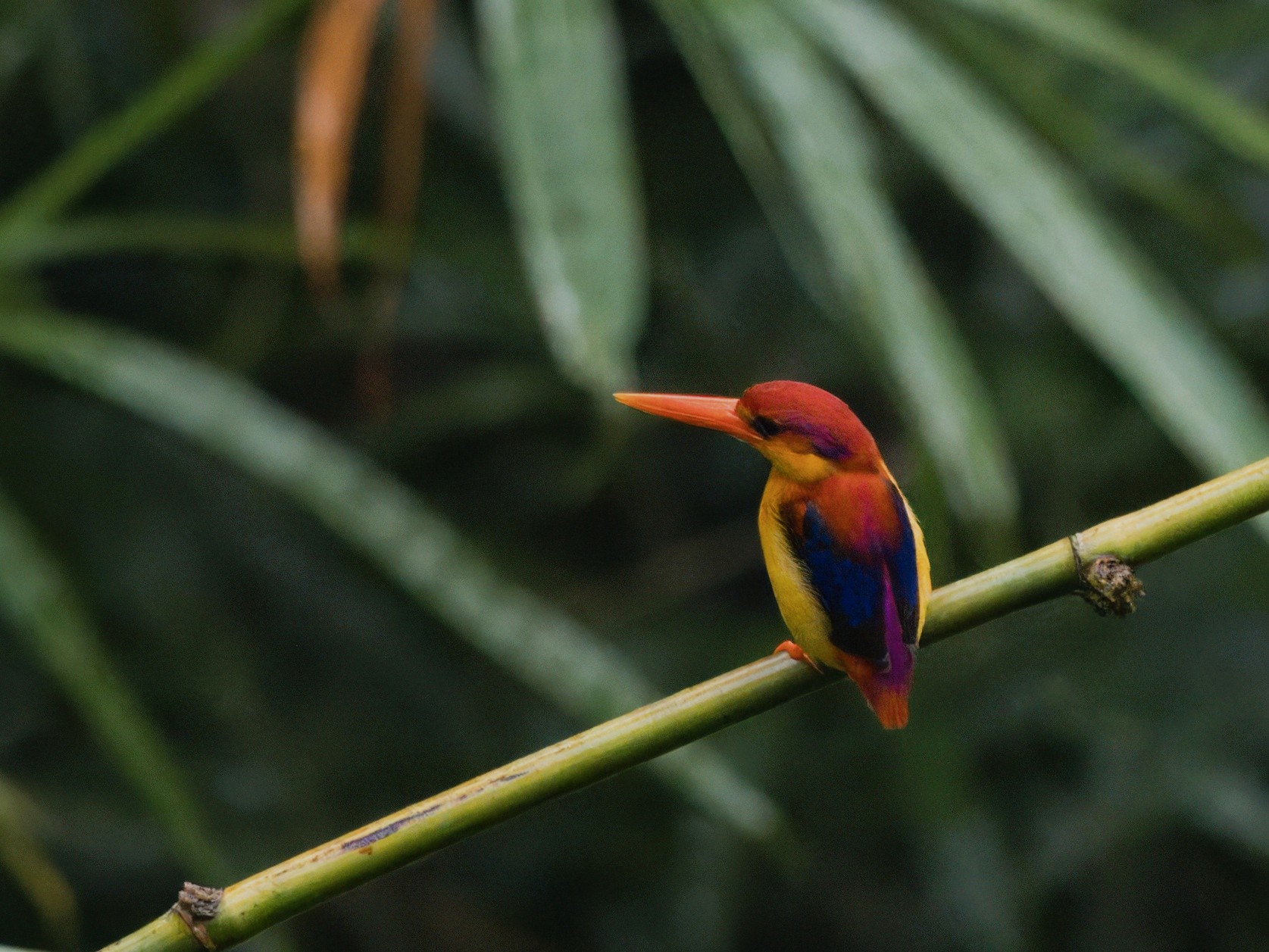
On our first morning, arriving at the park at the crack of dawn around 6 a.m., the very first bird we encountered from the canopy walkway was none other than the jewel of the rainforest—the Rufous-backed Dwarf-Kingfisher (Ceyx rufidorsa). Its bright red-orange plumage practically glowed against the greenery, and we couldn’t help but pause in awe at such a glorious first sighting.
The view from the top of Bristlehead Tower was nothing short of spectacular—an endless green canopy stretching in every direction, birds singing and gibbons wailing in the distance, the rainforest alive with sound.

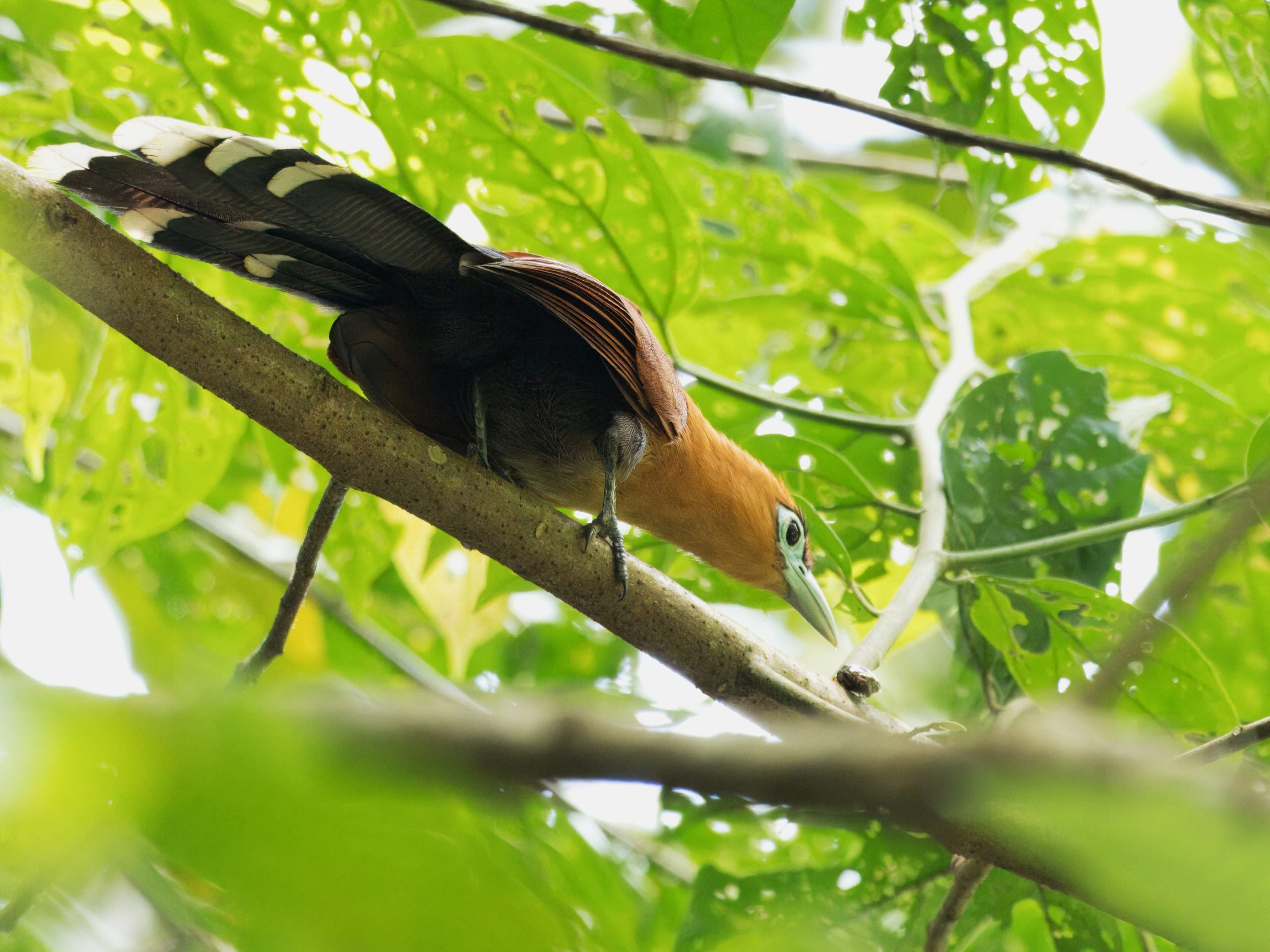
On our first morning, hopping through the forest canopy was the Chestnut-breasted Malkoha (Phaenicophaeus curvirostris), teasing us with fleeting glimpses of its chestnut breast, glossy blue wings, and almond-shaped bill, leaving us breathless and wanting more.

From our lofty perch on the tower, we also caught sight of the Red-billed Malkoha (Zanclostomus javanicus)…

and the Raffles’s Malkoha (Rhinortha chlorophaea), each adding their own dash of colour and mischief to the canopy spectacle.
The Wallace’s Hawk-Eagle (Nisaetus nanus) made a daily appearance during our three days at the park. Every morning, our first order of business after climbing the Trogon Tower was a game of ‘Where’s Wally?’—which almost always ended with spotting him perched on a distant snag. Its daily routine seemed to go something like this: 6 a.m., perched and surveying; 7 a.m., calling loudly, clearly grumbling about being hungry; 8 a.m., taking off in search of breakfast.

Hornbill Tower is the tallest of the three main towers in the canopy walkway system, offering panoramic views of the surrounding rainforest. Standing at approximately 27 metres tall and comprising seven storeys, it quickly became our favourite haunt. Mornings were spent perched there with breakfast packs in hand, and afternoons passed with quiet observation, spying on the birds that flitted about completely oblivious to their audience.

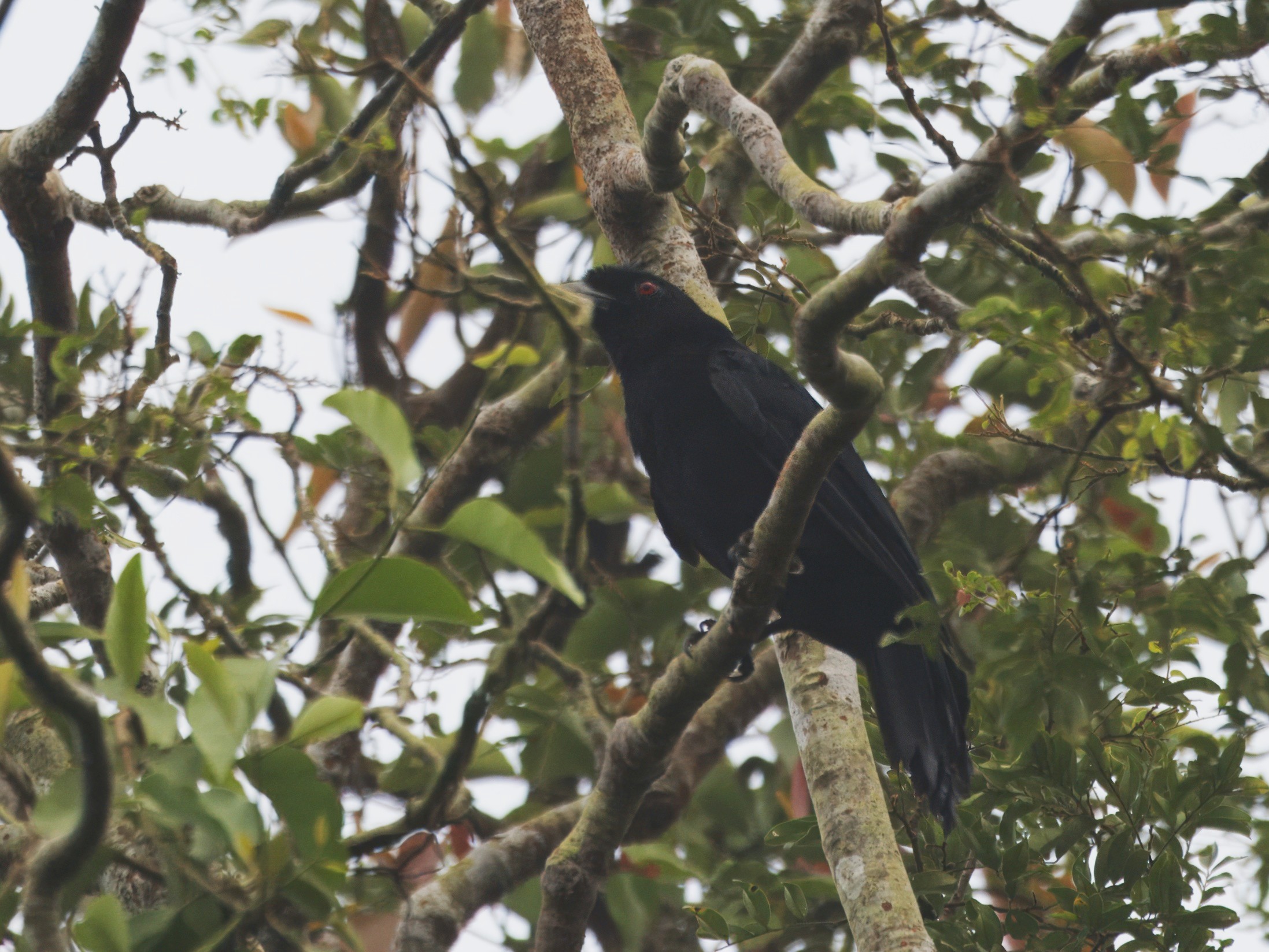
From the tower, we spotted our first Bornean endemic bird—the Bornean Black Magpie (Platysmurus aterrimus). Its presence was first announced by a distinctive call, almost like a yodelling flute. We glimpsed it perched high on a distant tree, but it didn’t linger long—its echoing call teasing us as it disappeared into the canopy.
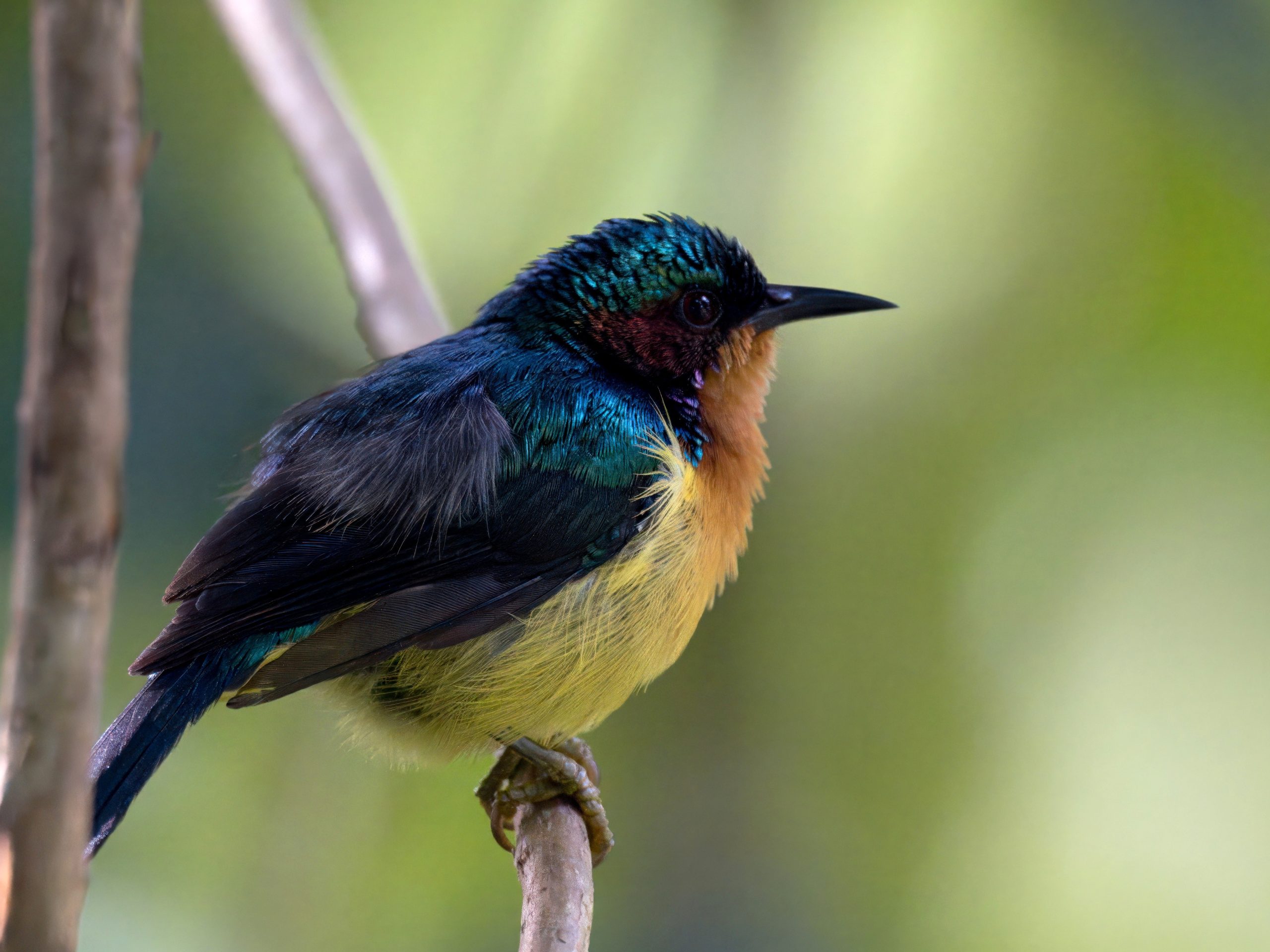
From the top of the tower, we were treated to tantalisingly close-up views of some of the forest’s smaller residents, including the Ruby-cheeked Sunbird (Chalcoparia singalensis) preening on a branch…
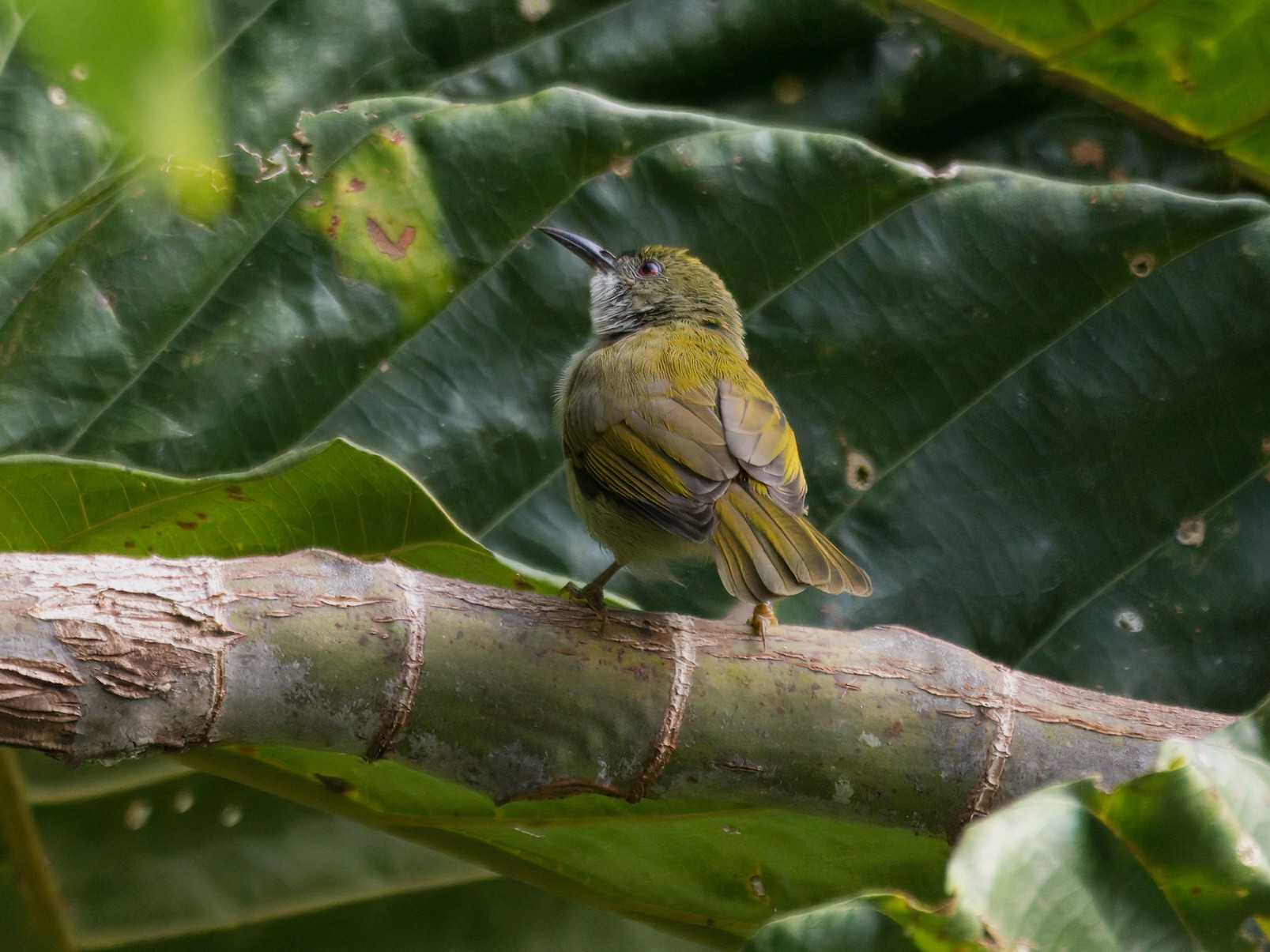
…the Thick-billed Spiderhunter (Arachnothera crassirostris) probing for nectar…

…the Brown Barbet (Caloramphus fuliginosus) doing the mating dance with its partner…

…the Charlotte’s Bulbul (Iole charlottae) cheekily peeking out from the foliage for a brief second…

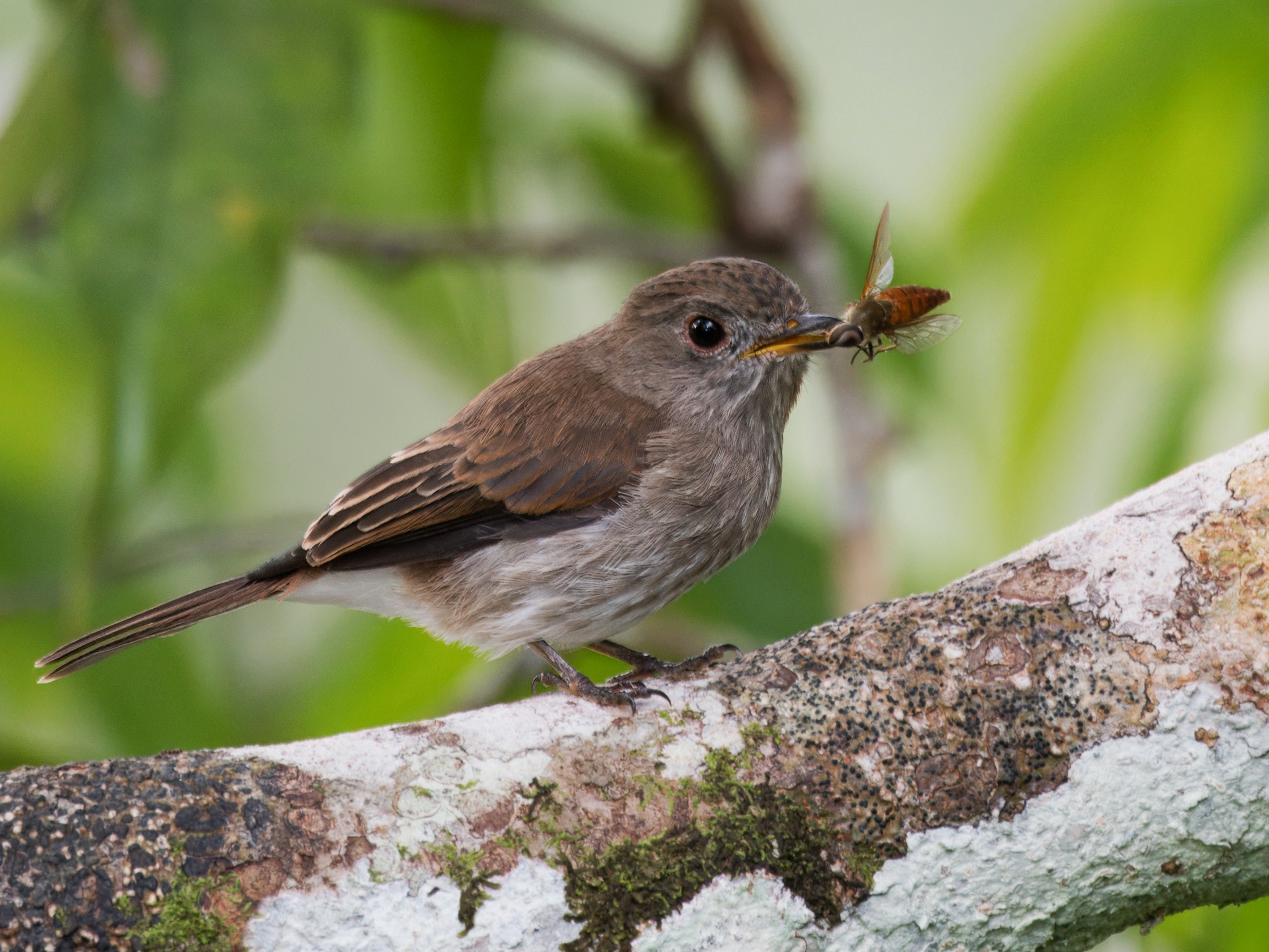
…and the Brown-streaked Flycatcher (Muscicapa williamsoni) greedily gobbling insects like he hadn’t had a meal in days.
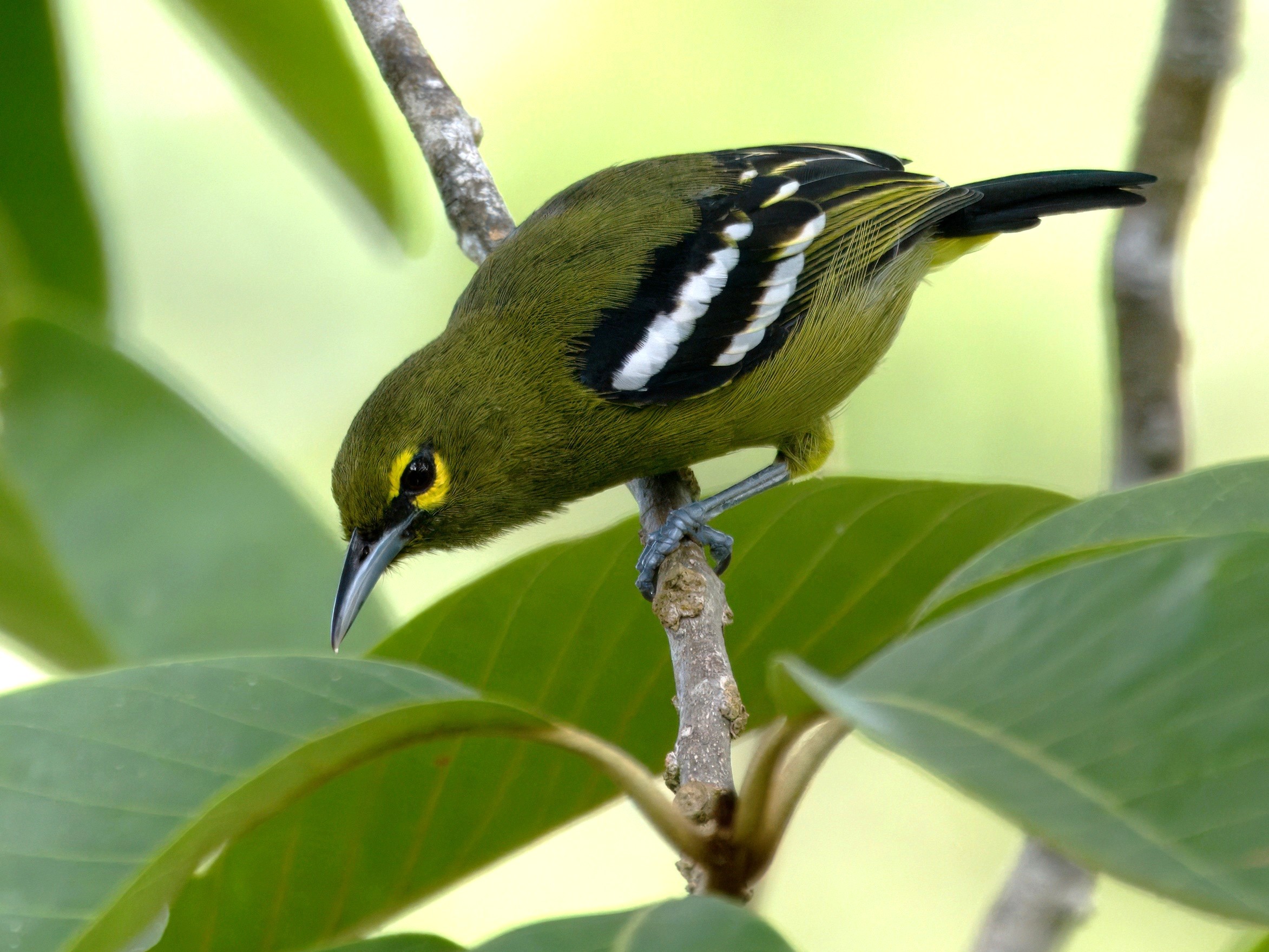
Early one morning, a flurry of activity signalled the arrival of a bird wave while we were lounging at the Hornbill Tower. Leading the parade were a group of Green Ioras (Aegithina viridissima), wheezing noisily as they hopped from branch to branch.
Nearby, a family of Black-winged Flycatcher-shrikes (Hemipus hirundinaceus) joined in the morning foraging frenzy.

We soon spotted the gleaming red sheen of a Red-throated Sunbird (Anthreptes rhodolaemus), sipping nectar from an overhanging bunch of pink flowers.
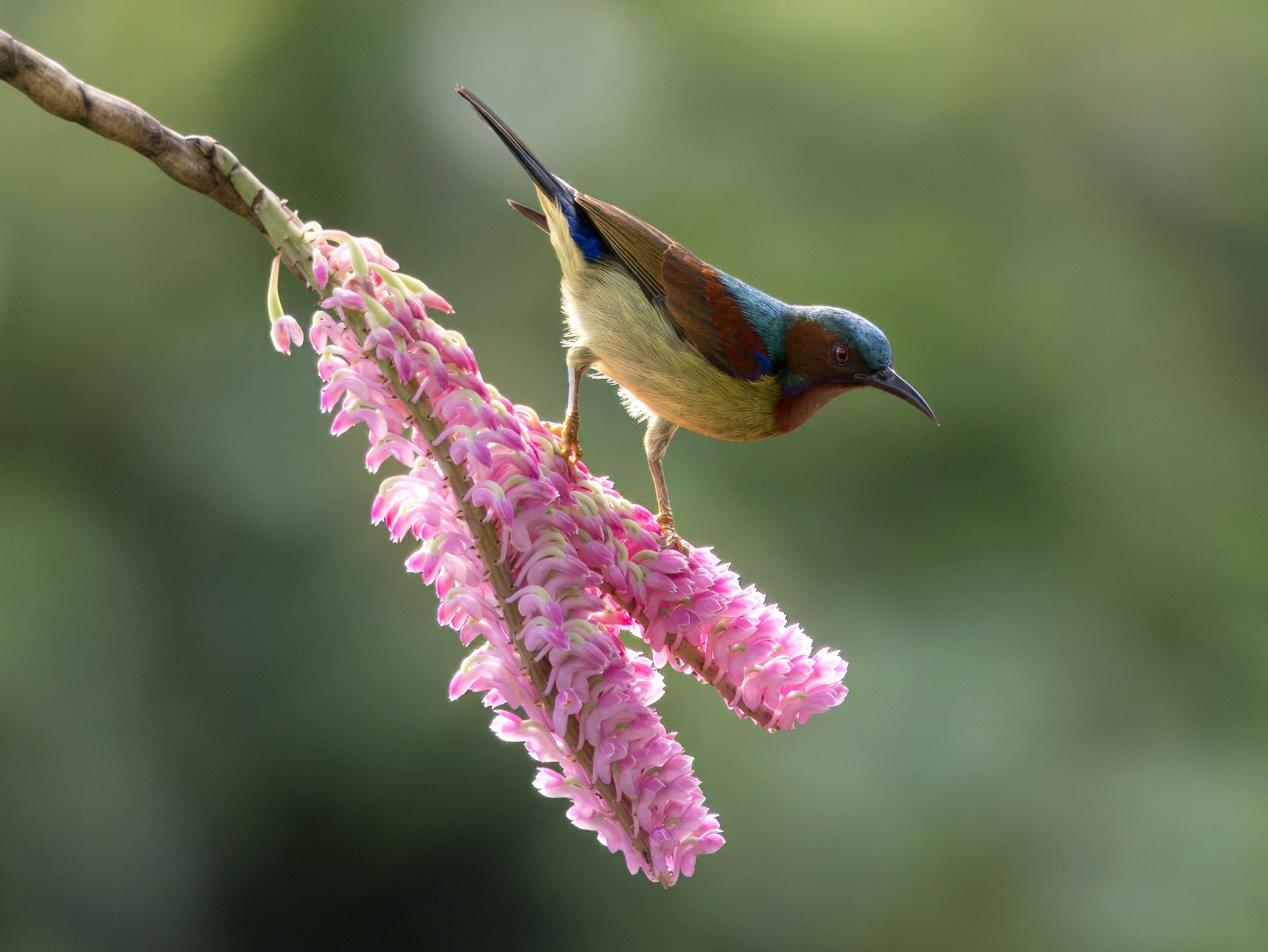
The Van Hasselt’s Sunbird (Leptocoma brasiliana) was also performing his acrobatic routine while feeding.

Not to be outdone, the Plain Sunbird (Anthreptes simplex) lingered nearby, on the lookout for a sweet treat of his own.
Soon, the sharp, high-pitched whistles of the Scarlet Minivet (Pericrocotus speciosus) caught our attention, drawing our eyes to a bright red flash high in the treetops.

Before long, the red flash was joined by several yellow flashes—his entourage of female Scarlet Minivets flitting gracefully among the branches.
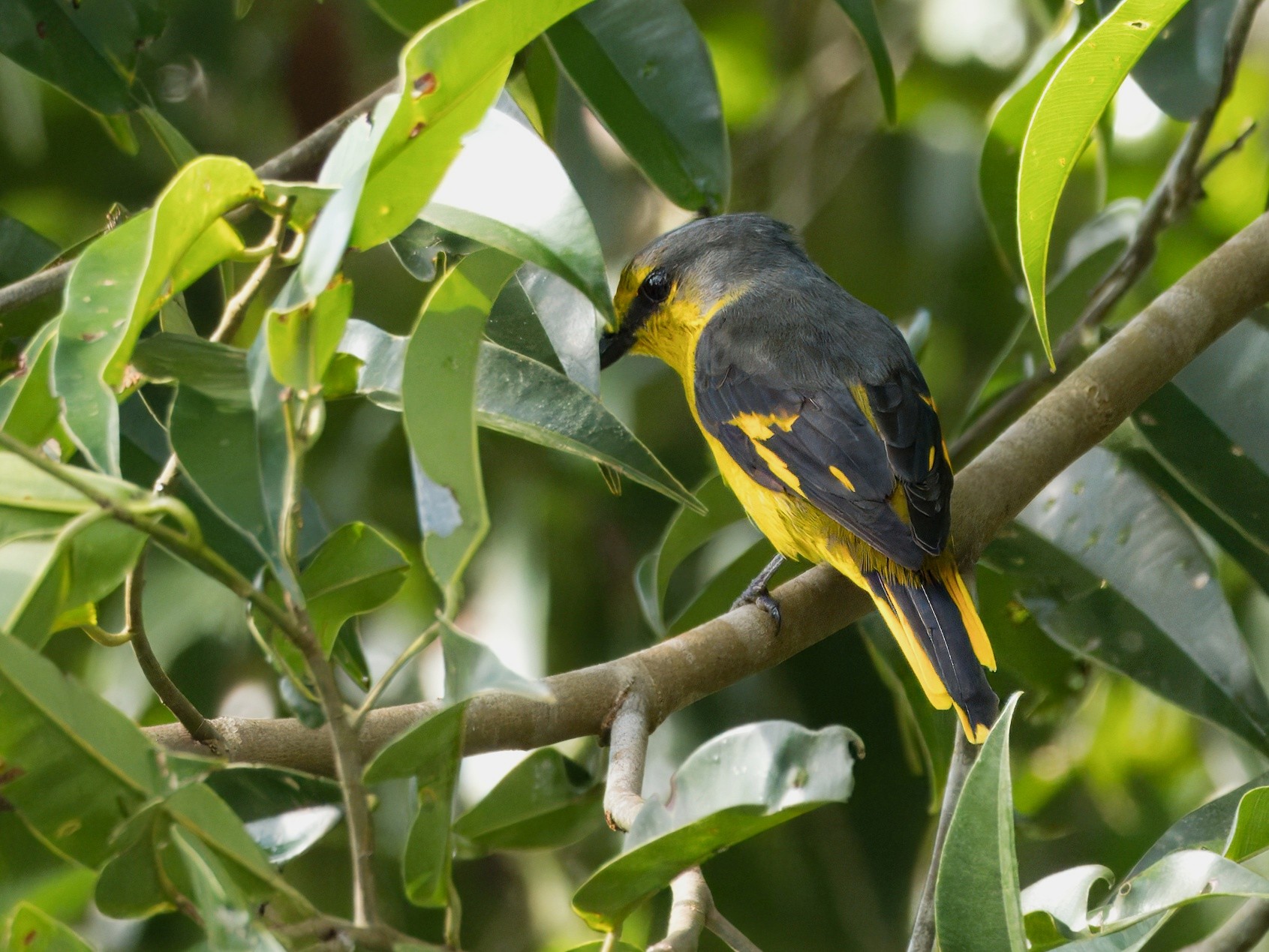
Also gracing the tower were Fiery Minivets (Pericrocotus igneus)—the males a striking orange-red…

…and the females a warm golden-yellow, their orange-red rump clearly setting them apart from the all-yellow female Scarlet Minivet.

For days we’d been listening to the Black-eared Barbet’s relentless, metronomic tuk-tuk calls echoing through the forest, without ever catching more than a glimpse. We secretly wished one might drop by the tower for a closer inspection—and one afternoon, our wish came true. A Black-eared Barbet (Psilopogon duvaucelii) suddenly popped up right in front of Hornbill Tower and settled in for a long, indulgent bath in a pool nestled in a tree hole.

From our perch atop the tower, we watched this seemingly intimate ritual alongside a small crowd of fellow birdwatchers, feeling a little like intruders peeking in on his privacy—but we simply couldn’t tear our eyes away.
Meanwhile, other birds queued up nearby, waiting for their chance at the public bath.

The Lesser Green Leafbirds (Chloropsis cyanopogon) soon got their turn, splashing about happily in the rain-filled tree hole.
The Plain Sunbird (Anthreptes simplex) waited patiently, but the barbets and leafbirds were taking their sweet time, so it eventually gave up and found an alternative bath a few storeys up.

Later, the Black-and-yellow Broadbill (Eurylaimus ochromalus) also enjoyed the refreshing soak. Honestly, after a long, hot day, we wouldn’t have minded a cool and relaxing dip ourselves.

And speaking of Hornbill Tower, it turned out to be the perfect perch for spotting Sabah’s famed hornbills. Over our time at Sepilok, we managed to see three species from here—the Rhinoceros Hornbill (Buceros rhinoceros)…
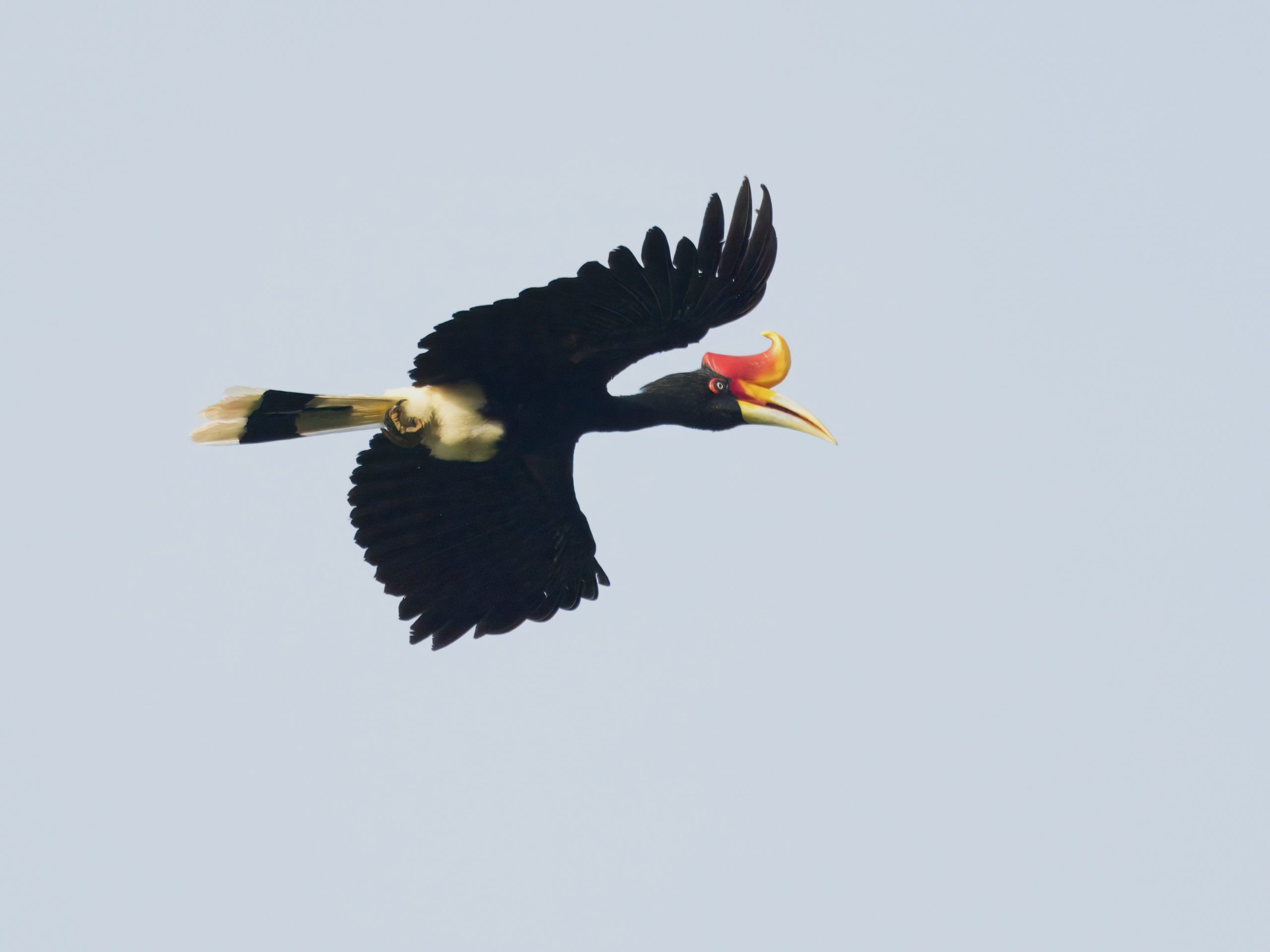
…the Black Hornbill (Anthracoceros malayanus)…

…and the Oriental Pied-Hornbill (Anthracoceros albirostris).

The towers also offered prime seats for mammal-spotting. After hearing the comical whoops of the North Bornean Gray Gibbon (Hylobates funereus) echoing through the forest, we were thrilled to finally spot not just one, but a pair of them swinging about like circus acrobats.

One of them even treated us to an entertaining solo of gibbon song, complete with all the high notes.
From the canopy tower, we also sighted a supporting cast of furry mammals— the sleek Black Prevost’s Squirrel (Callosciurus prevostii pluto)…
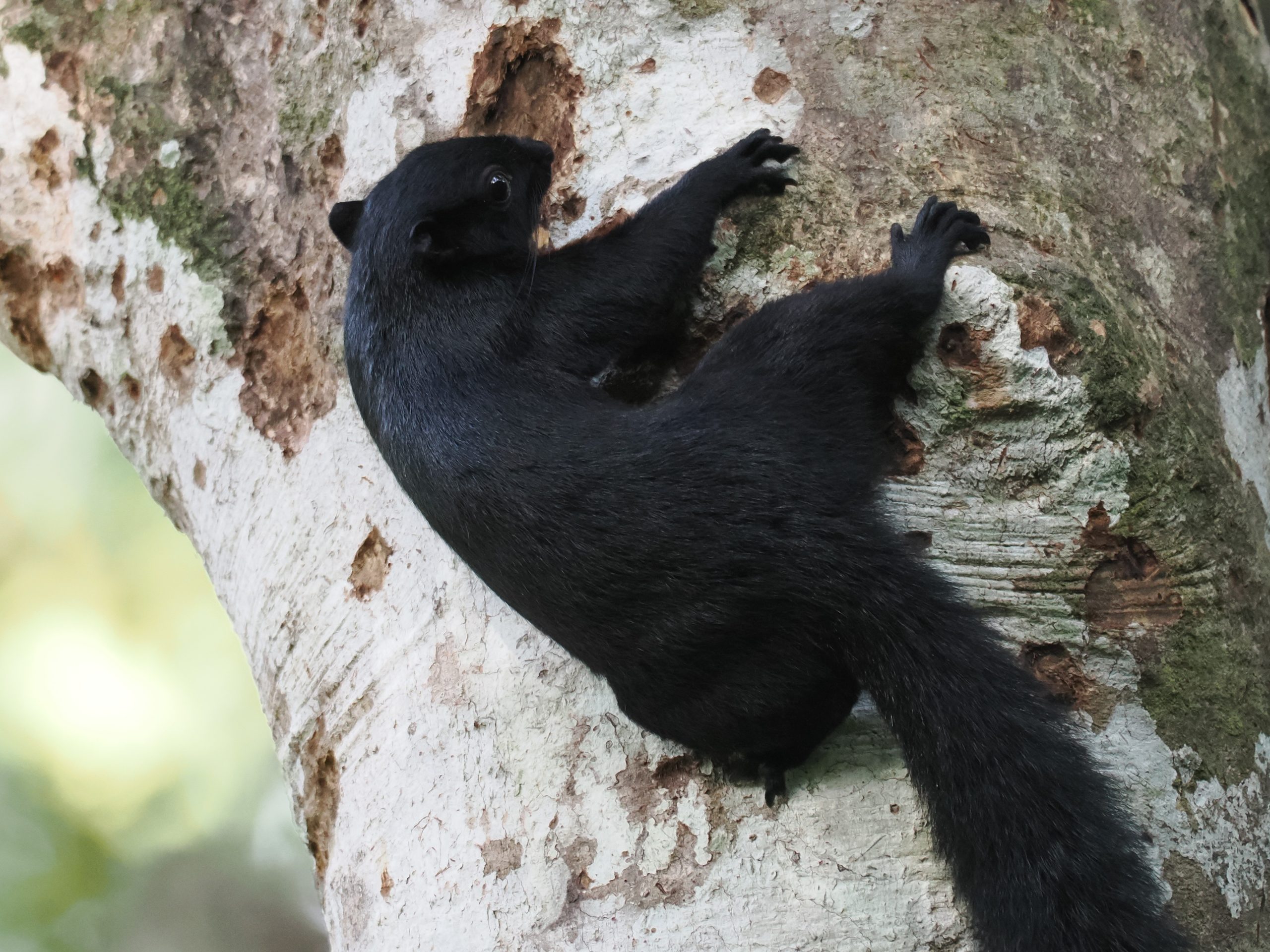
…the stately Pale Giant Squirrel (Ratufa affinis)…

…the adorable Maroon Leaf Monkey (Presbytis rubicunda)…

…and even the zippy Lesser Treeshrew (Tupaia minor).

The showstopper, however, was the Red Giant Flying Squirrel (Petaurista petaurista), gliding from tree to tree like a furry parachutist on a mission.

Trails That Lead to Wonder
The canopy walkway and towers were so enchanting that we hardly wanted to set foot back on the ground. Yet the forest trails offered a different perspective, revealing a new cast of creatures and surprises along the way.

Along the trails, we heard the elusive Diard’s Trogon calling every day, though it always managed to stay out of sight. One morning, while on the hunt for the trogon, a bold and inquisitive Bornean Black-capped Babbler (Pellorneum capistratoides) popped out to check us out, curious about what we were up to.

The Pitta path is known for harbouring Borneo’s mystical, colourful endemic pittas—and also where the Bornean Bristleheads had been recently spotted—so we dedicated some time to scouring the trail, hopeful for a glimpse of these elusive gems of the forest.

Following the trail deeper into the forest eventually brought us to the legendary Sepilok Giant—a towering Yellow Seraya (Richetia acuminatissima) tree that commands respect with its sheer size and age—at approximately 67 metres tall and between 800 and 1,000 years old. Standing beneath its massive trunk and gazing up at the sprawling canopy, we couldn’t help but marvel at the centuries of life it has witnessed—and secretly hoping a Bornean Bristlehead would peek out from one of its branches.

After nearly completing the loop trail and looking forward to returning to civilisation, we were stopped in our tracks by a broken bridge. We tried a parallel trail as a detour, but after some trekking, it turned out to be a dead end, forcing us to backtrack. Finally, back at the broken bridge, we discovered another trail that successfully led us out of the forest and back to civilisation.

That mini trail adventure turned up some hidden gems: the Buff-necked Woodpecker (Meiglyptes tukki)…
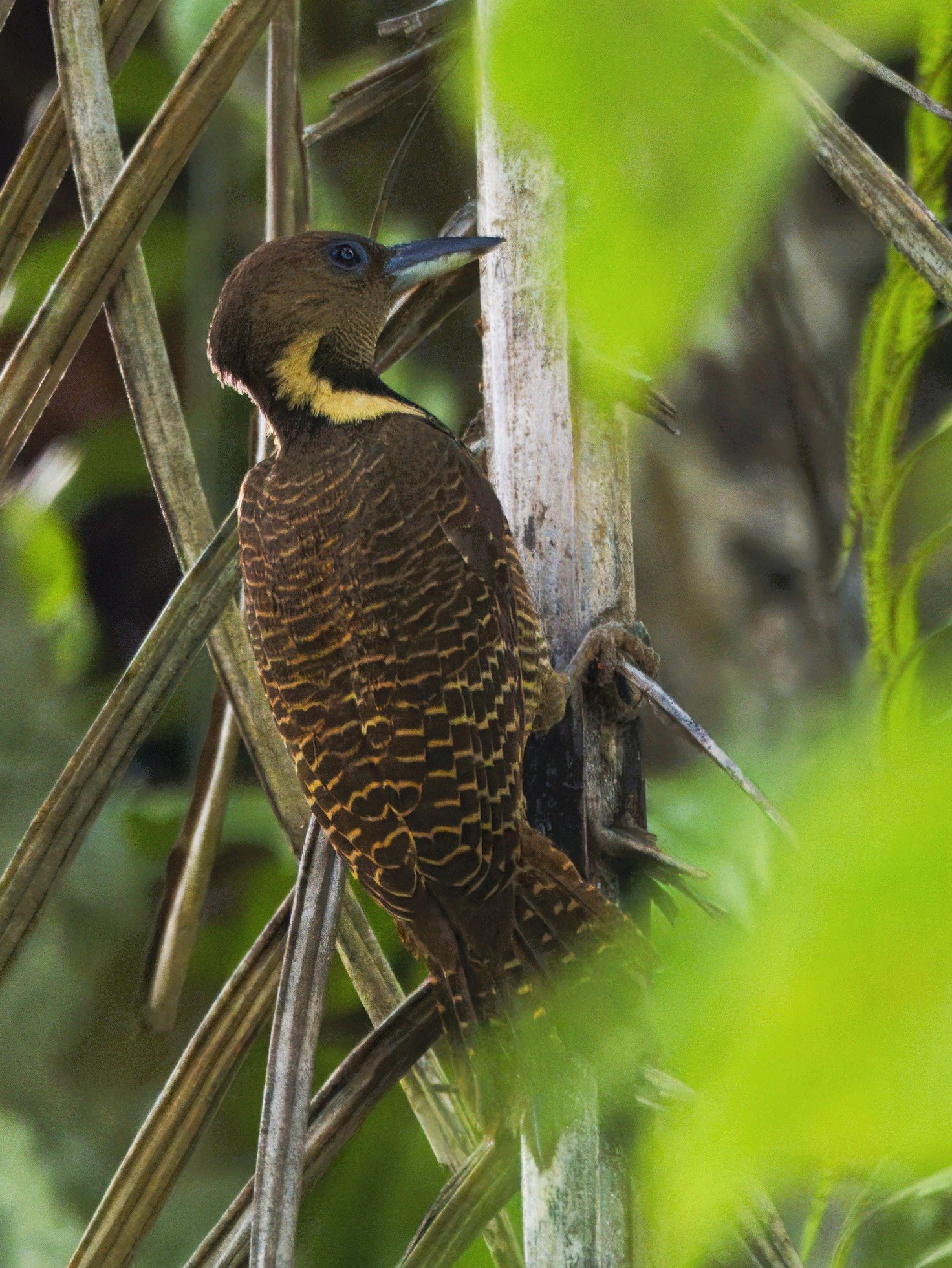
…the Maroon Woodpecker (Blythipicus rubiginosus)…

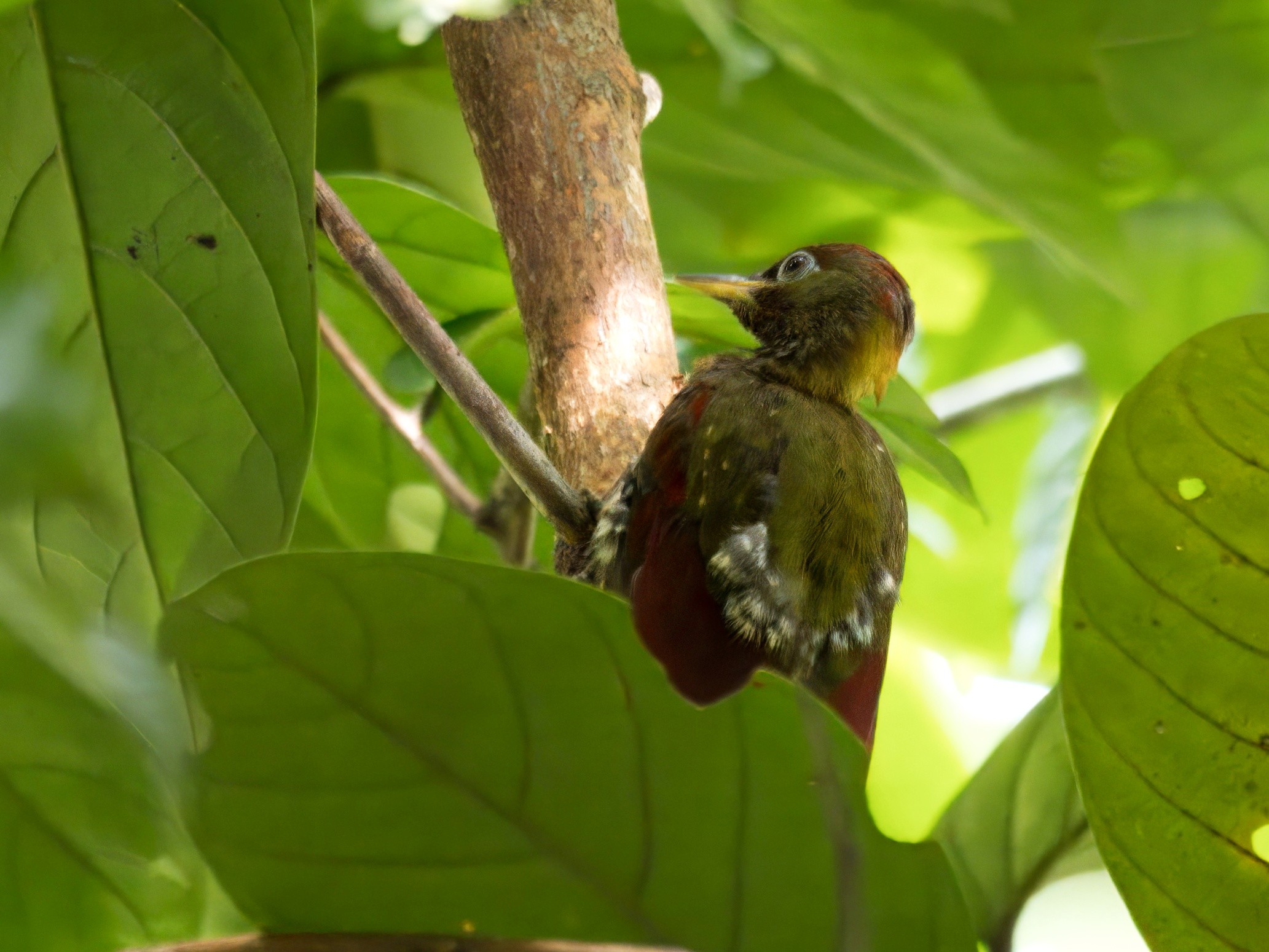
…and the Crimson-winged Woodpecker (Picus puniceus), each seemingly playing a game of hide-and-seek among the foliage.
During one of our early-morning forays along Pitta Path in search of the difficult-to-find pitta, a family of Gray-hooded Babblers (Cyanoderma bicolor) distracted us with their playful calls. Trying to photograph them was no easy task—like fidgety children, they darted about constantly, refusing to sit still for even a single shot.

More obliging were a family of Black-and-red Broadbills (Cymbirhynchus macrorhynchos), who stopped and perched for a few seconds—just enough for a few shots to be taken.

On our countless hikes up and down Pitta Path, the resident Sabah Partridge (Tropicoperdix graydoni) proved to be an endless source of amusement. Much like a curious pet chicken, it would trot along behind us, keeping a watchful eye as we poked into every bush hunting down the maddeningly elusive pitta.

When he felt ignored, he’d let out a little call, demanding our attention.
After three days of fruitless searching and coming up empty on our target—the Black-crowned Pitta (Erythropitta ussheri)—we were beginning to lose hope. On our third and final day, we ran into a local birder familiar with the pitta’s habits, and with his help we eventually managed to see it.
The sheer joy of encountering this black-crowned beauty was indescribable.

Butterflies Flutter By
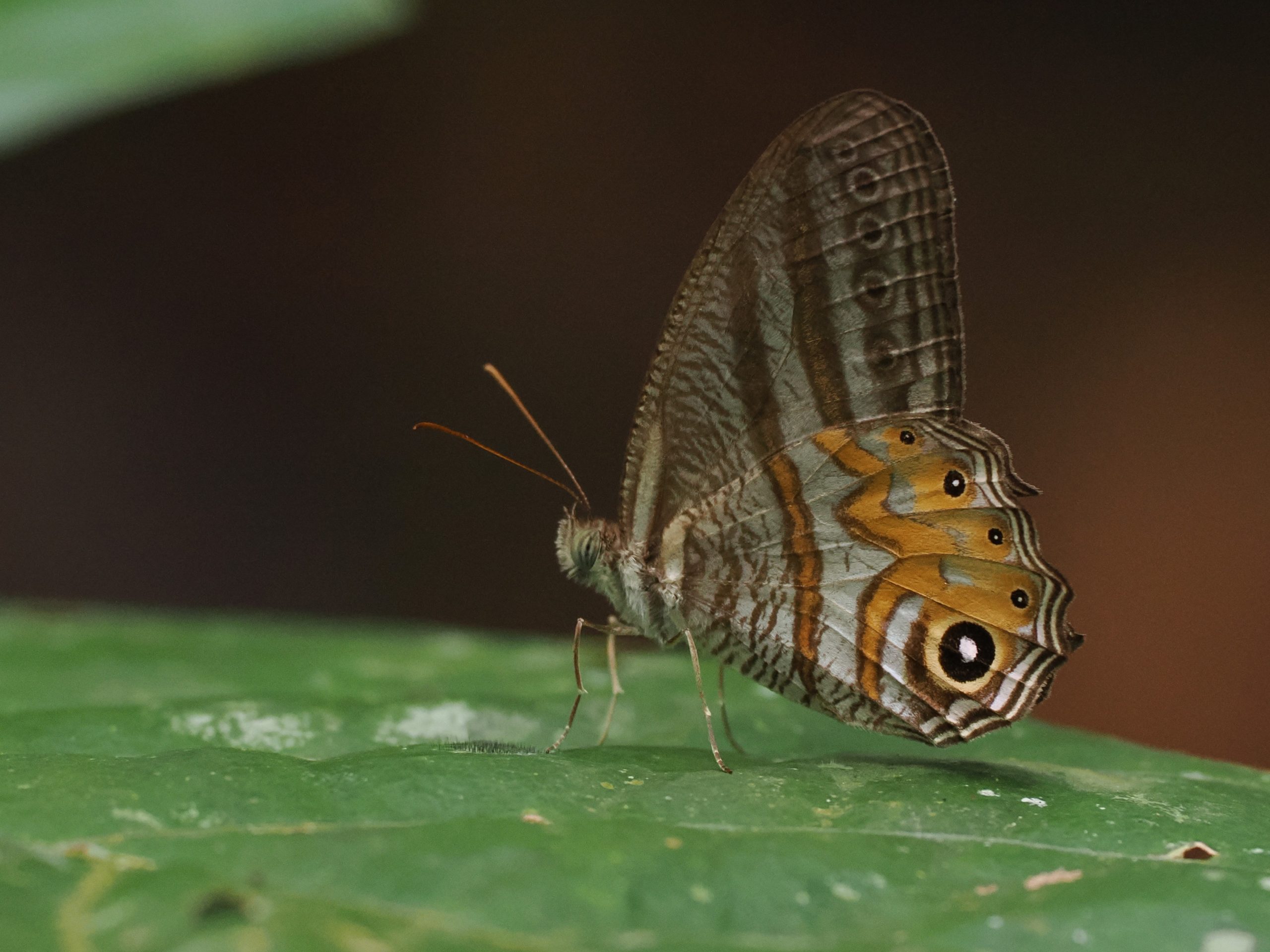
Although our primary mission was the birds, we couldn’t help but notice some of the rainforest’s fluttering gems along our treks. These are a few of the butterfly beauties we were lucky enough to spot and photograph:
The Sylhet Oakblue (Arhopala silhetensis)

The Elegent Cyclops (Erites elegans)
The Yellow Banded Awl (Hasora schoenherr)

The Small Leopard (Phalanta alcippe)

The Satellite Yeoman (Cirrochroa satellita)

The Short-banded Viscount (Tanaecia aruna)

On the Trail of the Bornean Bristlehead
Of course, our primary target at the RDC was the legendary Bornean Bristlehead (Pityriasis gymnocephala). Why does every birder dream of seeing him? He’s bald, he’s bold, and he’s found only in Borneo!
His mugshot was plastered everywhere—on the informational boards…

…on the posters…

…at the tower entrance…

…and on the buildings.

His mugshot even appears on the restaurant menu! As if to taunt us, every time we dined at the Keruing Cafe.
Unfortunately, local birders warned us that only a single group of Bristleheads remains roaming around the RDC, possibly as few as two birds in the flock. The odds of actually seeing one were slim. We did hear their crow-like, jarring calls once, but the star never showed up in person. In the end, we had to be content with his mugshot as a keepsake.
Our Rainforest Retreat
We stayed four nights at the Sepilok Bed & Breakfast, conveniently located just a few hundred metres away from the RDC entrance—perfect for darting in and out of the park. The lodge even offered packed breakfasts on request, which came in handy for birdwatchers like us, sneaking into the park at ungodly hours to catch the early risers before sunrise.

The B&B had a cozy, relaxed vibe, surrounded by greenery and the constant soundtrack of forest life. A family of White-crowned Shamas (Copsychus stricklandii) roamed the grounds, serenading us each morning as we set out at dawn. Right in front of our room stood a gigantic fruiting fig tree—ideal for a spot of birdwatching on rainy days. From there, we spotted bulbuls, tailorbirds, fantails, barbets, and even hornbills.
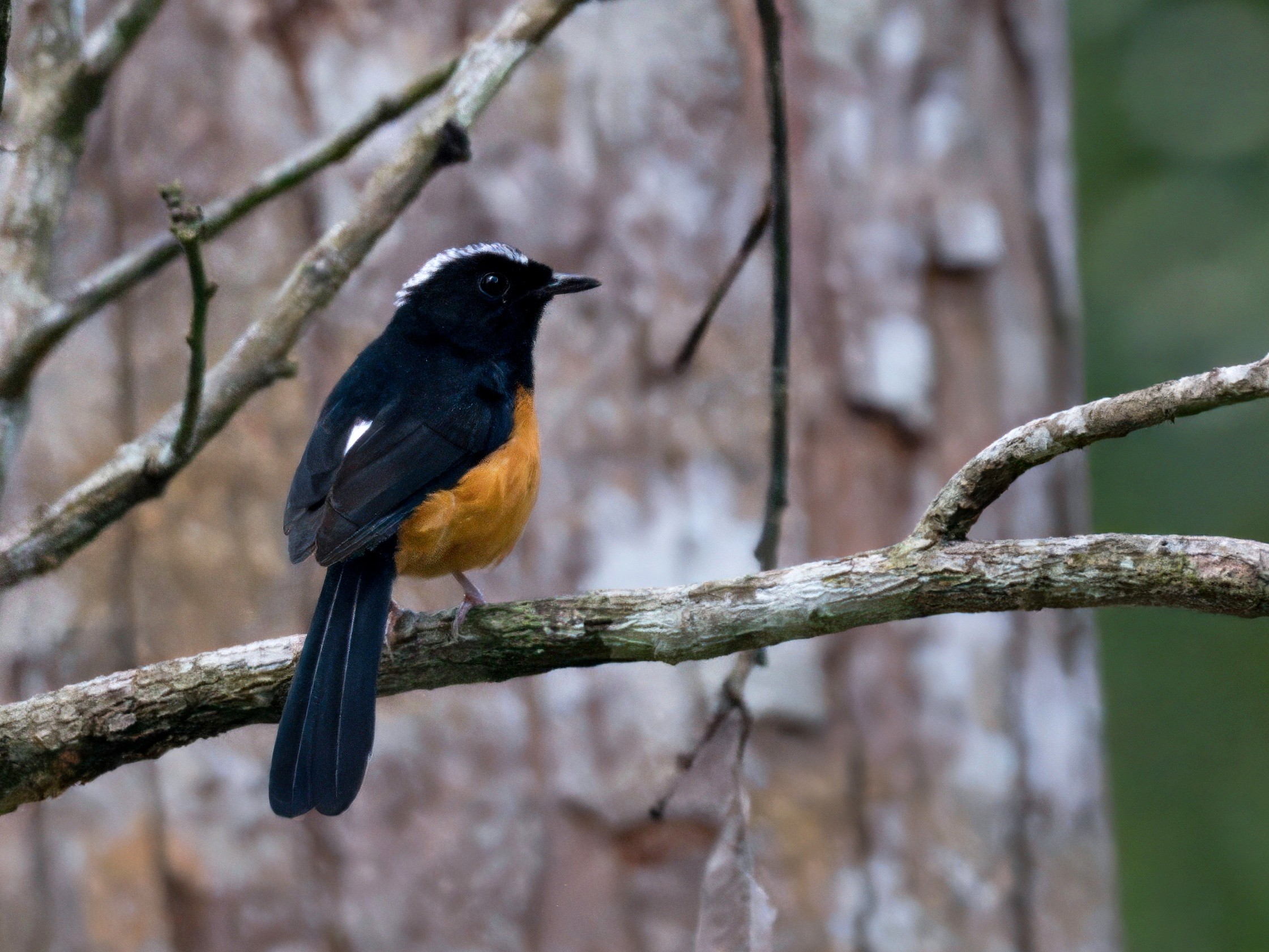
Our visit to the Sepilok Rainforest Discovery Centre gave us a good look at the rainforest and its many residents, from the playful gibbons to the tiny, elusive pittas. Yet, the Bornean Bristlehead remained just out of reach, a reminder that there’s still more to discover. We’ll definitely have to come back someday, in the hope of finally crossing this legendary bird off our list.
Catch all our bird sightings in the eBird trip report here:
https://ebird.org/tripreport/410700?view=photos