Funabashi Sanbanze Seaside Park
Last Updated on 30 April 2026
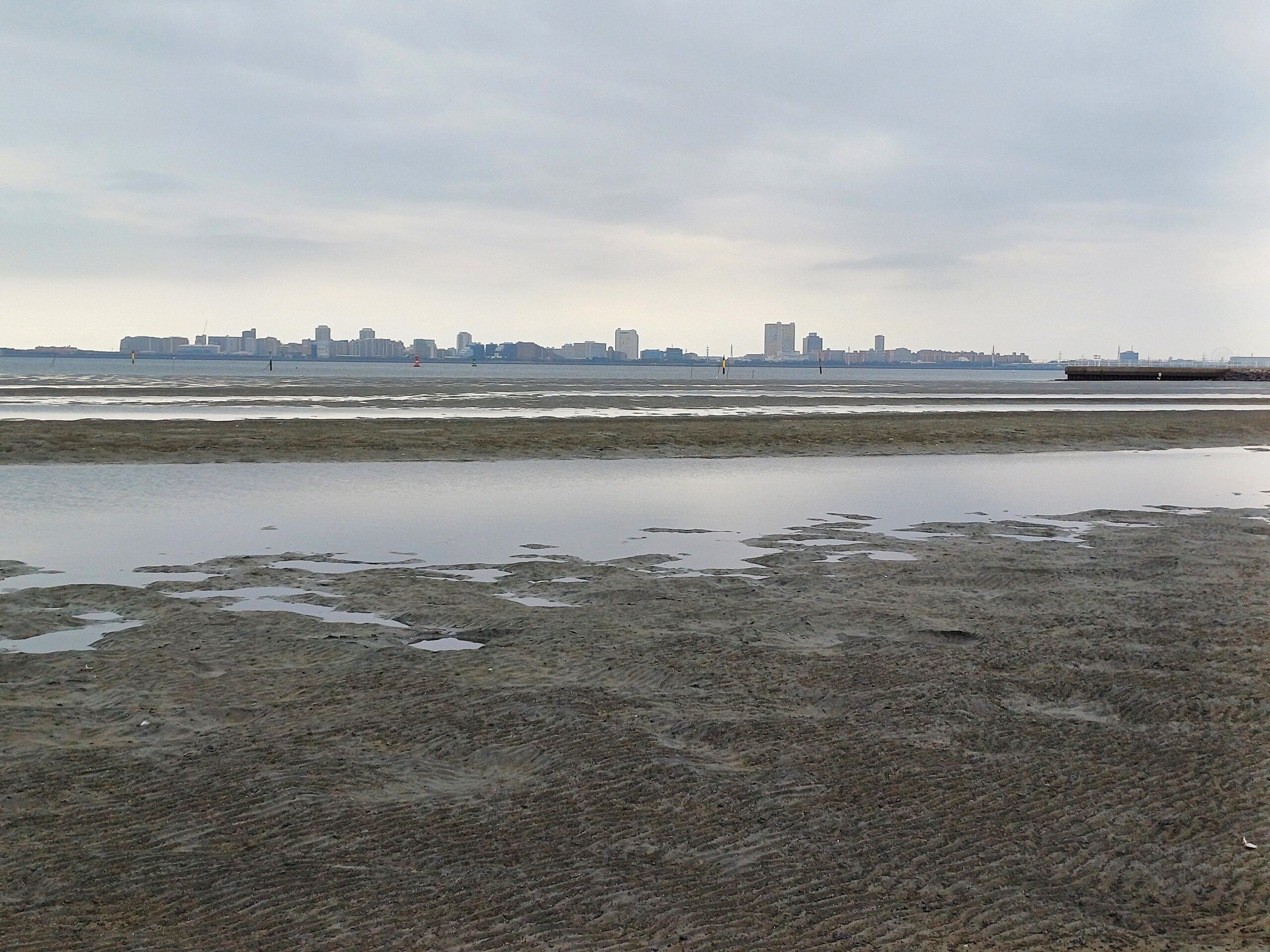
Tokyo is a city that hums, buzzes, glows. But just beyond its electric pulse lies a quieter rhythm. Situated at the edge of Tokyo Bay is Funabashi Sanbanze Seaside Park, where a vast stretch of tidal flats seems to stretch into infinity. At low tide, the sea retreats dramatically, exposing glistening mudflats rippled with tiny channels, dotted with crabs, and alive with movement.
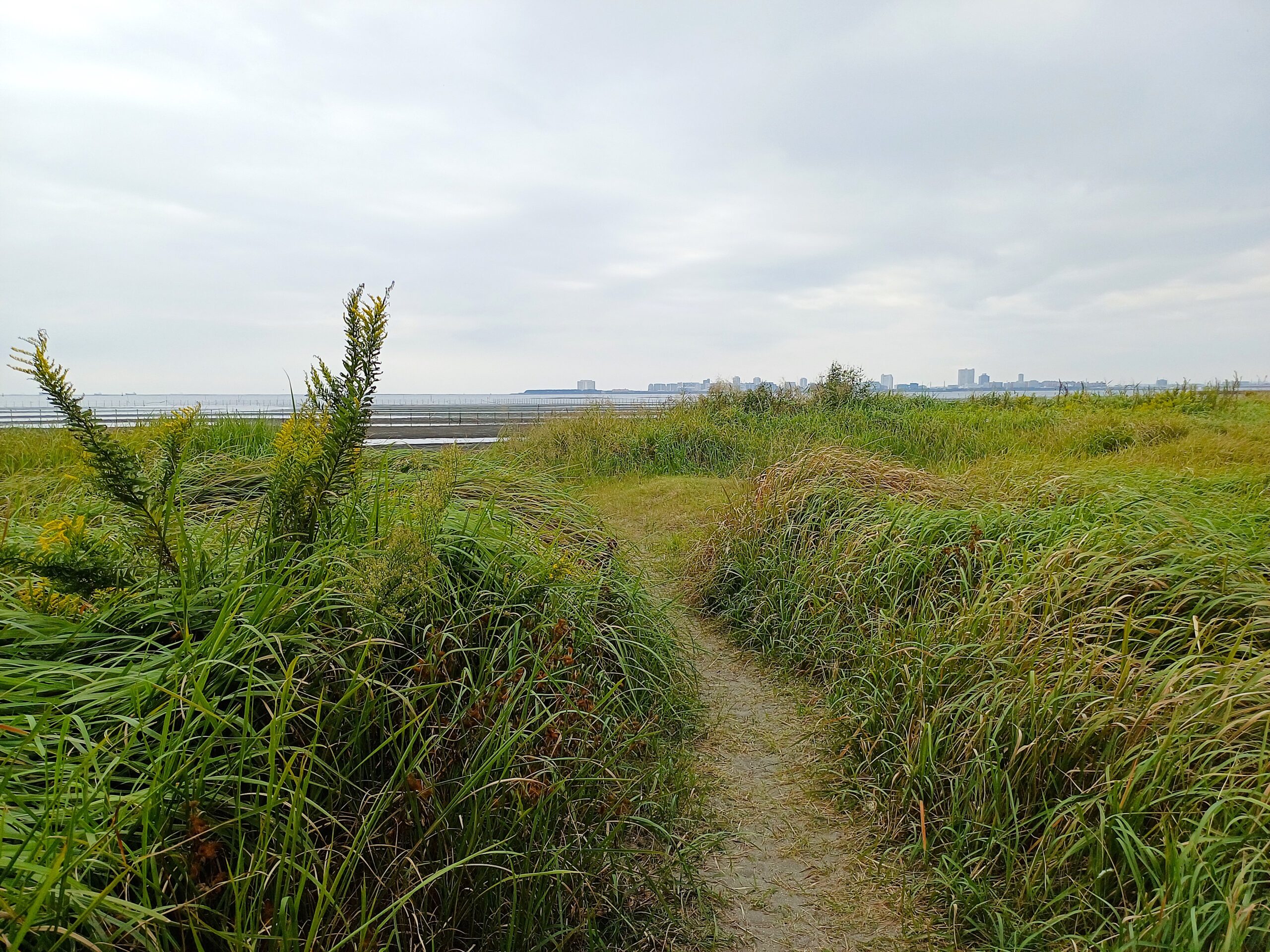
Reaching the place wasn’t exactly a walk in the park—it required several train transfers and a tedious 2.5-km walk through an uninspiring industrial area. Tackling the last stretch on a rental bicycle, we pedalled through suburban neighbourhoods at first, then navigated a busy main road that sliced through the industrial estate, before finally arriving at Funabashi Sanbanze Seaside Park. At the park entrance, a narrow man-made trail through the tall grass led us onto the mudflats.
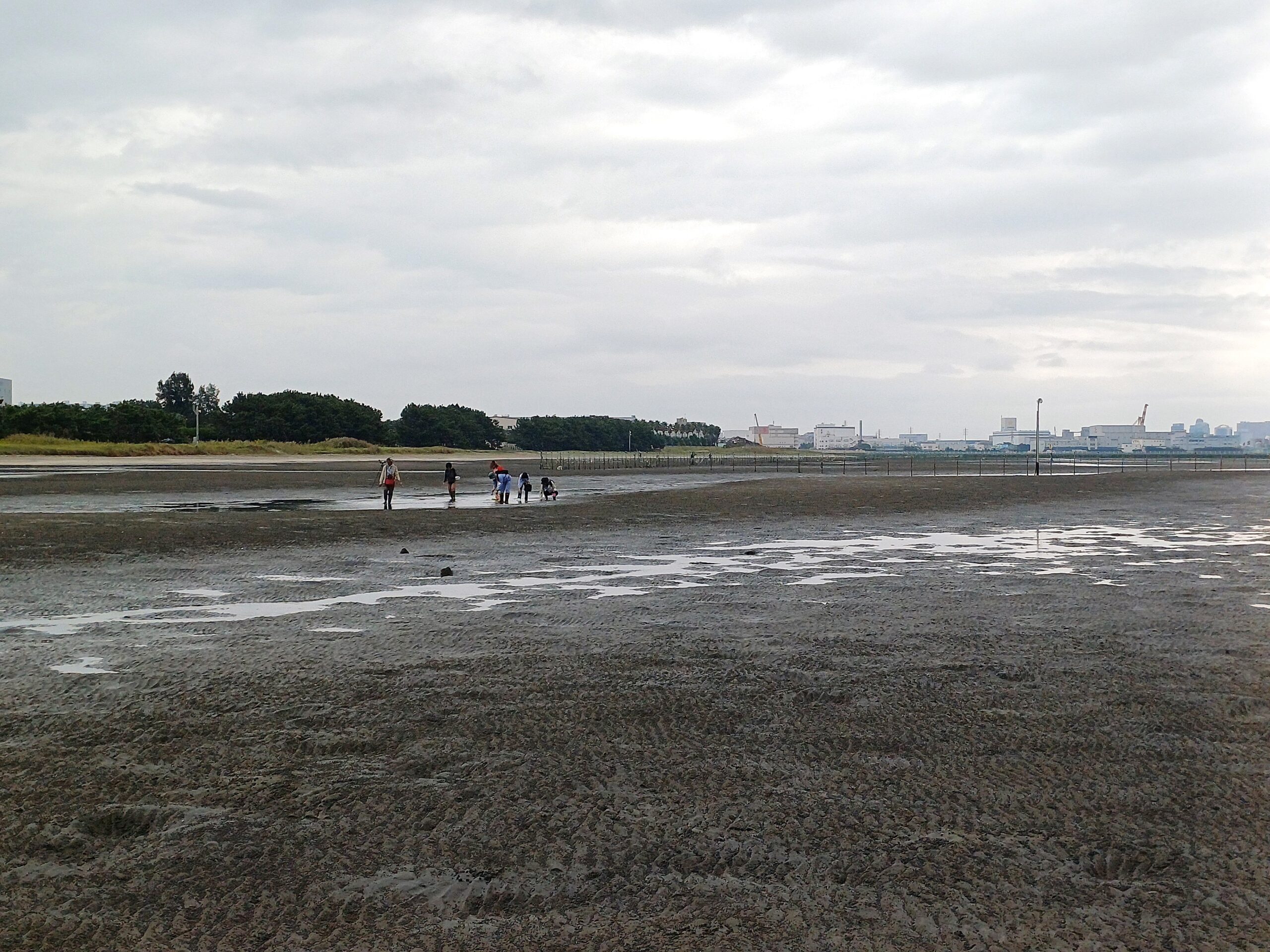
It was a cloudy day, perfect for a seaside excursion. There were several groups of people trampling on the mudflats, some birdwatchers like us, while others were hunting for crabs, clams and other sea creatures.
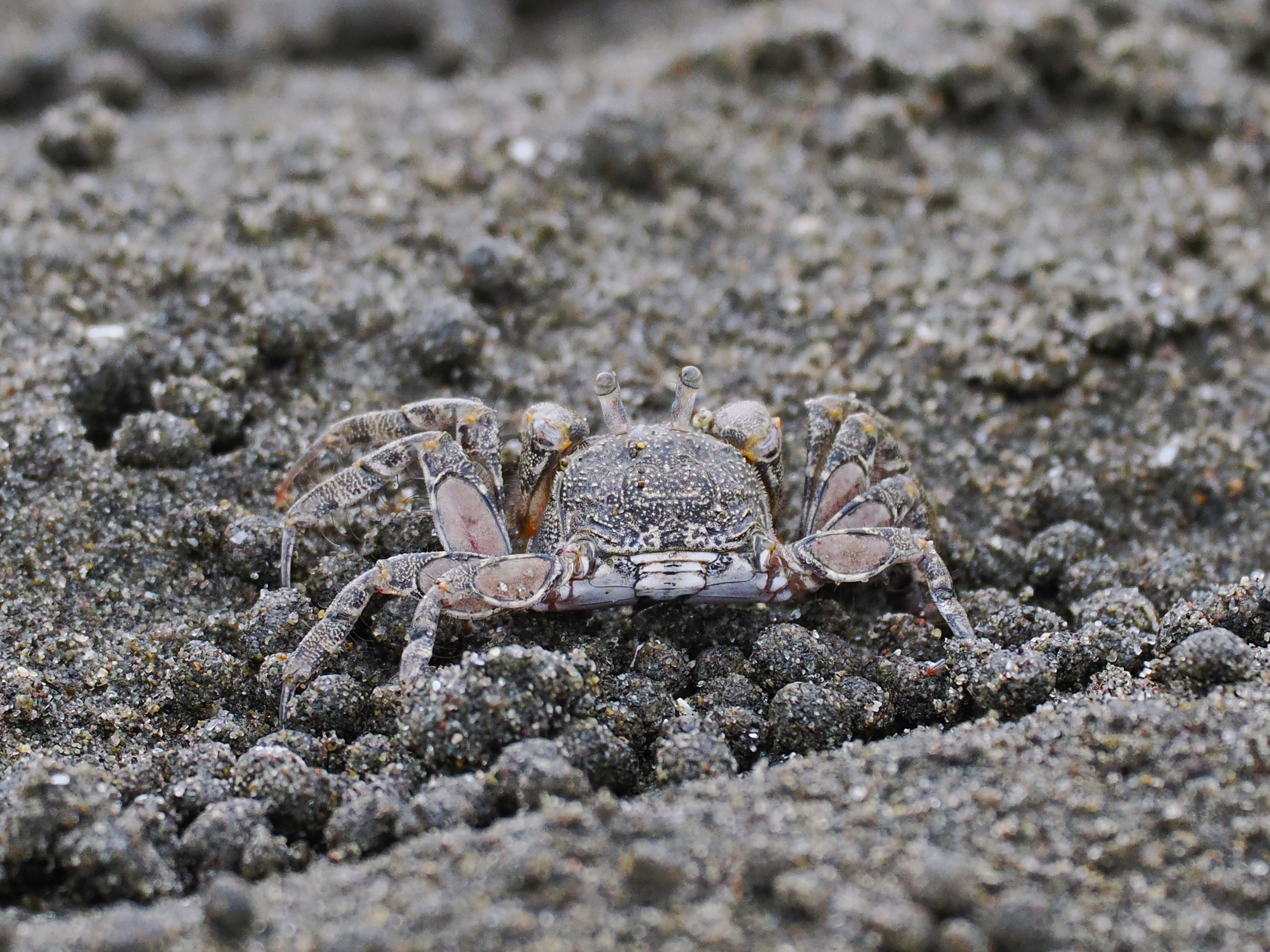
Taking cue from them, we gingerly made our way across the mudflats, cautiously avoiding the soft, sinking spots and sticking to the firmer sections of the mud. With each step we took, tiny crabs hurriedly scurried back into their burrows. Here’s a big one, bravely staring at us as we approached.
From afar, we spotted a group of Sanderlings foraging on the mud.
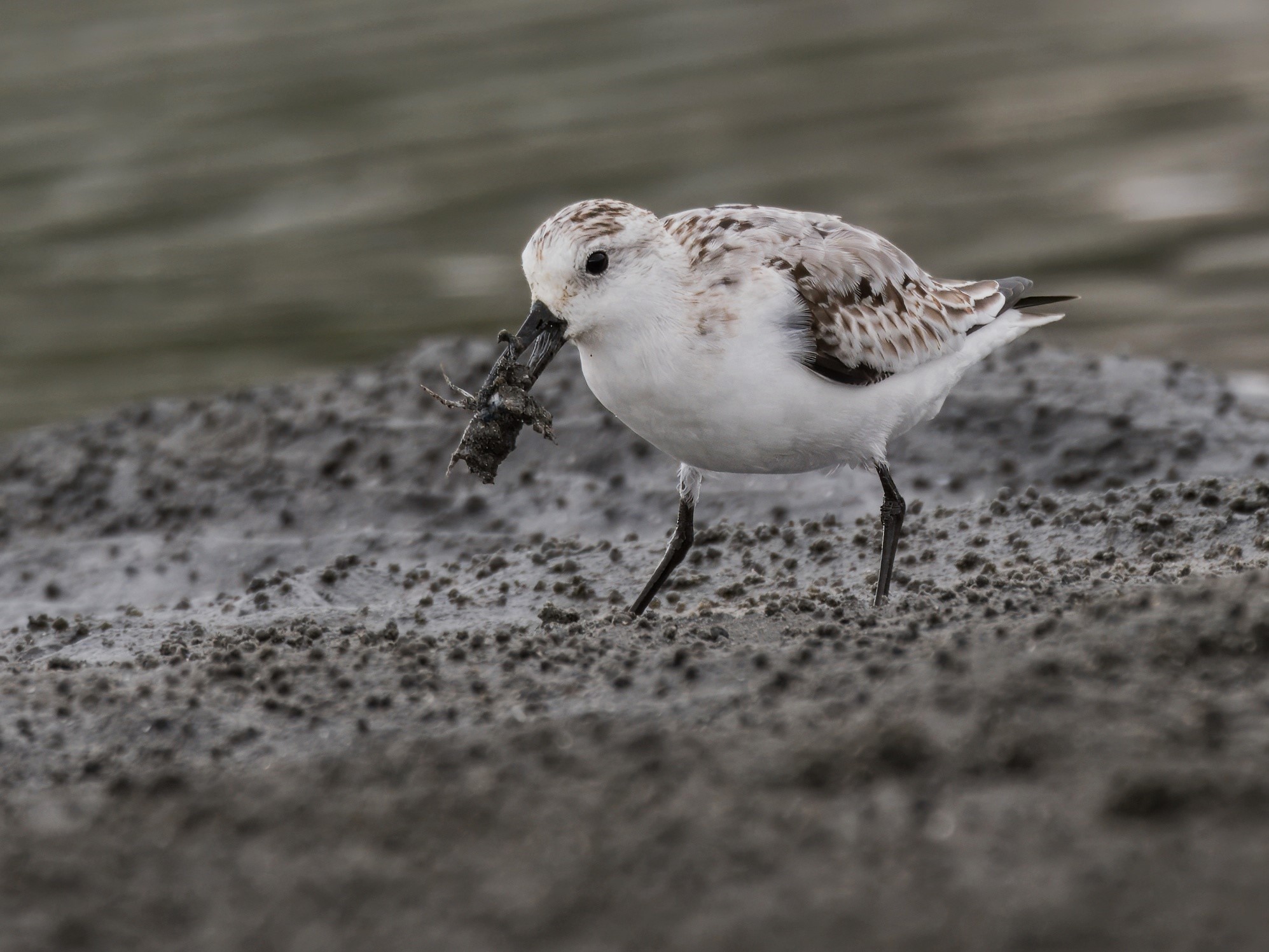
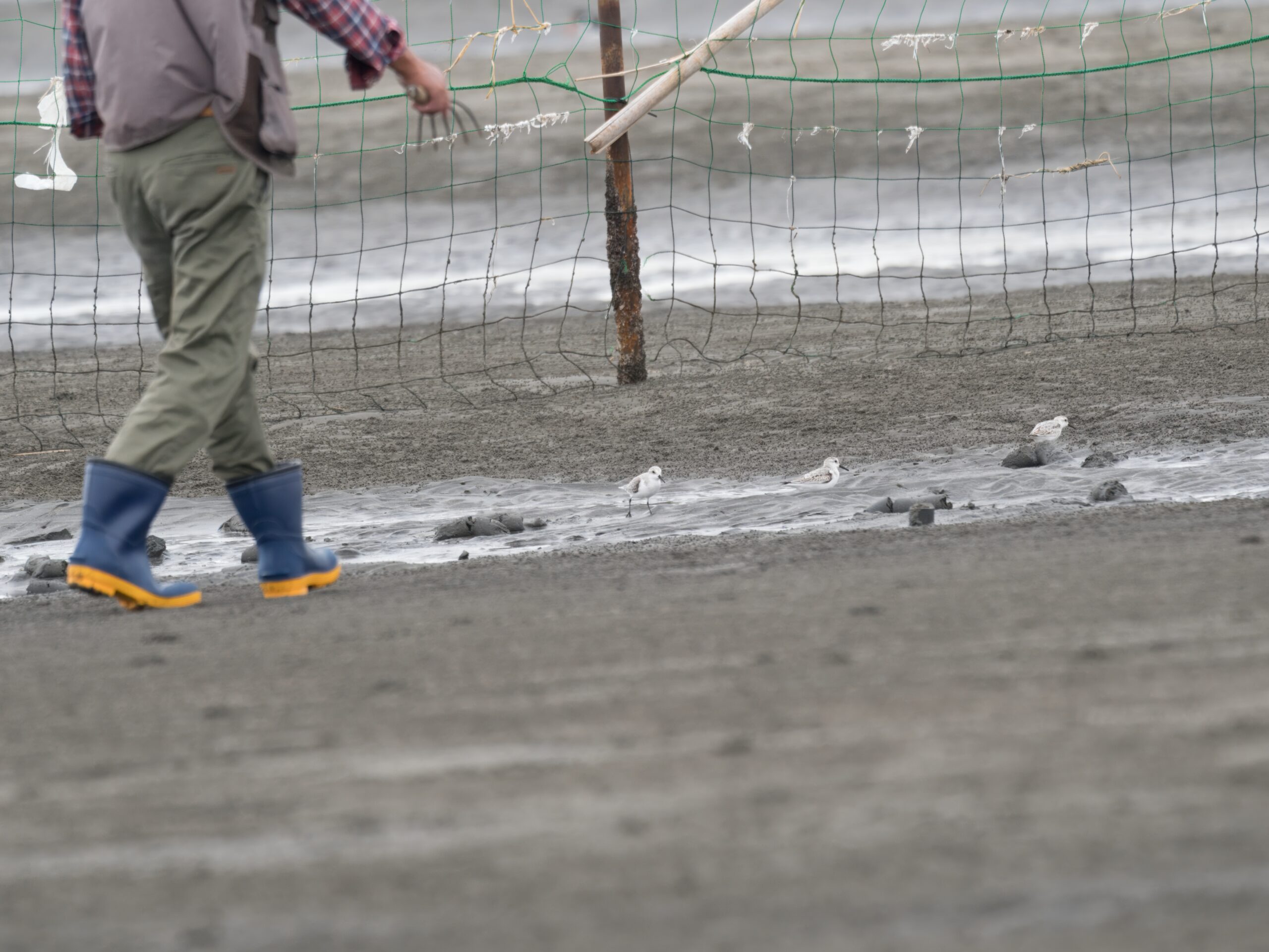
As we were about to slowly and quietly sneak up on the Sanderlings, a rake-wielding man barrelled through and went Freddy Krueger on the unsuspecting birds. The birds inevitably took off and flew away into the distance.
We then decided to venture toward the shoreline to check out the flock of seagulls lounging at the edge of the mudflat. There must have been a gazillion of them, all attempting to catch a few winks.
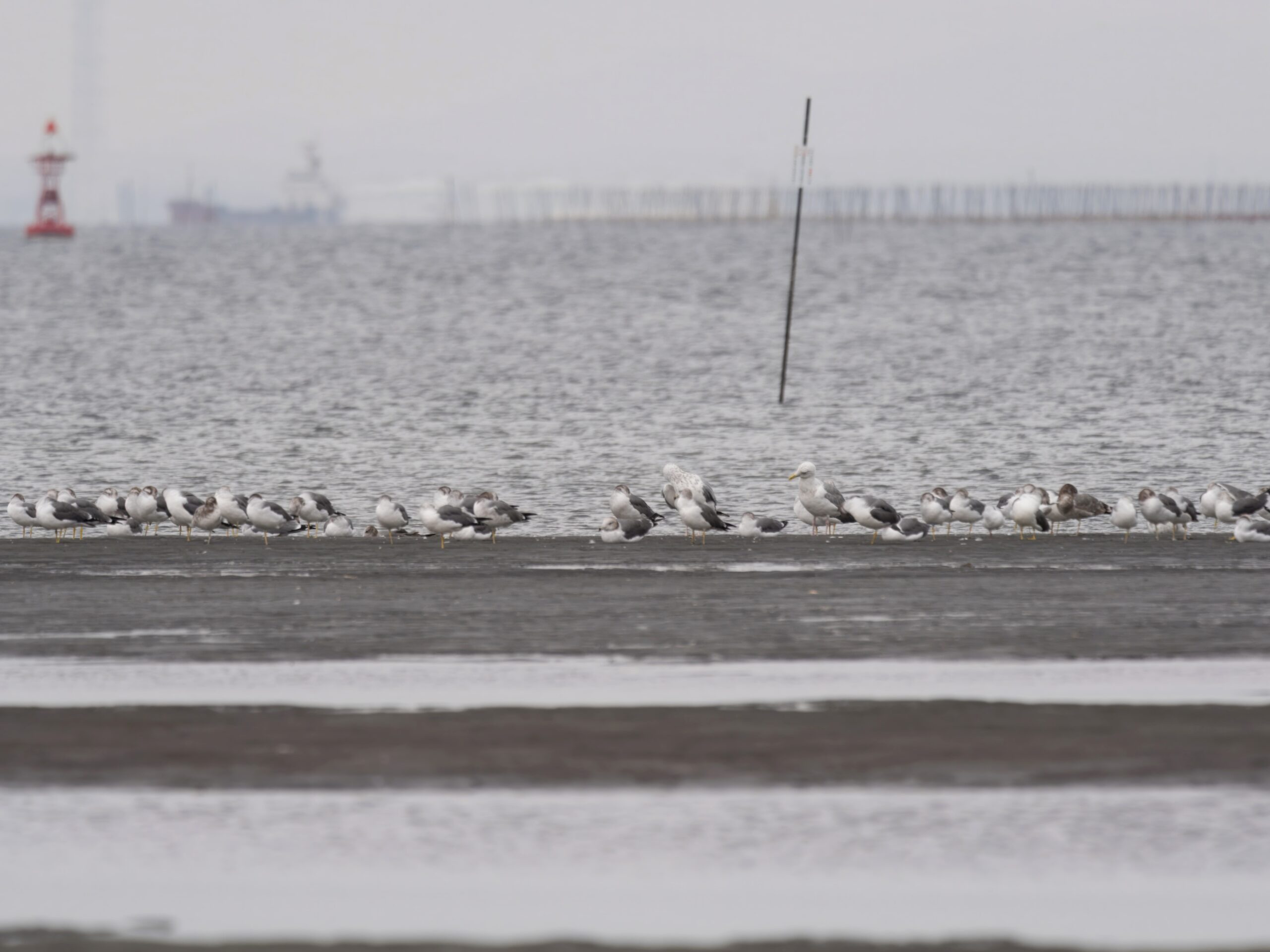
Despite their distance, we squinted hard to identify the different types of gulls, which proved tricky since they all looked so alike. After much effort, we managed to make out the Slaty-backed Gull…
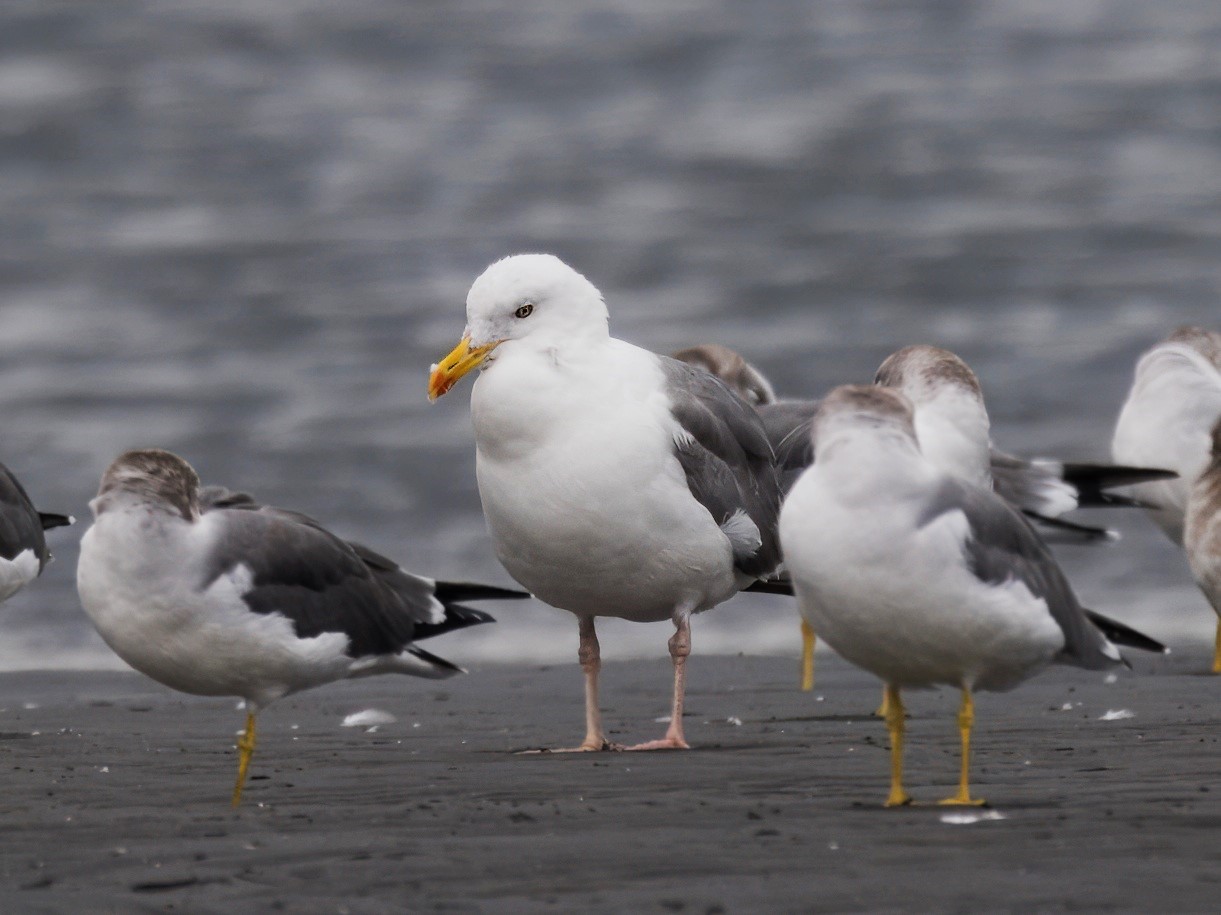
…the Black-headed Gull…
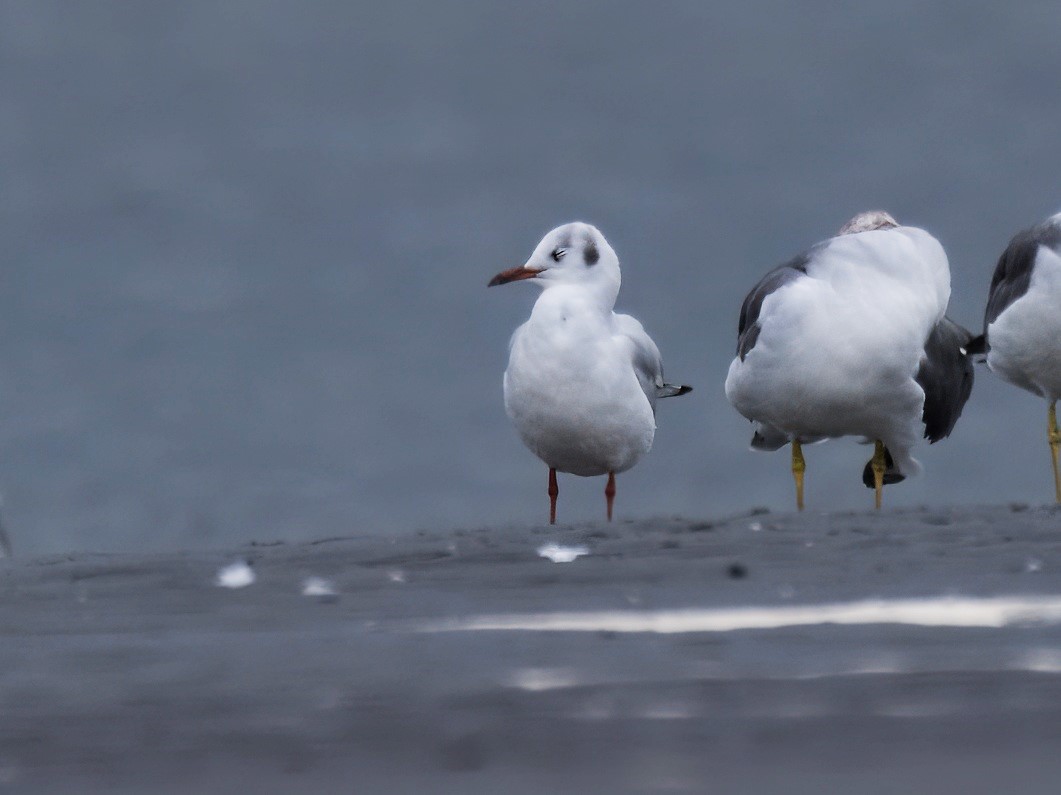
…and the most common of them all, the Black-tailed Gull.
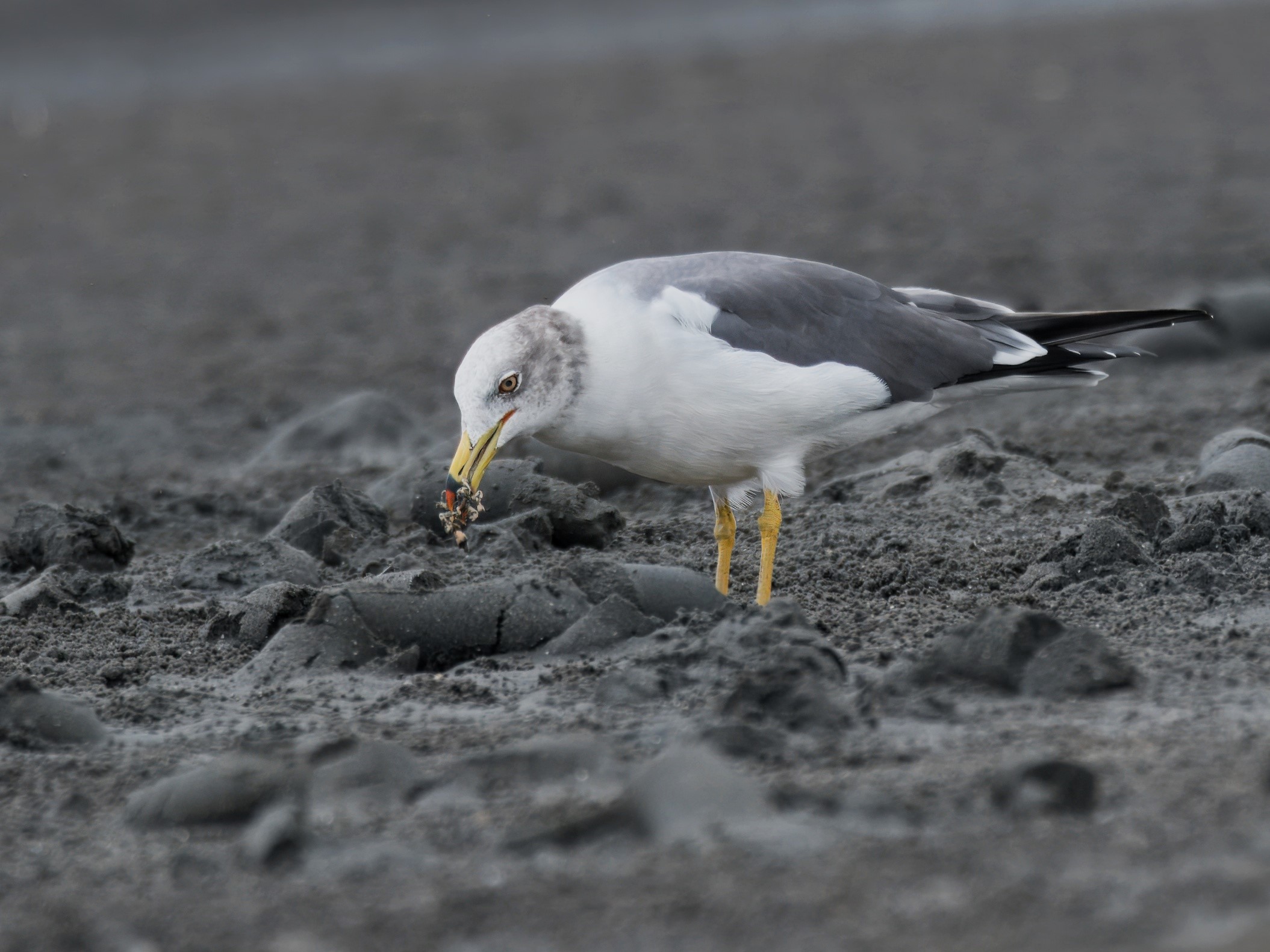
Continuing our walk haphazardly across the mud, we spotted the Red-necked Stints…
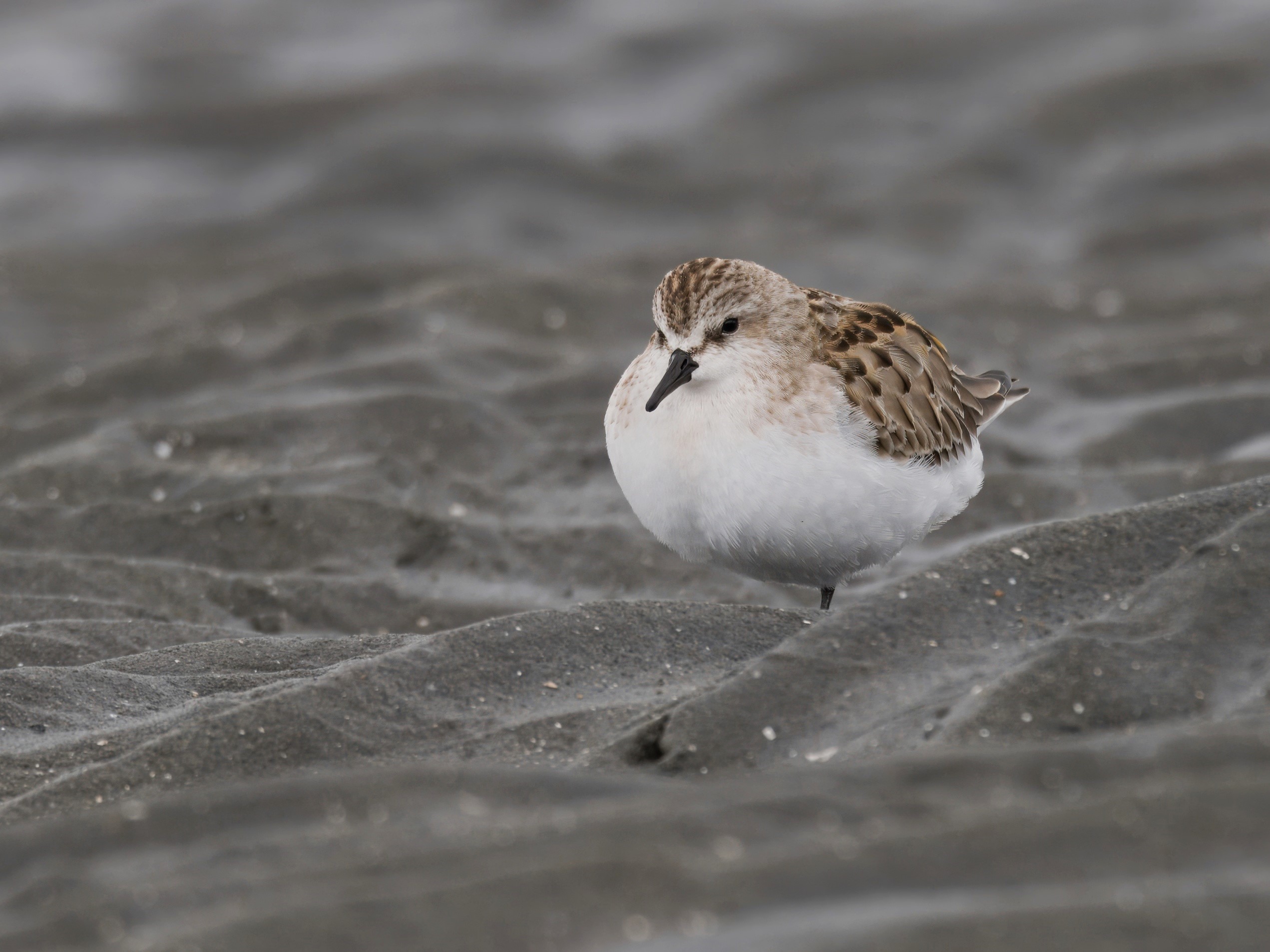
…the Dunlins…
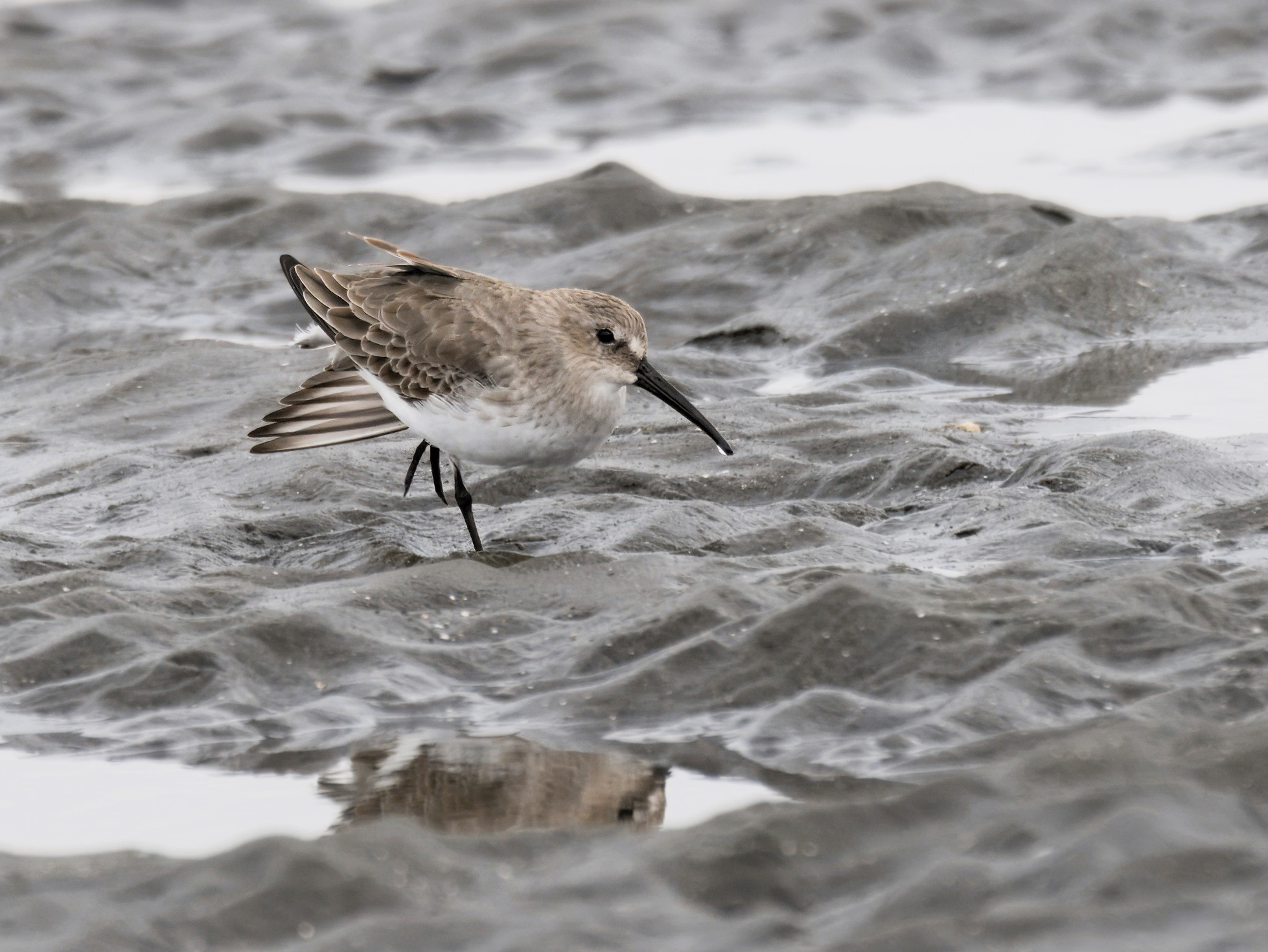
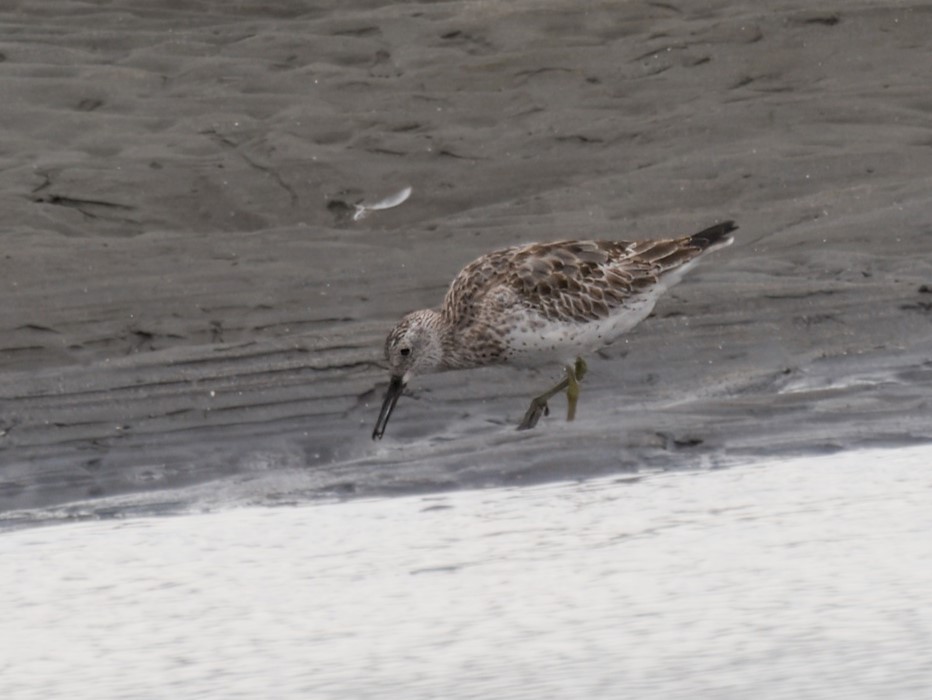
…and the Great Knots—each looking like they were cut from the same mould. We had a hard time telling them apart, based on the lengths of their bills.
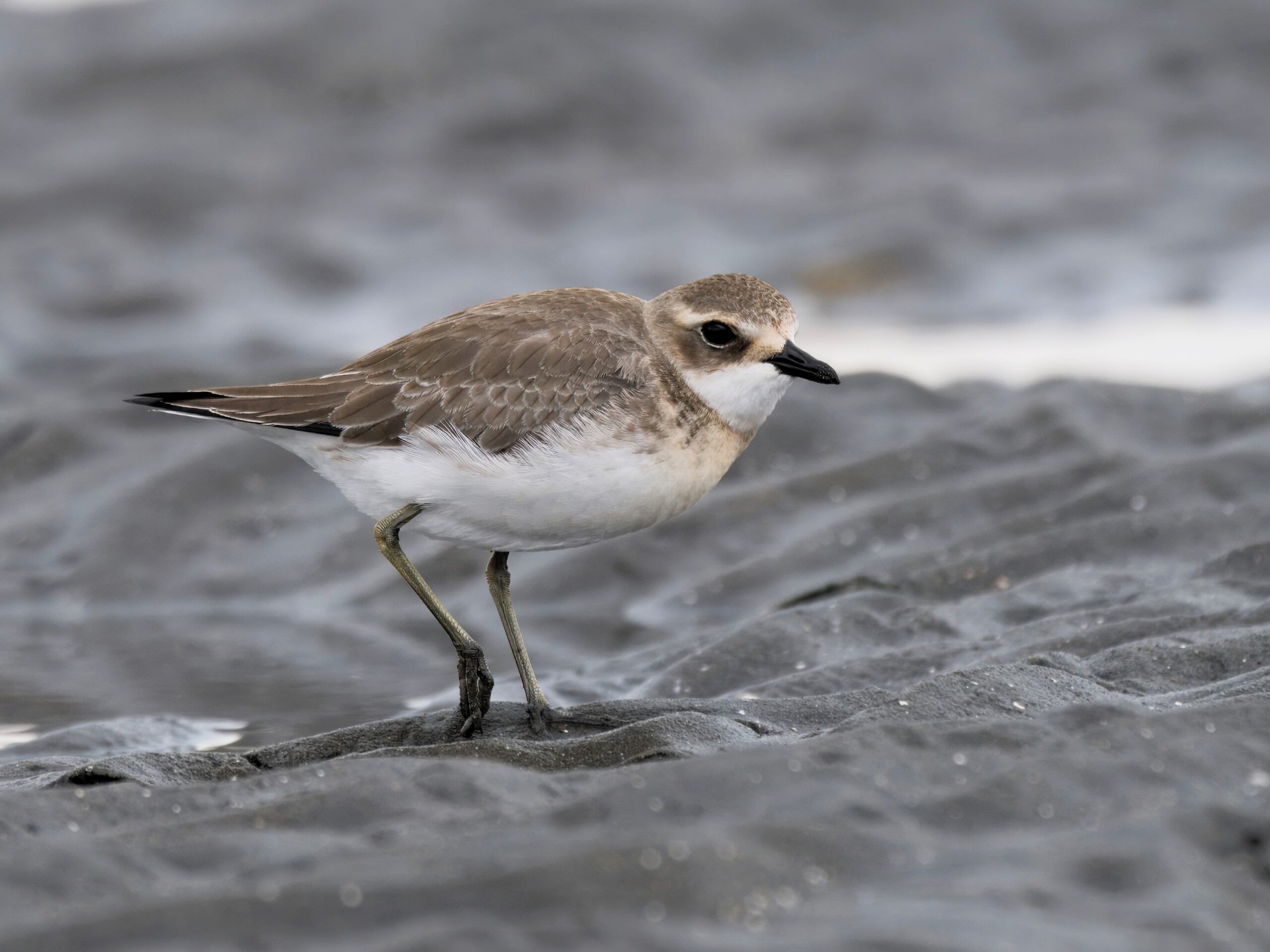
Also scattered around were the Siberian Sand-Plovers…
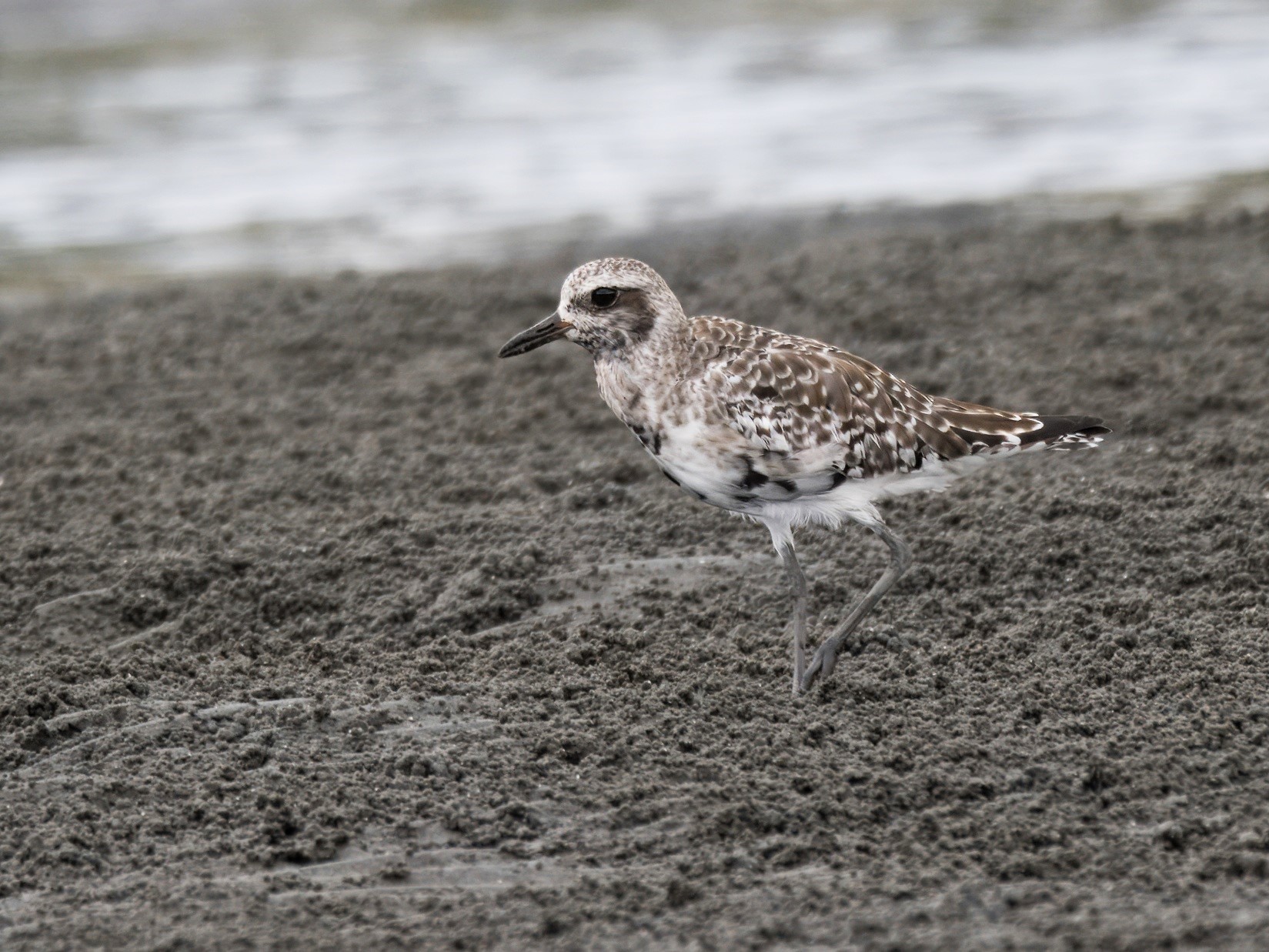
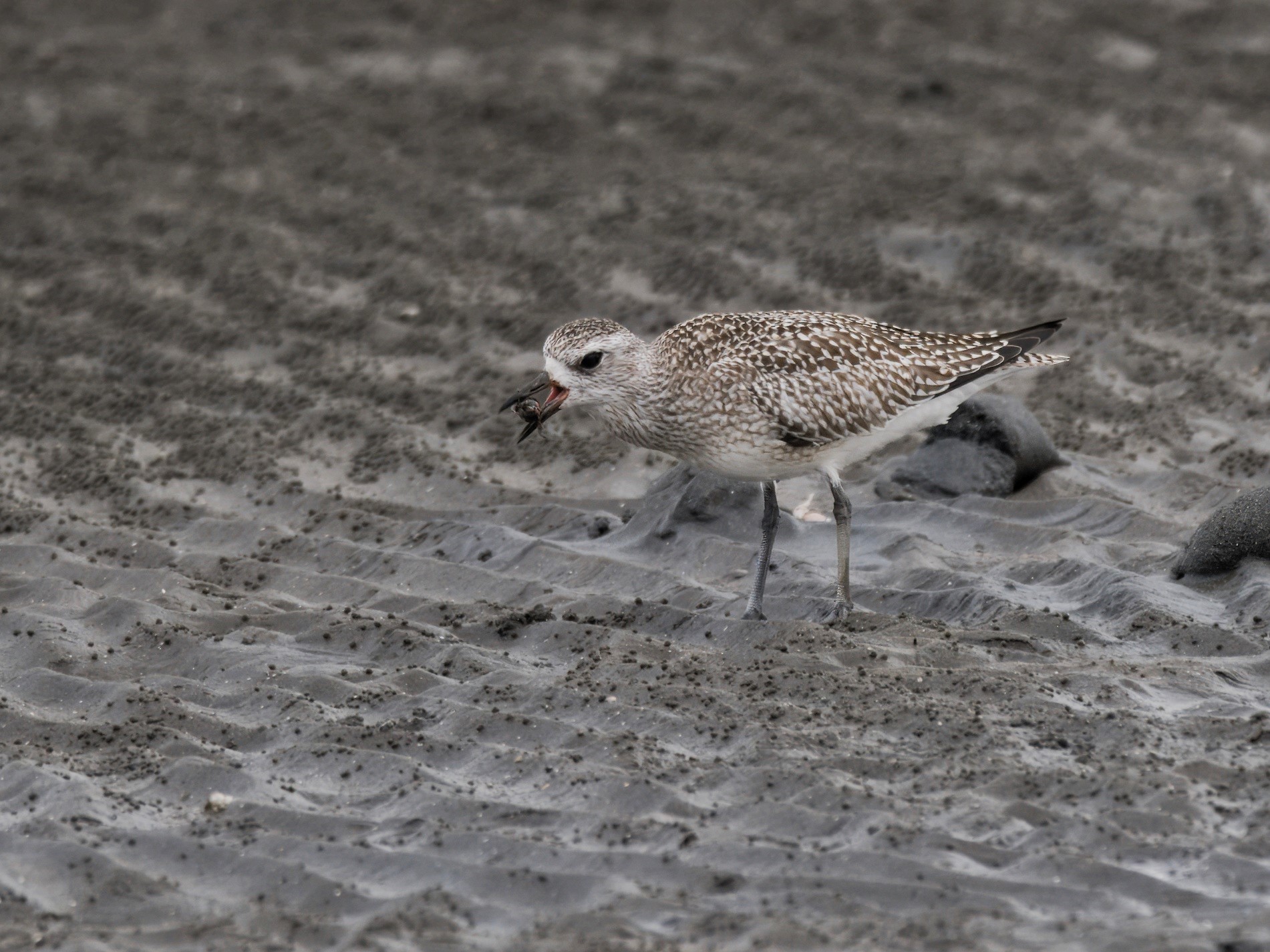
…the Black-bellied Plovers…
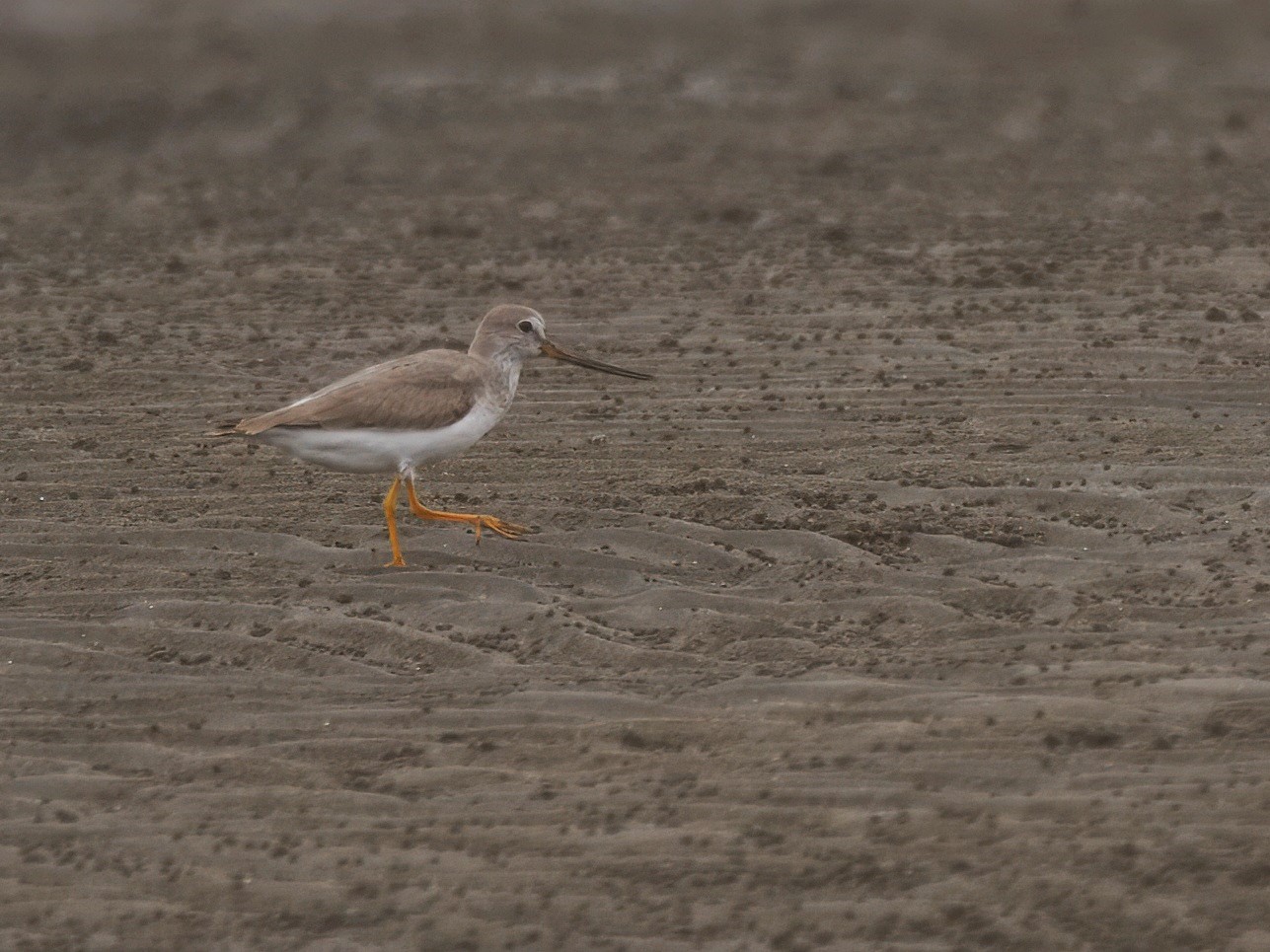
…and the Terek Sandpiper.
Our main target was the Eurasian Oystercatcher, a real head-turner. With his bright orange, carrot-stick bill, red spectacles, and striking black head and back that contrasted with a pristine white belly, he was impossible to miss.
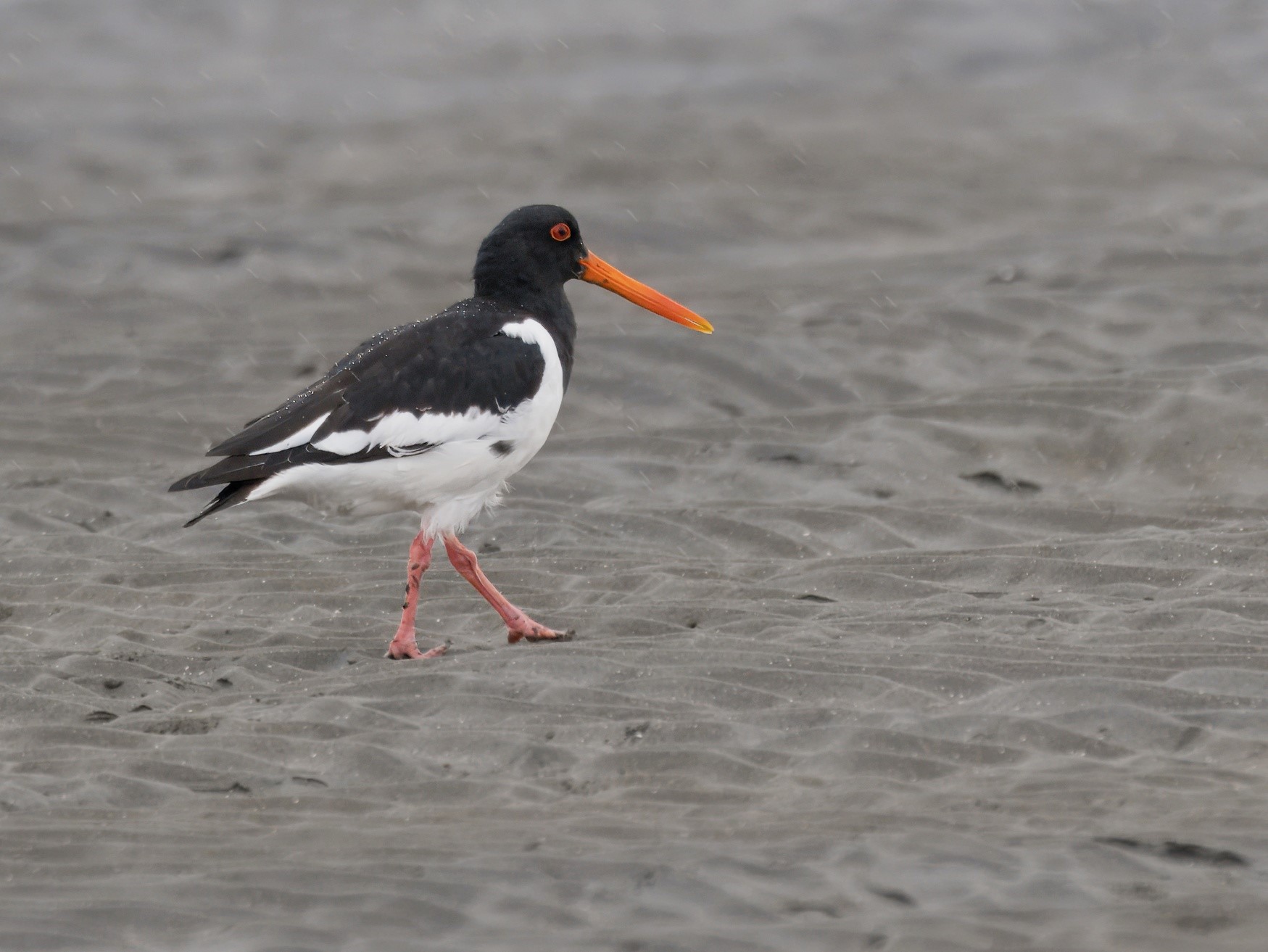
There were plenty of them darting about, hunting for their snack.
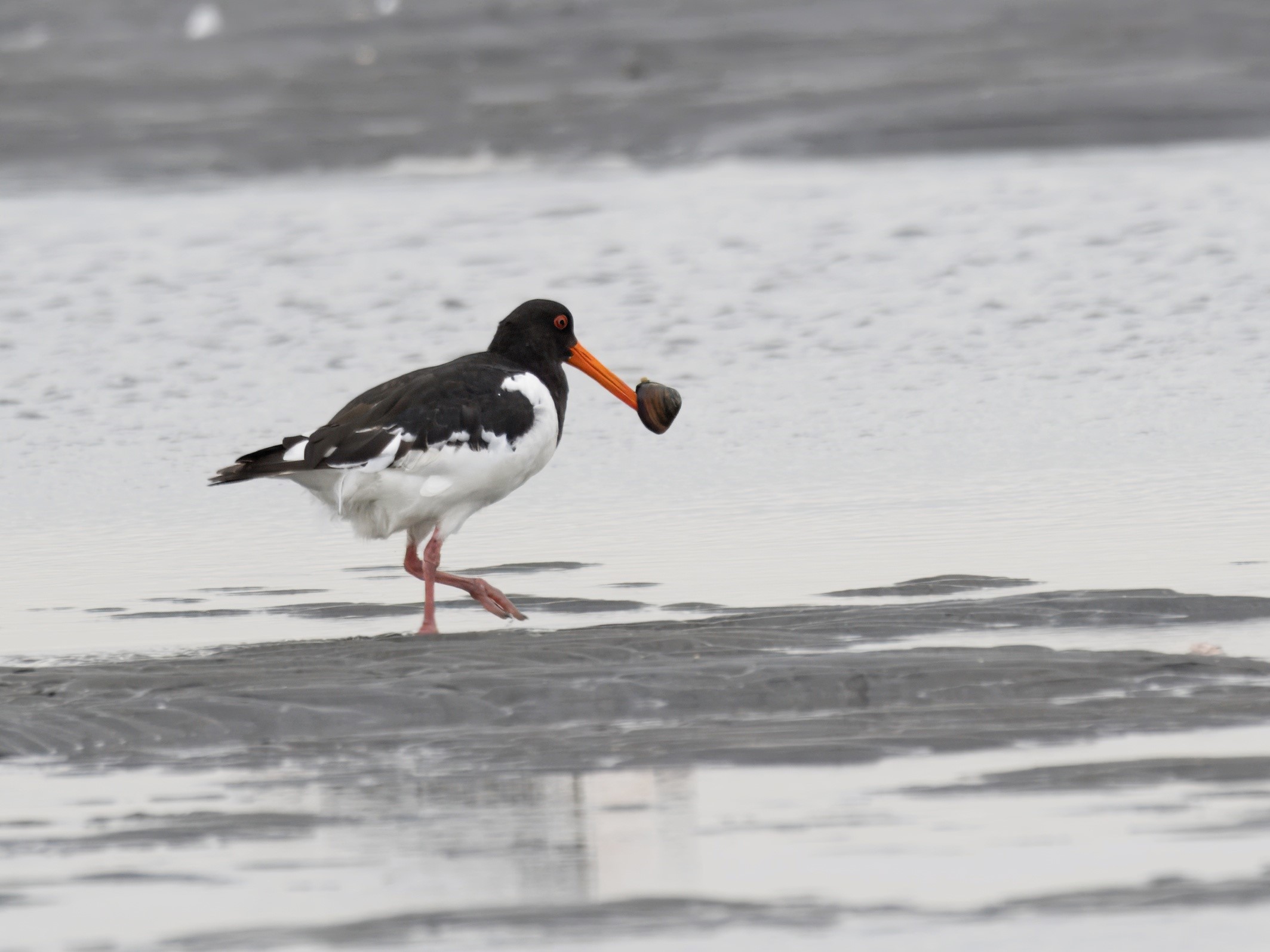
We spent some time stalking them, entertained by their quirky antics as they cracked open oysters, gave them a quick rinse in the water, before swallowing the juicy morsels whole.
The entire mudflat was huge, and after about an hour, we had only explored a small section of the western end. We decided to head towards the middle and eastern sections, and were glad we did. There, we managed to pick up a few more lifers: the Black-tailed Godwit…
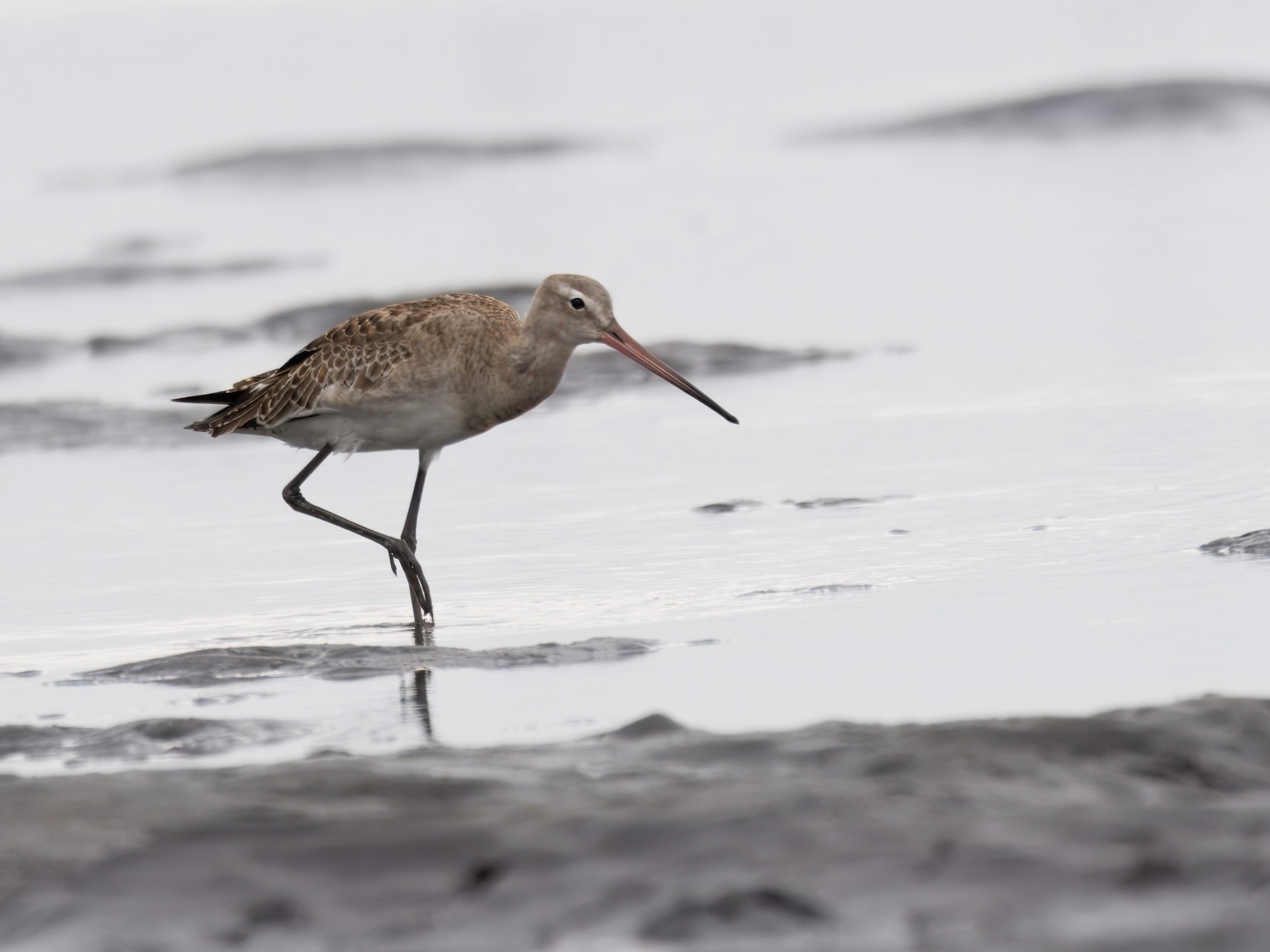
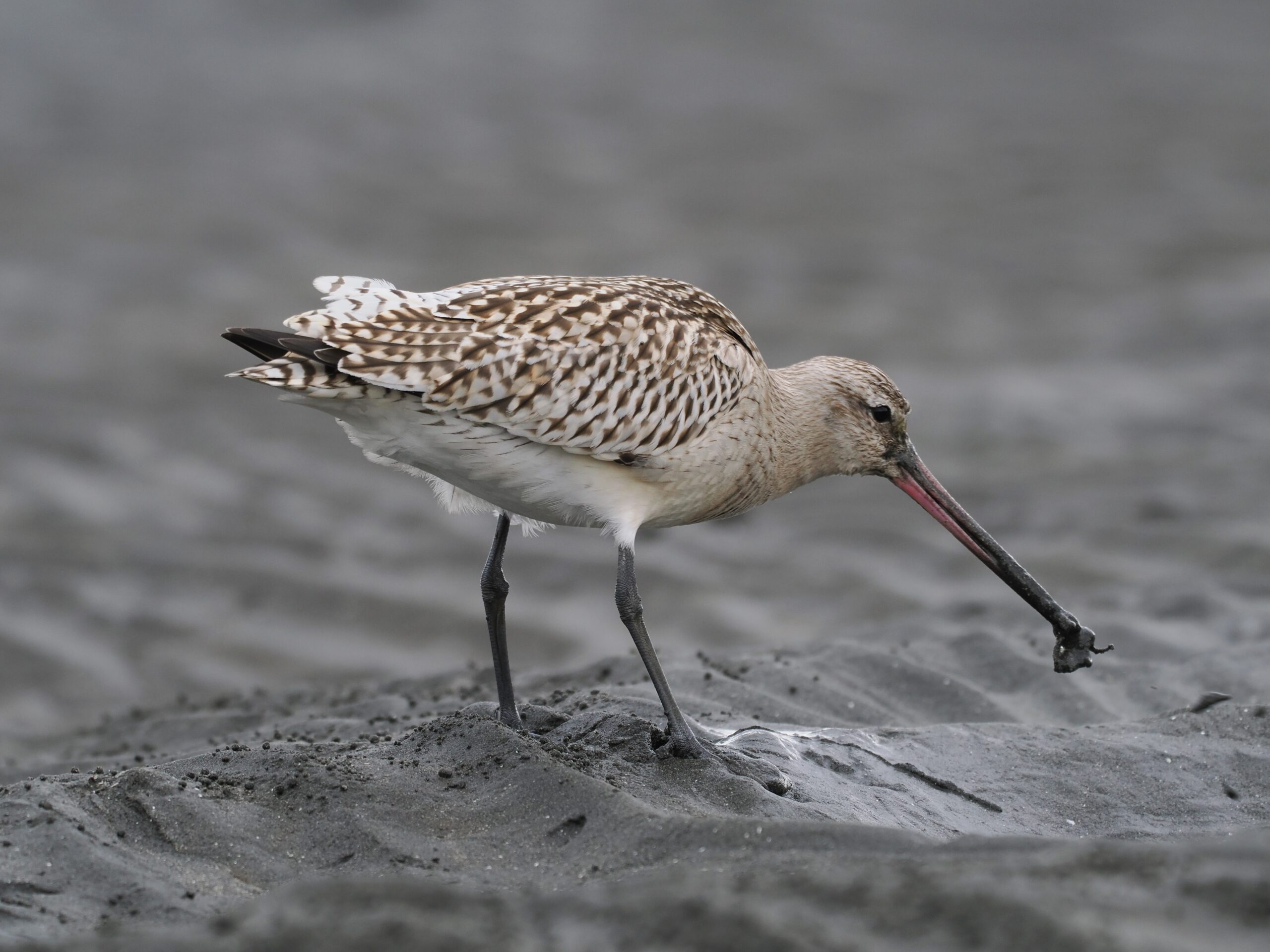
…and the Bar-tailed Godwit…
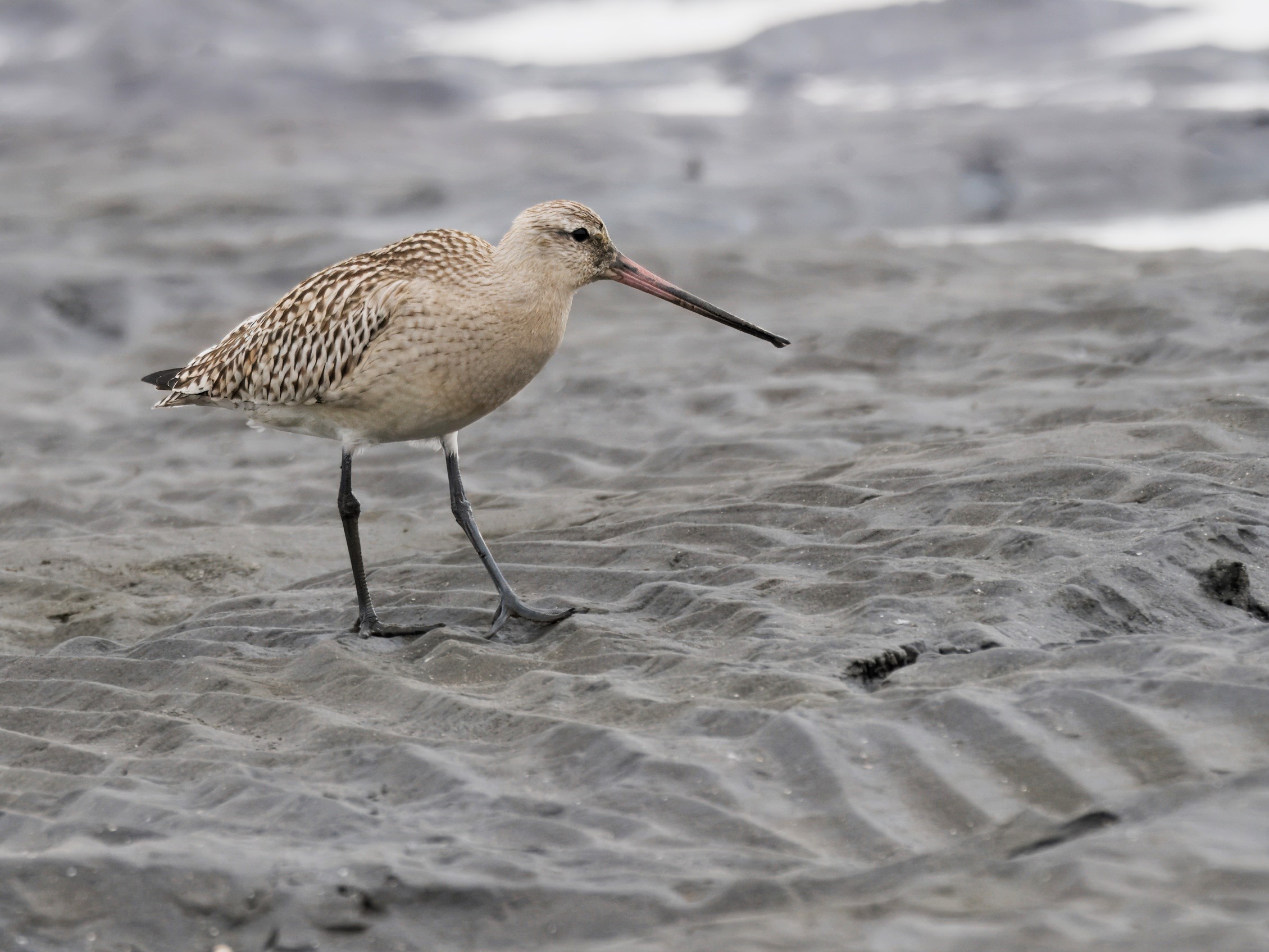
…who gave us a demonstration of how to stick their heads in the mud…
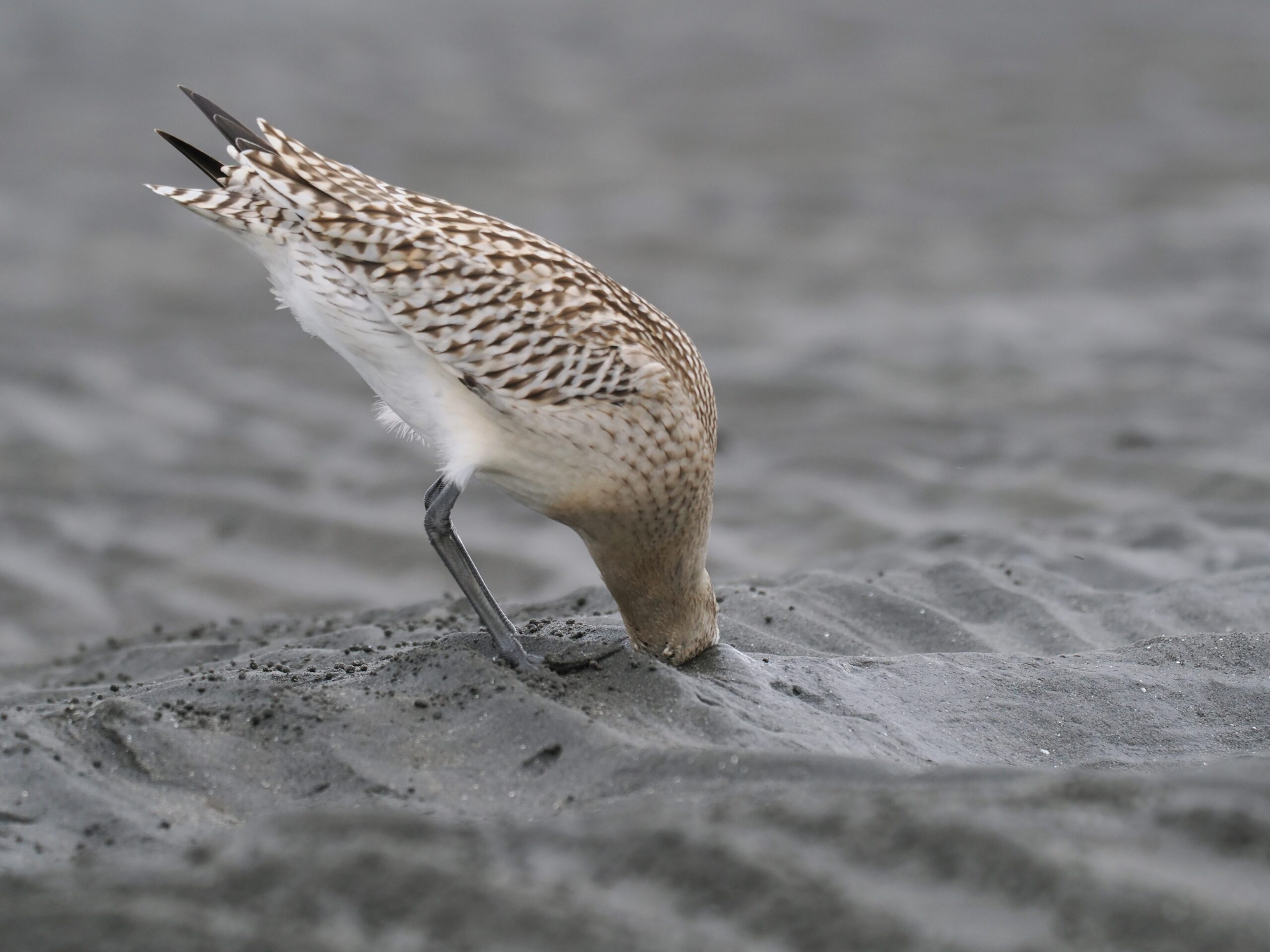
…extract their prey, plunge it into the water to rinse off the mud, and then swallow—pluck, plunge, pop.
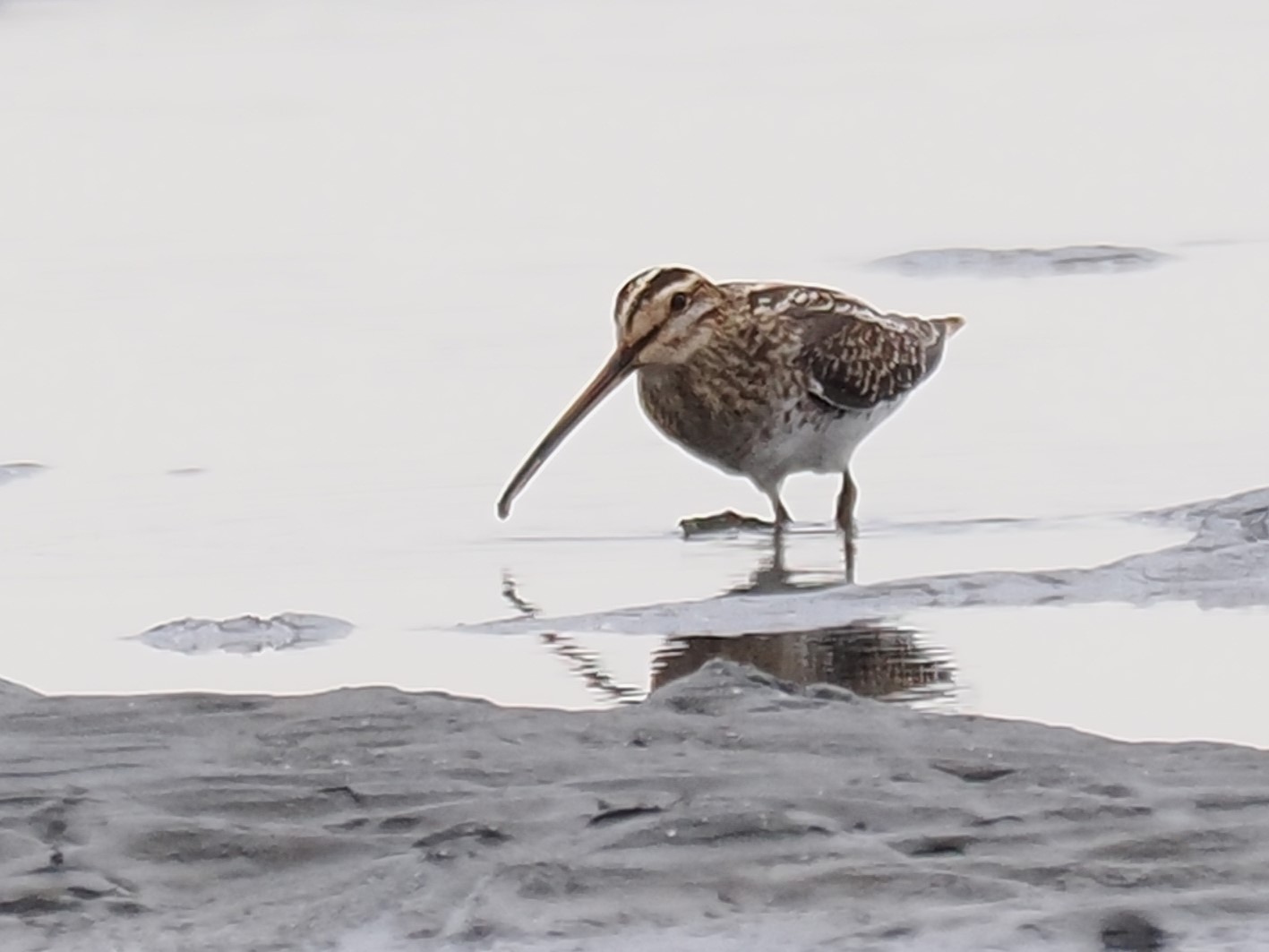
While we were focused on the Godwits, a peculiar bird appeared on the scene. It turned out to be a Common Snipe, an unexpected find as snipes typically hide in tall grass and rarely make an appearance in the open. As we tried to sneak up on it, another birder from the other end spotted the snipe at the same time and began approaching. Naturally, the snipe caught wind of our plan, took flight, and disappeared into a nearby patch of grass to hide.
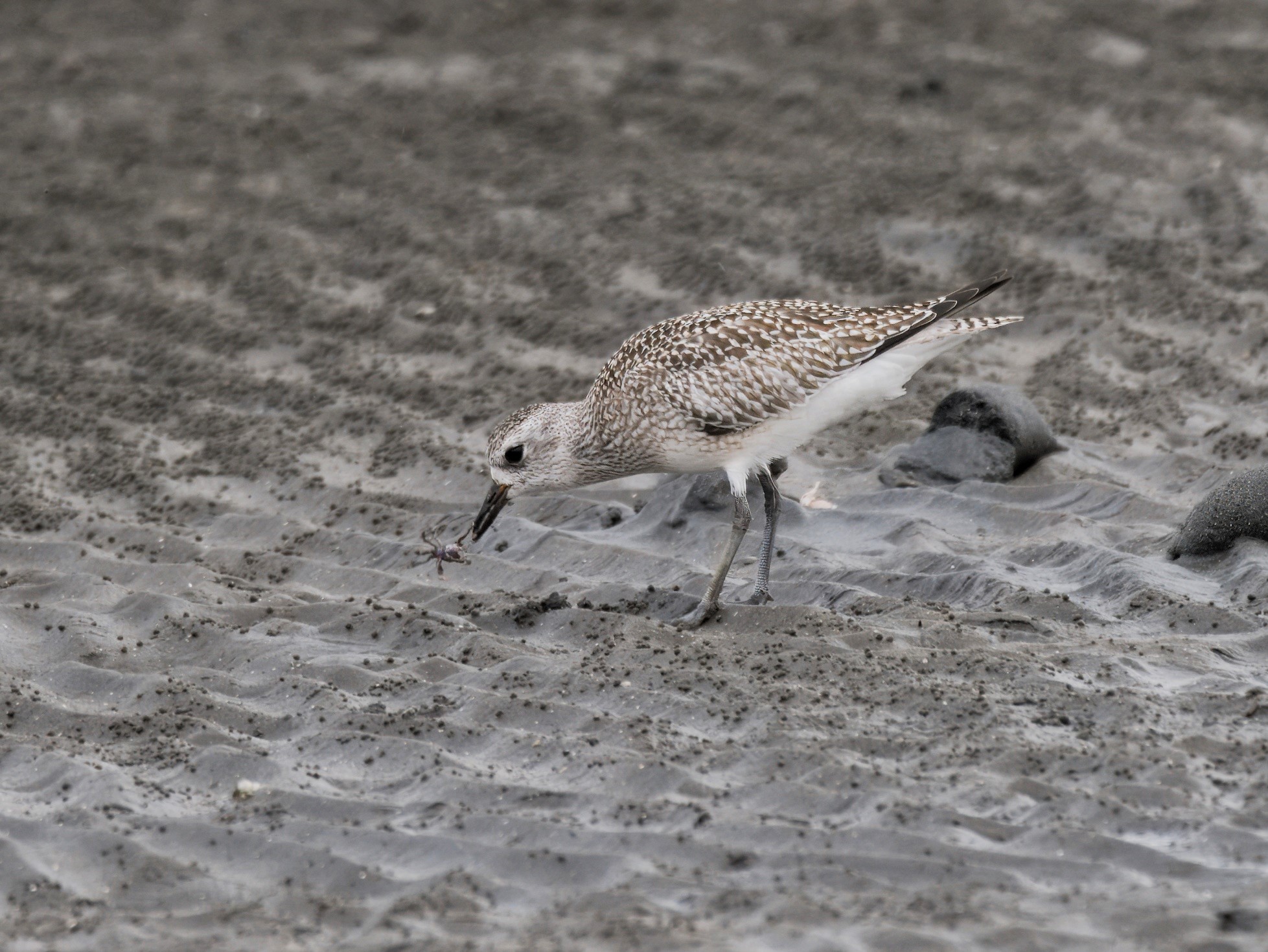
When it was time to go, we couldn’t help but feel a bit sad to leave our feathered friends behind. On the way out, a Black-bellied Plover treated us to a final show, swallowing his crabby prey in one smooth gulp—a fitting parting gift.
Take a peek at our ebird checklist here:
https://ebird.org/checklist/S199185717