Stalking the Shorebirds at Mersing and Endau
Last Updated on 30 April 2026
The road to the east coast of Peninsula Malaysia always feels like a slow unspooling of the city—glass towers giving way to oil palms, then to kampung houses, and finally to that wide, wind-swept coast where the land ends and the sea begins. By the time we reached Mersing, the tide was already slipping out and we headed straight for the beach in anticipation of our main targets: the shorebirds.
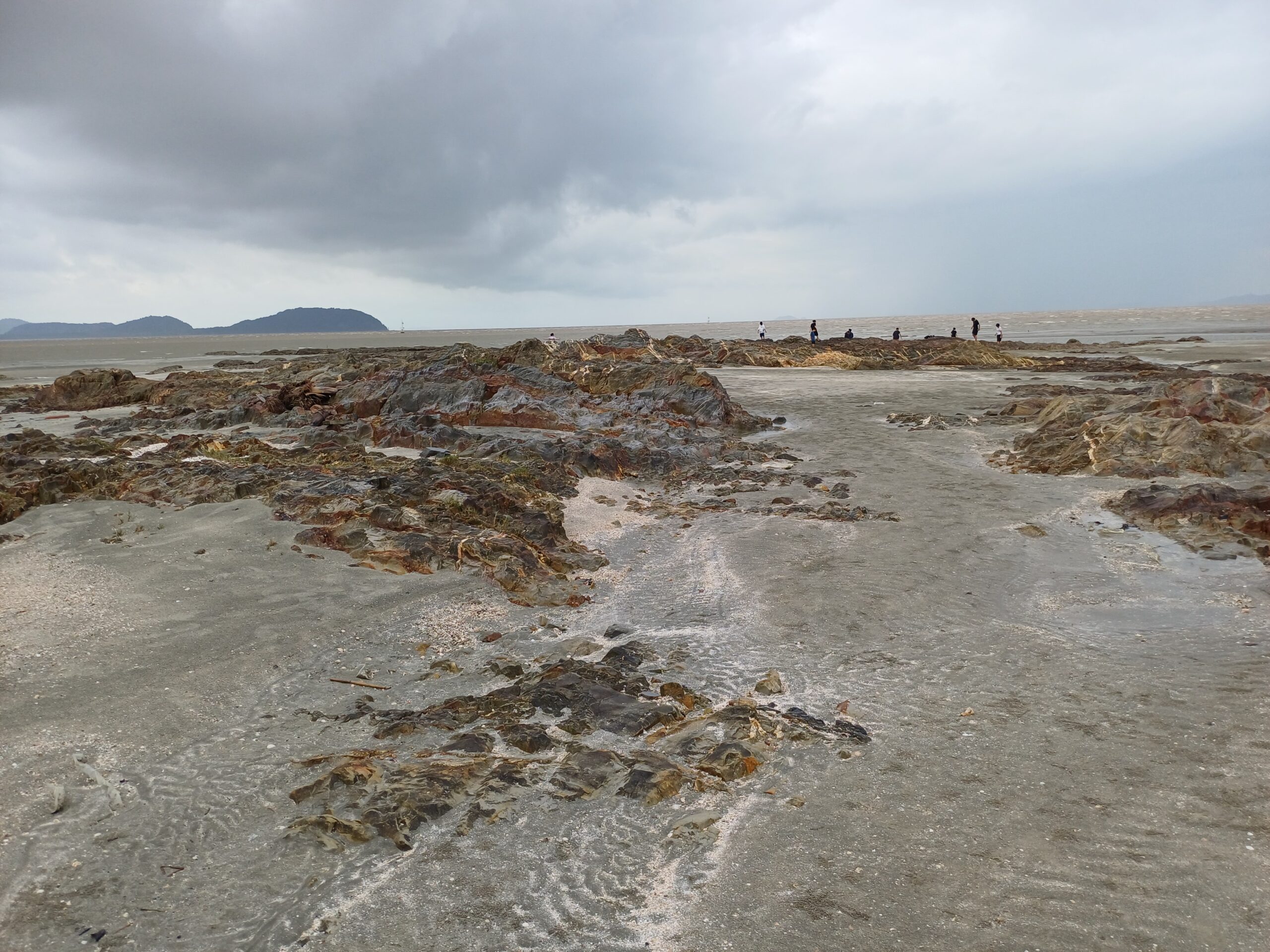
While Mersing is best known as the launchpad to Tioman Island, its bay plays a quieter but far grander role. Each year, it becomes a vital pit stop for shorebirds that embark on epic, thousand-kilometre journeys. The coastal wetlands here serve as essential refuelling stations for thousands of shorebirds moving along the East Asian-Australasian Flyway.
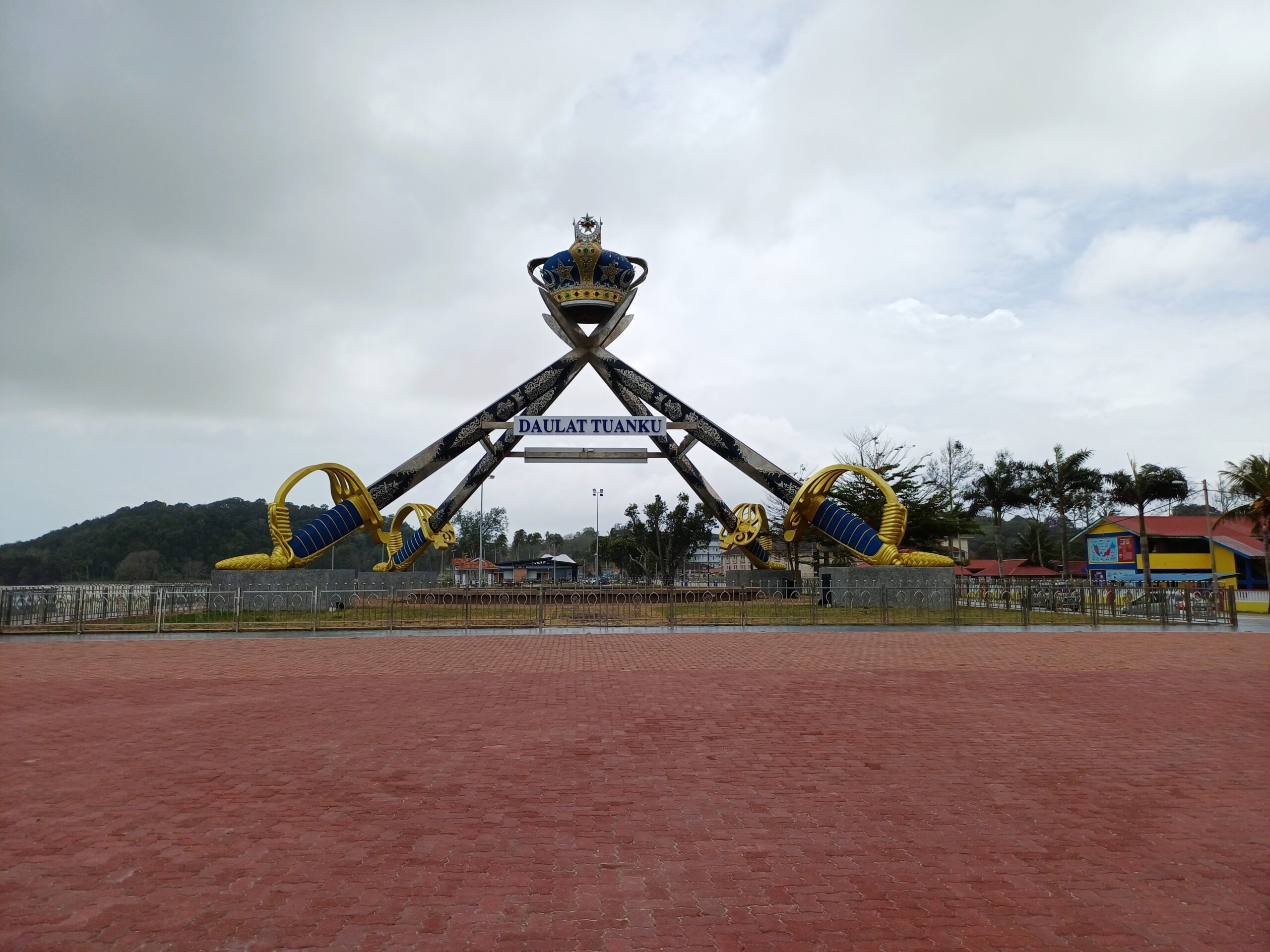
Arriving in the evening at low tide, Mersing greeted us with that familiar coastal perfume: a blend of salt, mud, and the faint promise of birds. It quickly became clear that low tide wasn’t ideal for shorebirding at Mersing—the mudflats stretched endlessly into the distance, leaving the birds far beyond view.
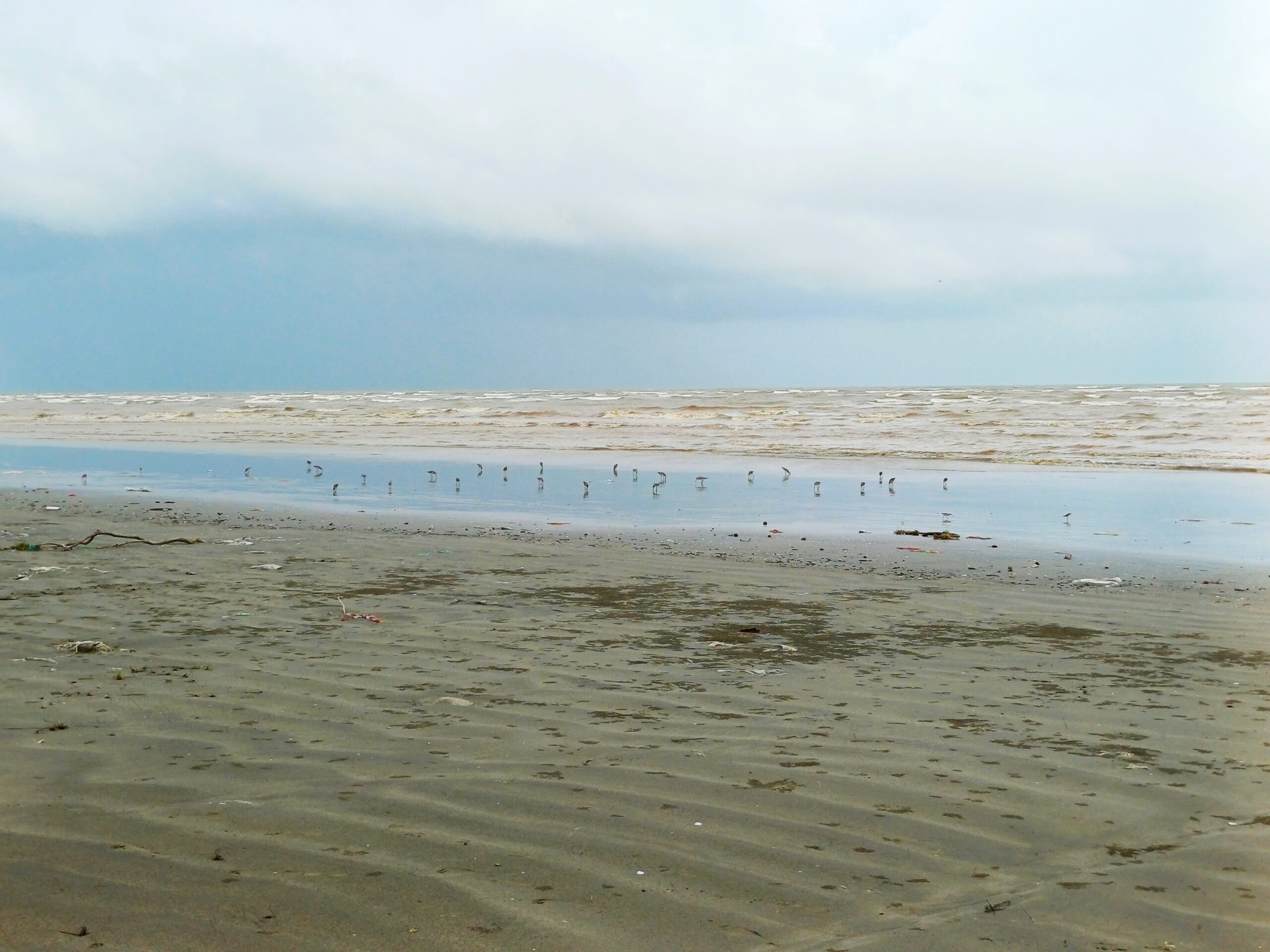
So, the next morning found us back at the beach, timing our return for a predicted 2m tide—that sweet spot when the mudflats were exposed just enough for the shorebirds to linger along the water’s edge, yet close enough for us to observe them without squinting into the horizon.
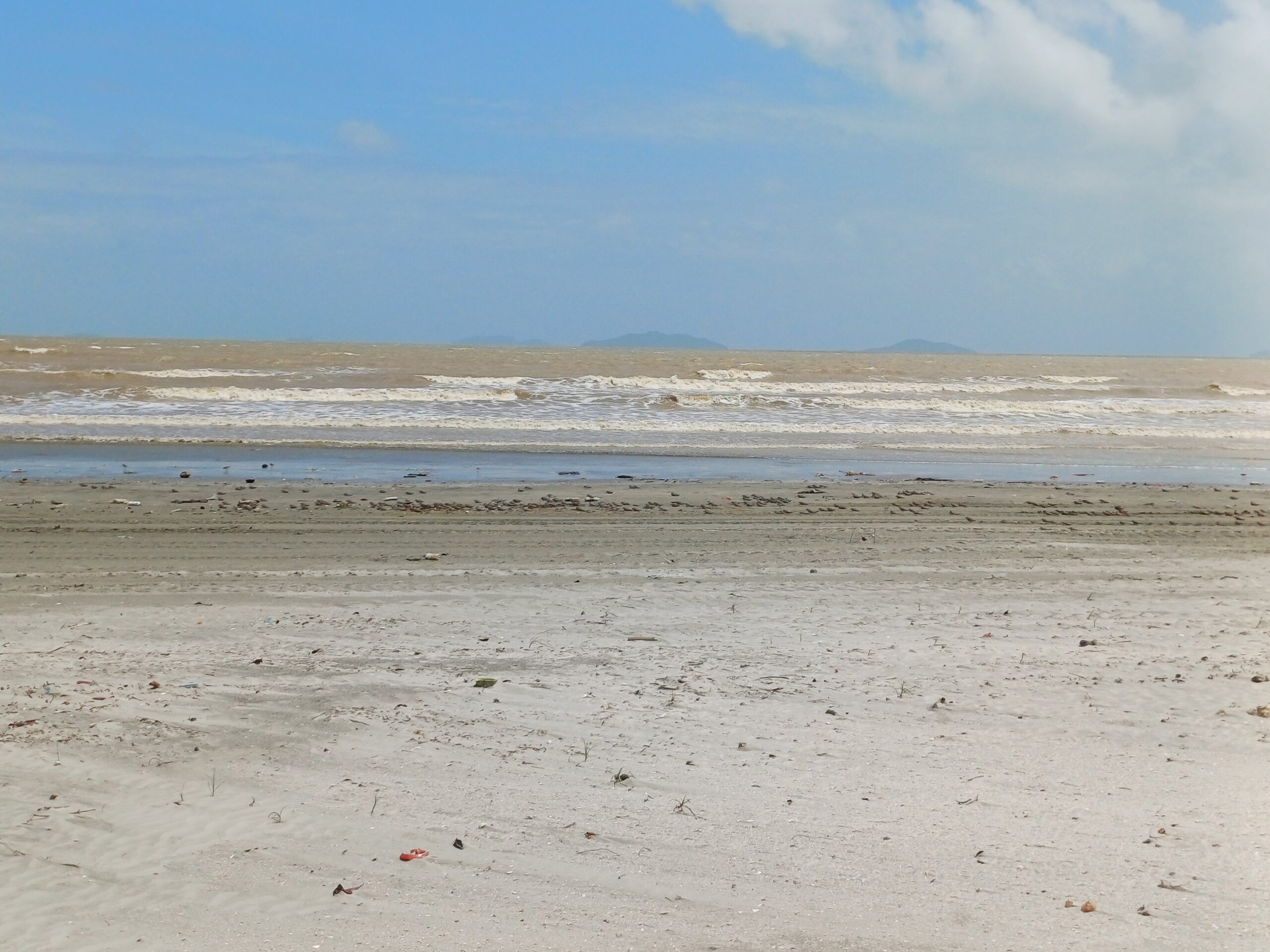
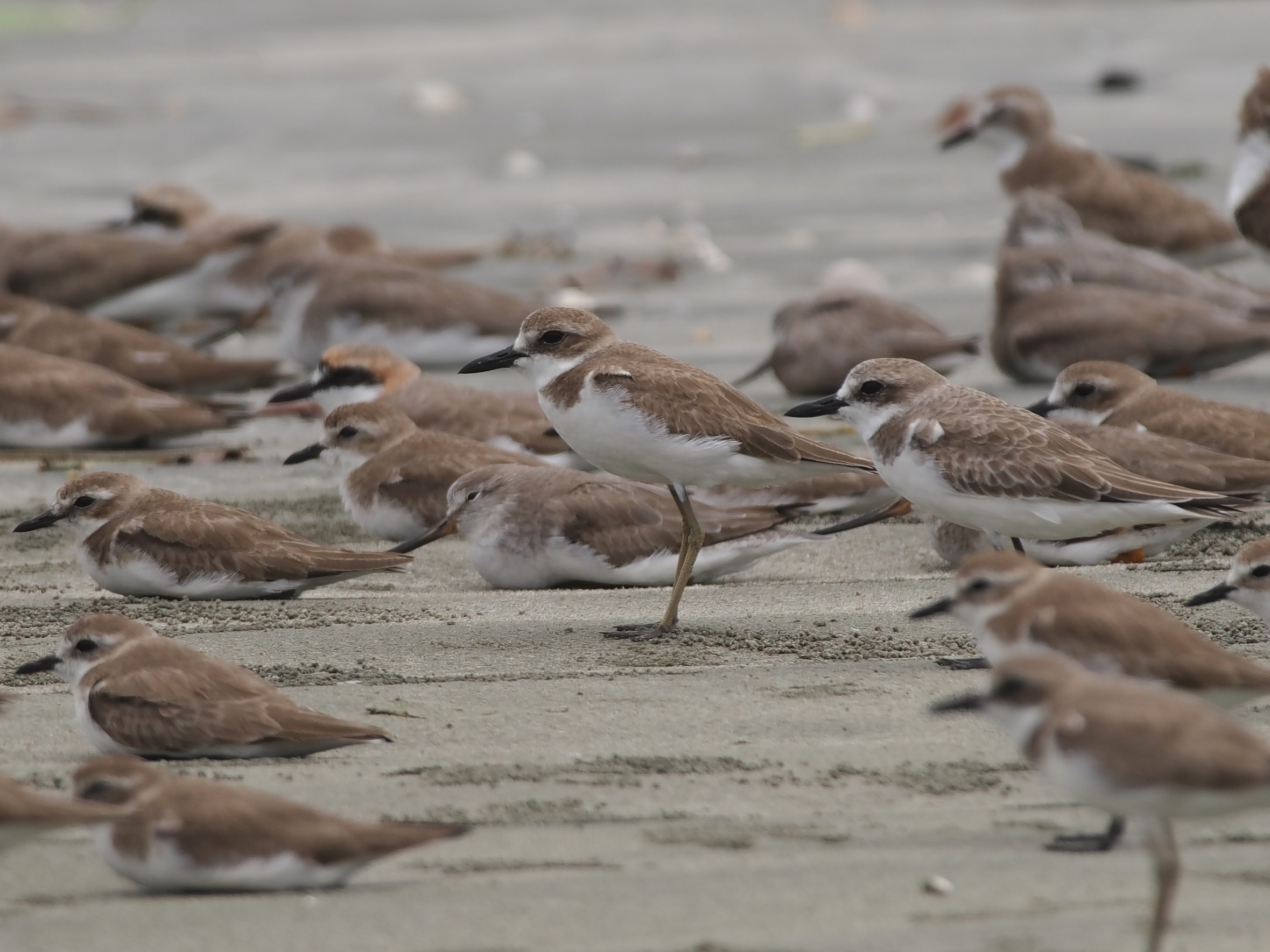
Scattered across the sand were a congregation of plovers, sandpipers, and the occasional larger wader, all roosting under the mid-morning sun. The most numerous of the assembly were the Tibetan Sand Plovers (Anarhynchus atrifrons).
We scanned carefully, searching for anything that stood out. Like this Greater Sand Plover (Anarhynchus leschenaultii), attempting to melt into the crowd but giving itself away with those long sexy yellow legs.
As plentiful as the plovers were the Terek Sandpipers (Xenus cinereus), instantly catching the eye with their bright red legs and those lusciously long and curvy bills.
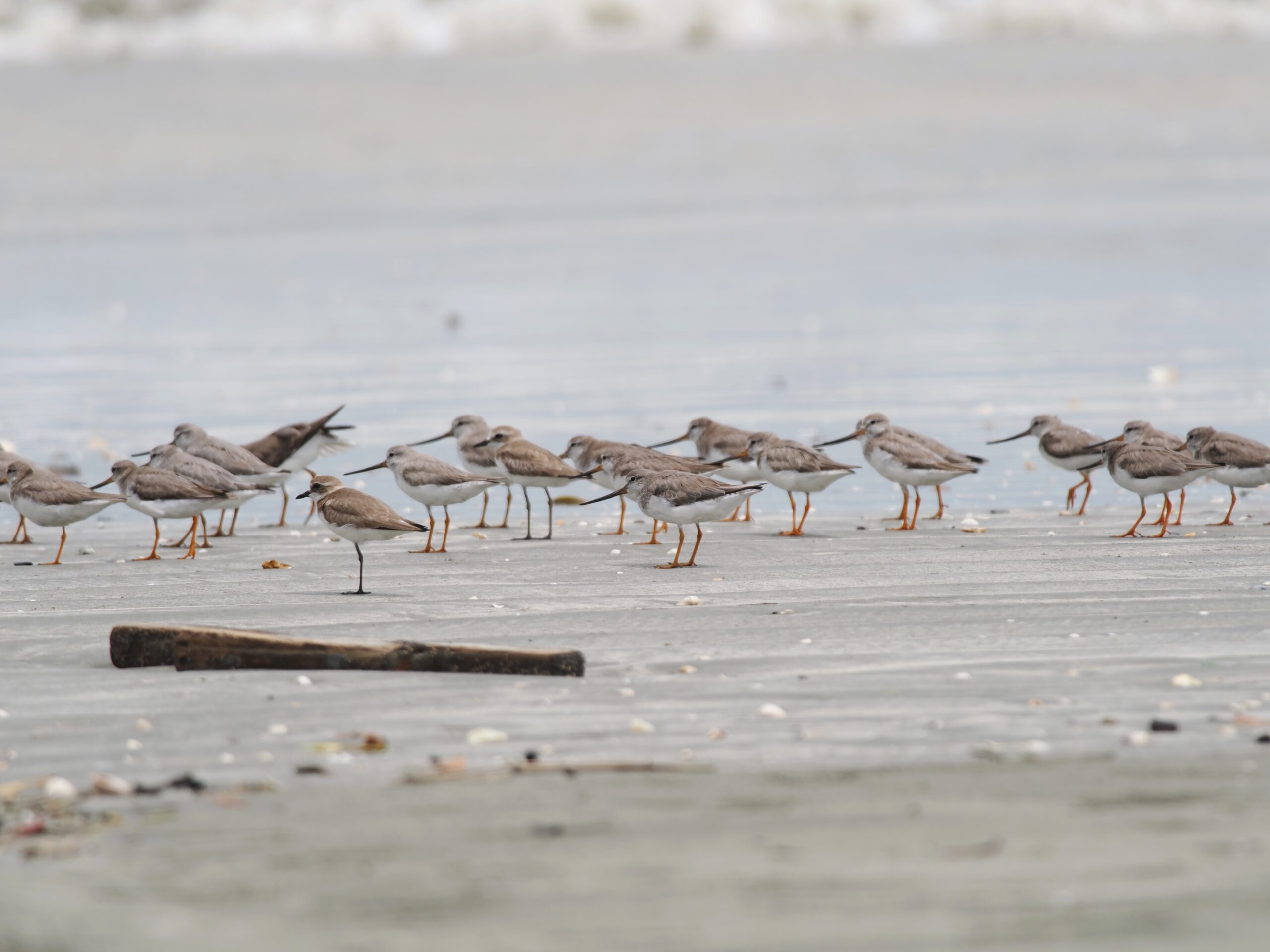
We swept our binoculars across the Terek crowd and caught a tiny glitch in the pattern. It appeared to be the Grey-tailed Tattler (Tringa brevipes)—its straight, chonky bill standing out among that sea of elegant curves.
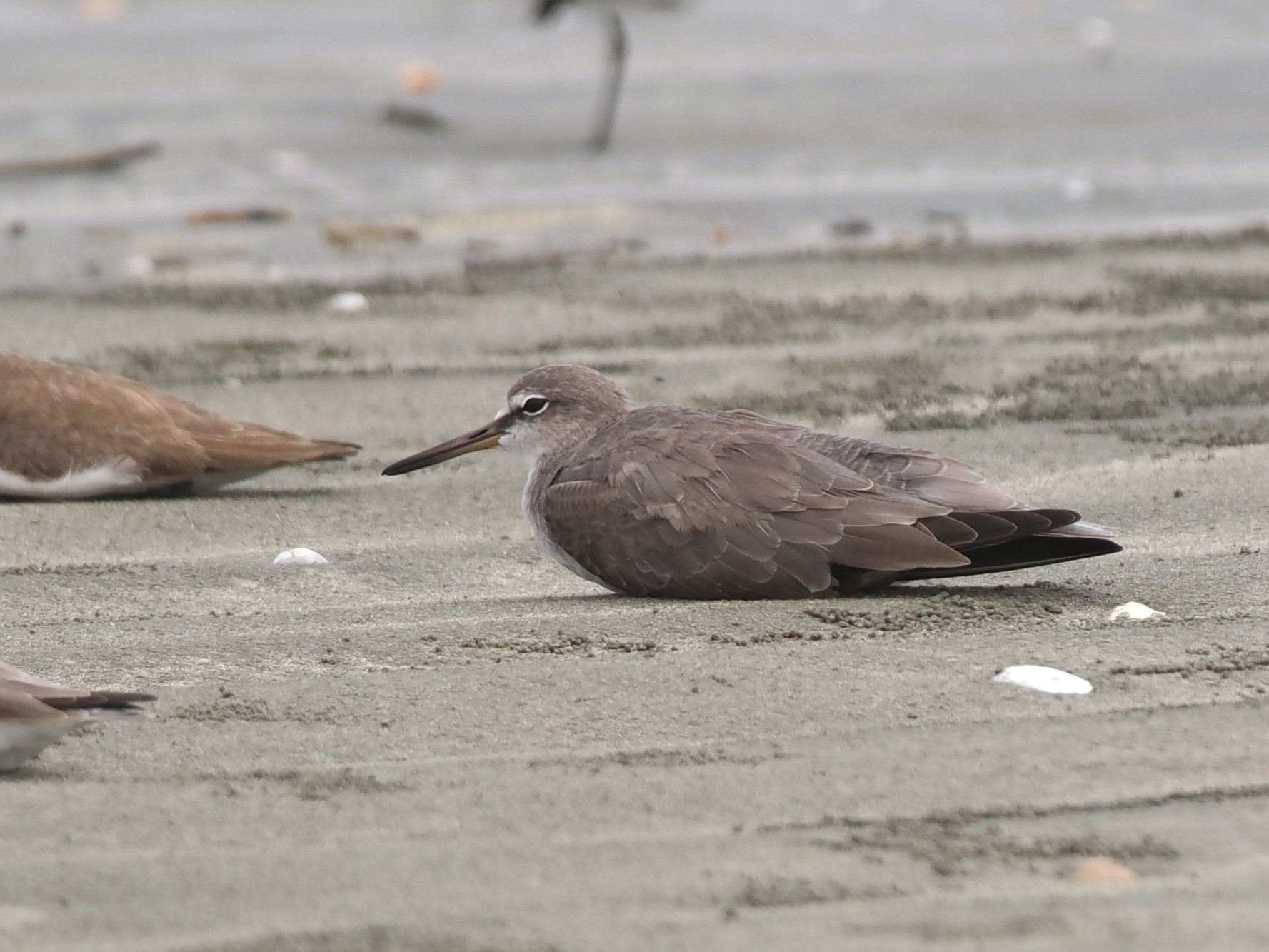
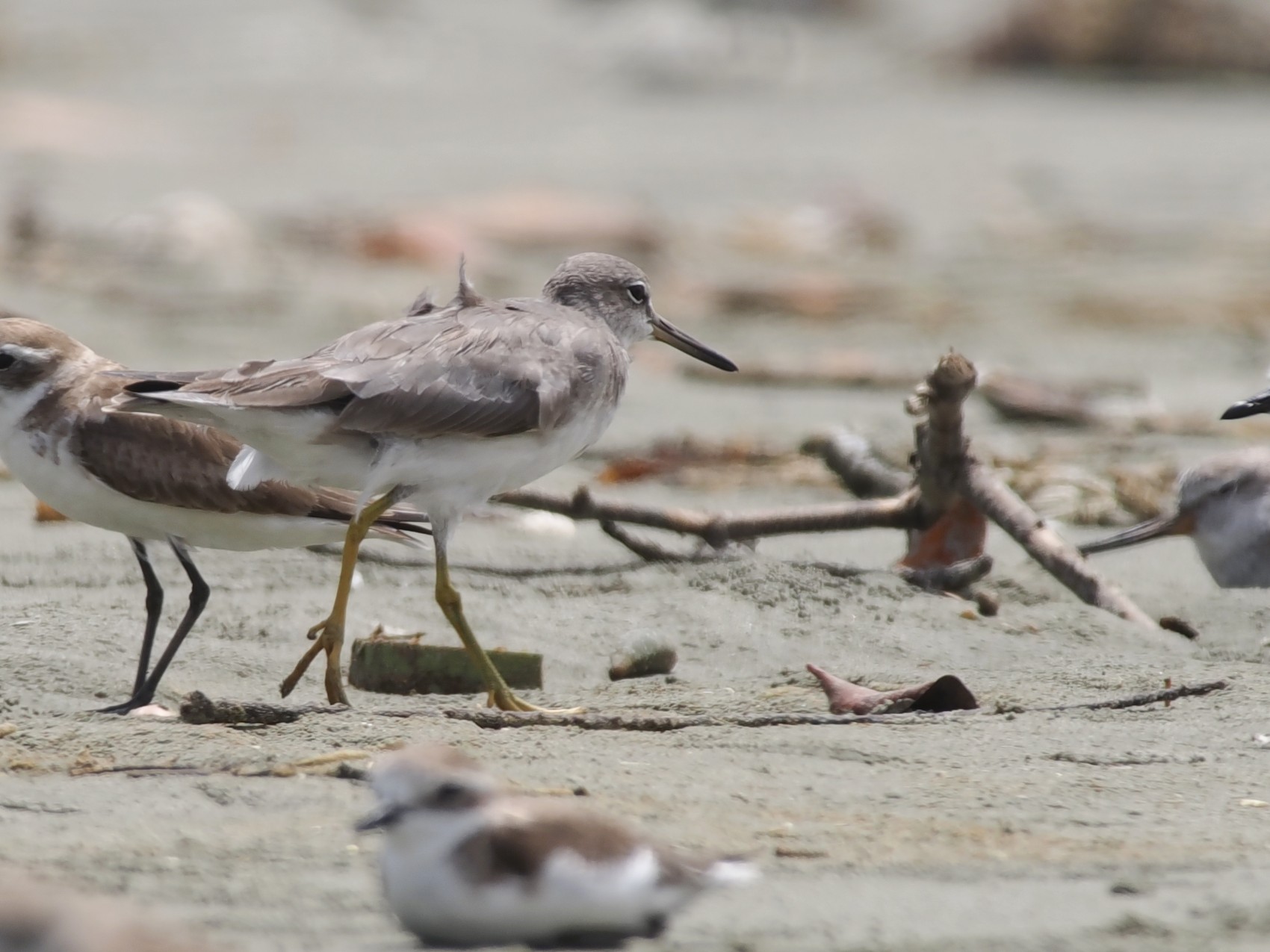
A slight disturbance rippled through the gathering of plovers and sandpipers, causing them to rouse from their sleep. The whole assembly sprang into motion, legs flashing as they broke into a scurry. The tattler was the last to rise, but when it finally did, those bright yellow legs were revealed, sealing its identity beyond doubt.
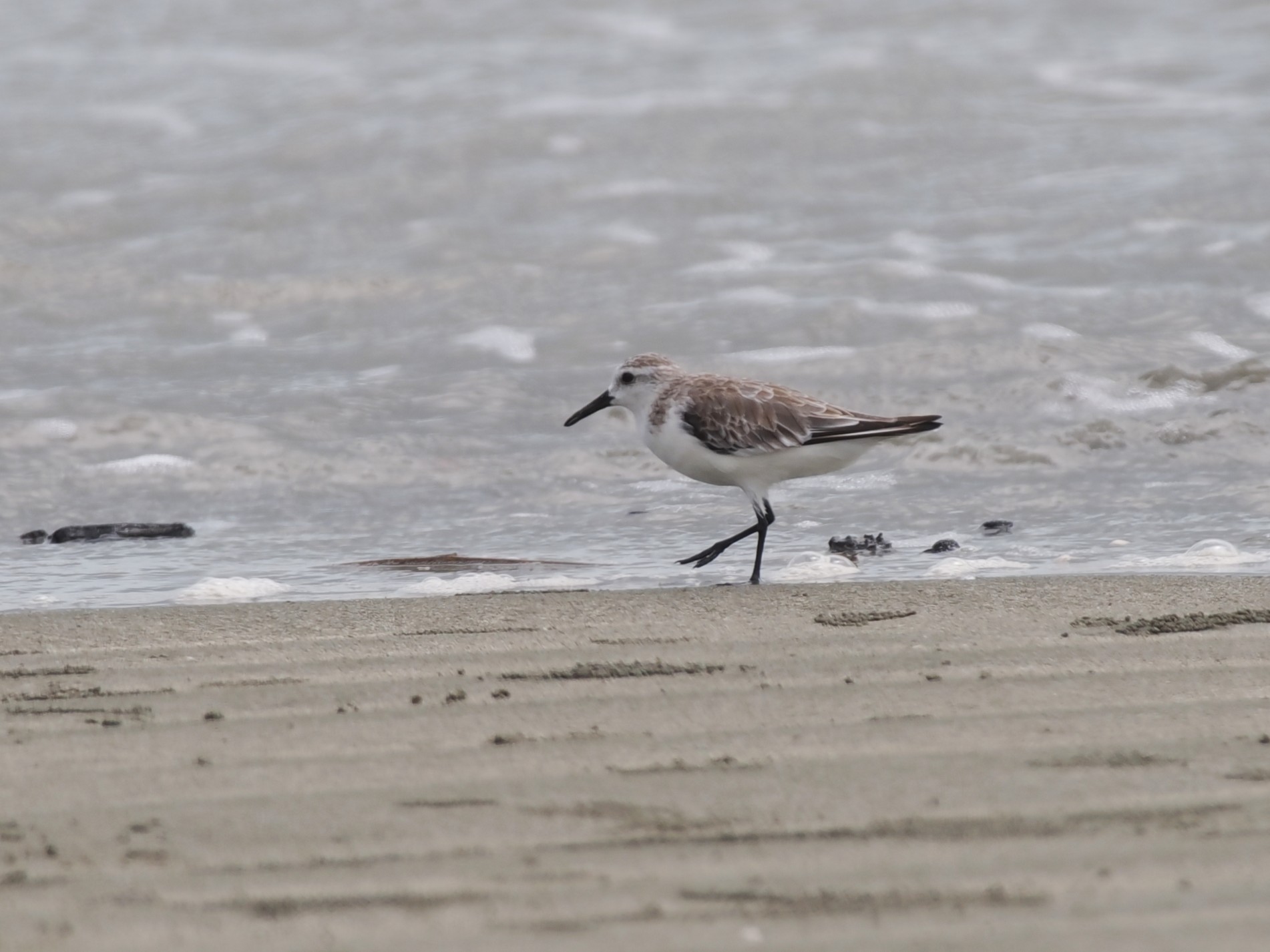
Also present and attendance ticked were the Sanderling (Calidris alba)…
…the Malaysian Plover (Anarhynchus peronii)…
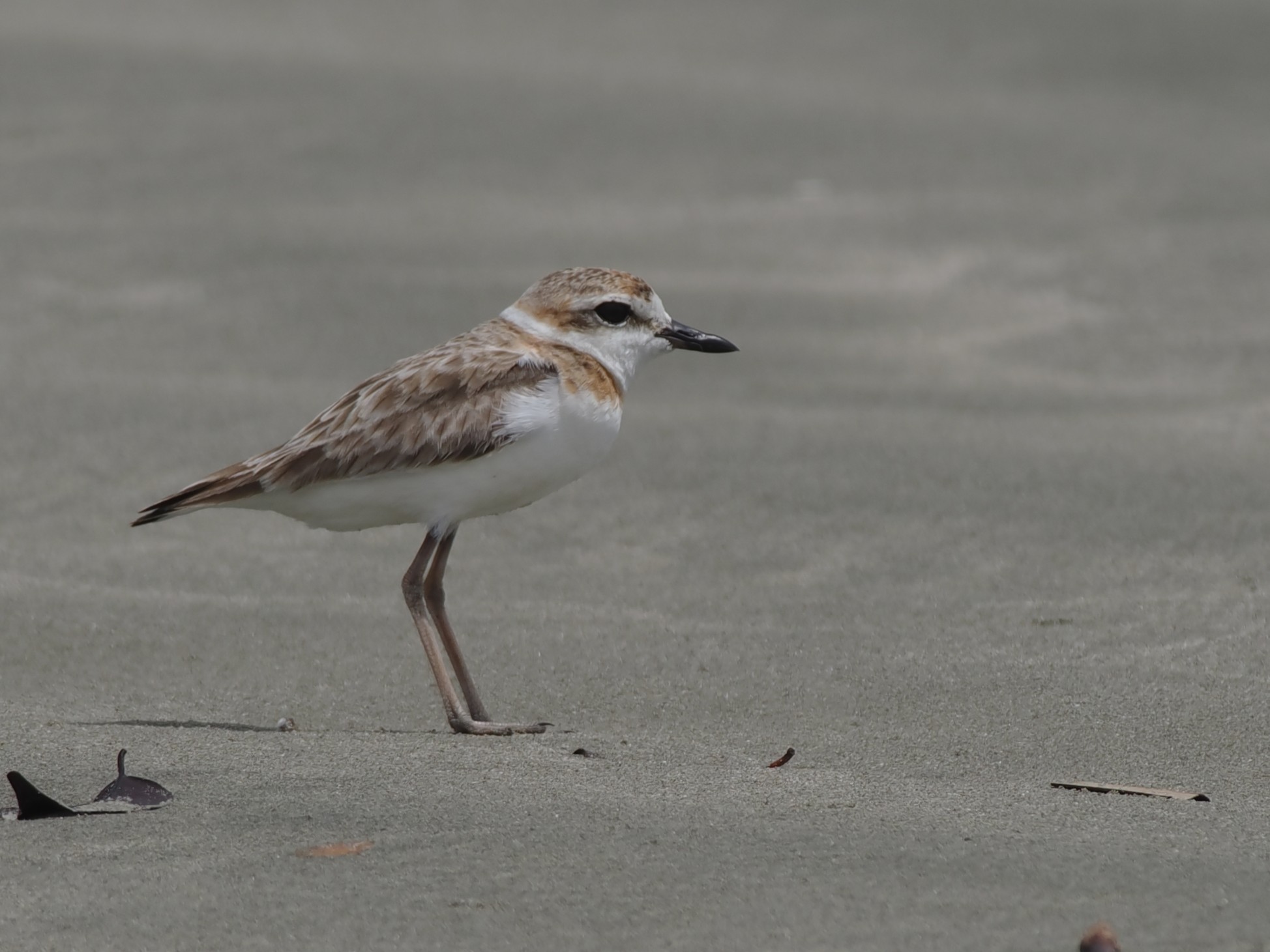
…the Eurasian Whimbrel (Numenius phaeopus)…
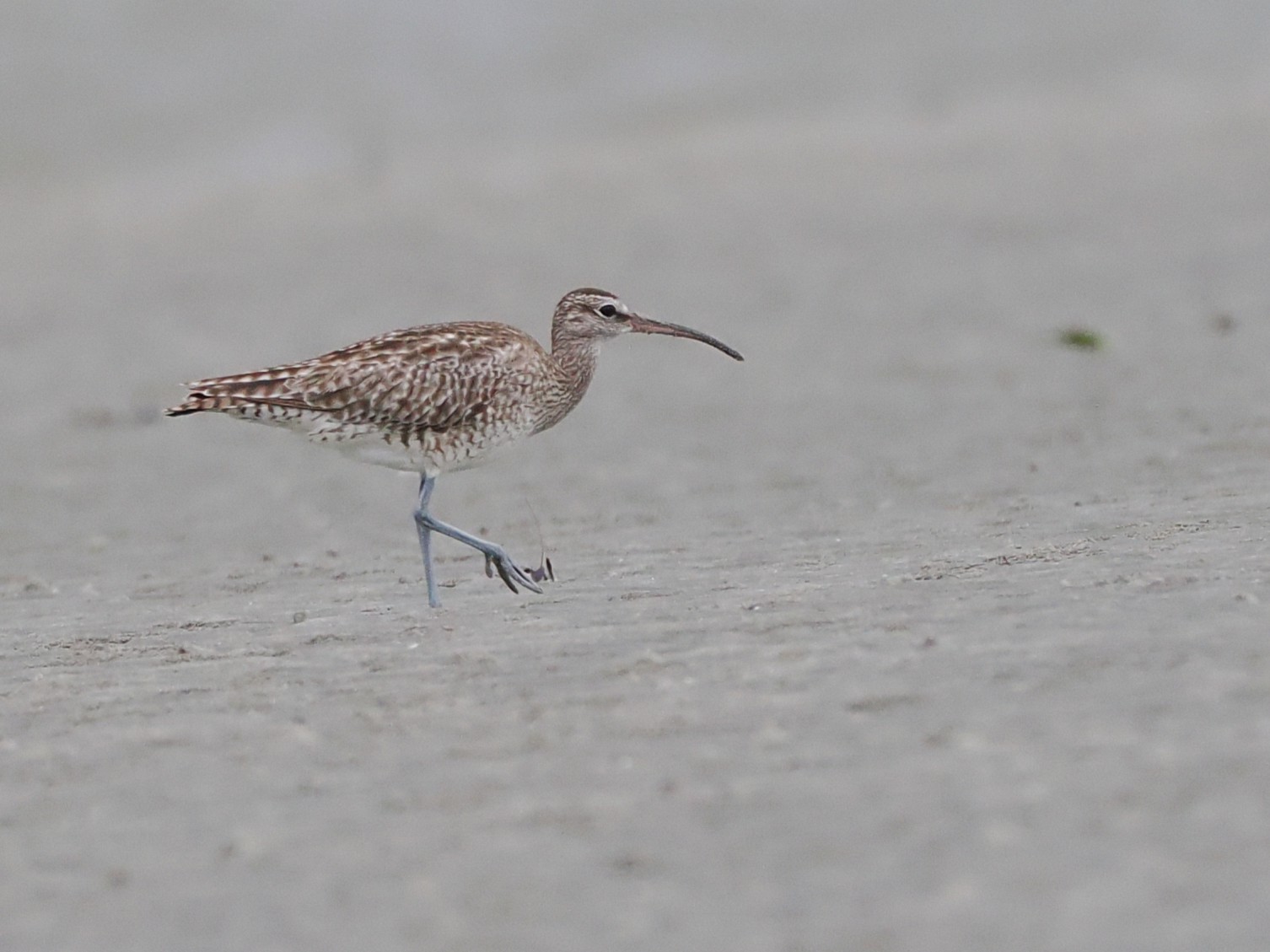
…and the Common Greenshank (Tringa nebularia).
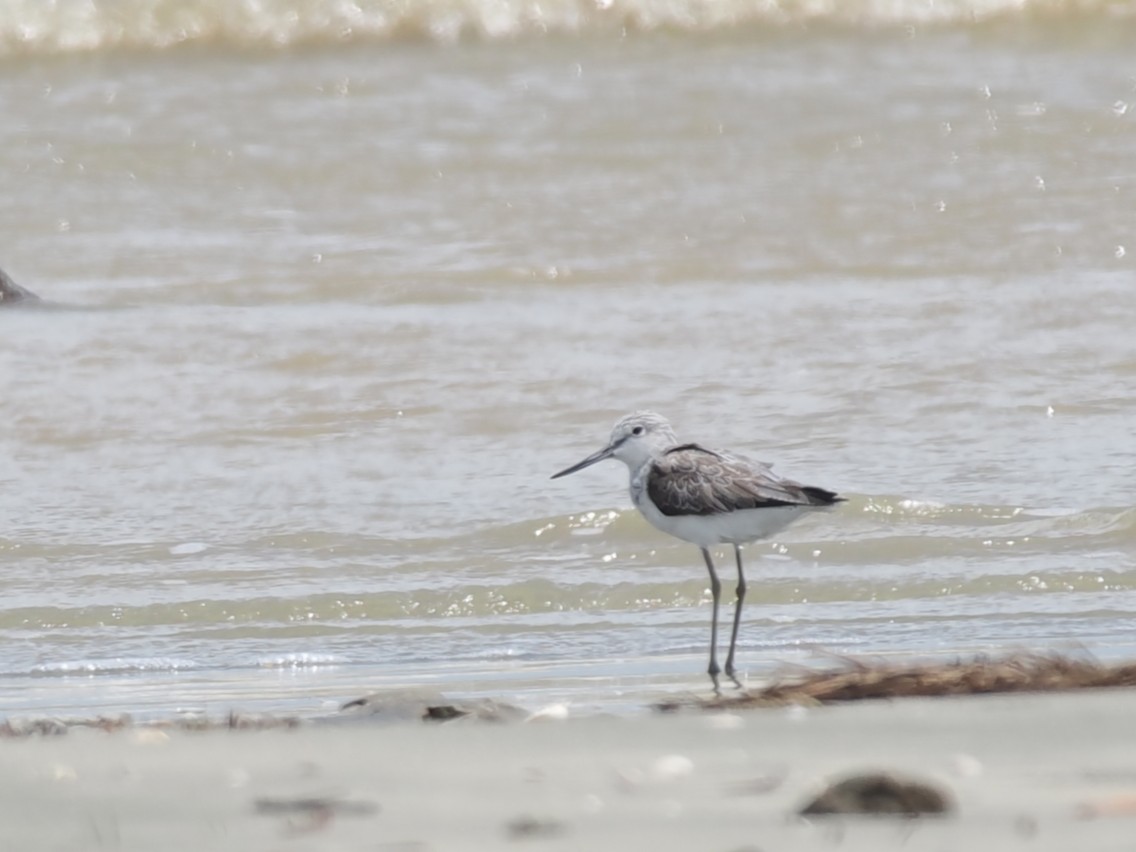
At Mersing’s north shore, a different gathering of larger waders took centre stage.
Dominating the scene were the Great Crested Terns (Thalasseus bergii), lined up along the shoreline in an orderly stretch—lounging, preening, dozing, and generally making themselves at home.
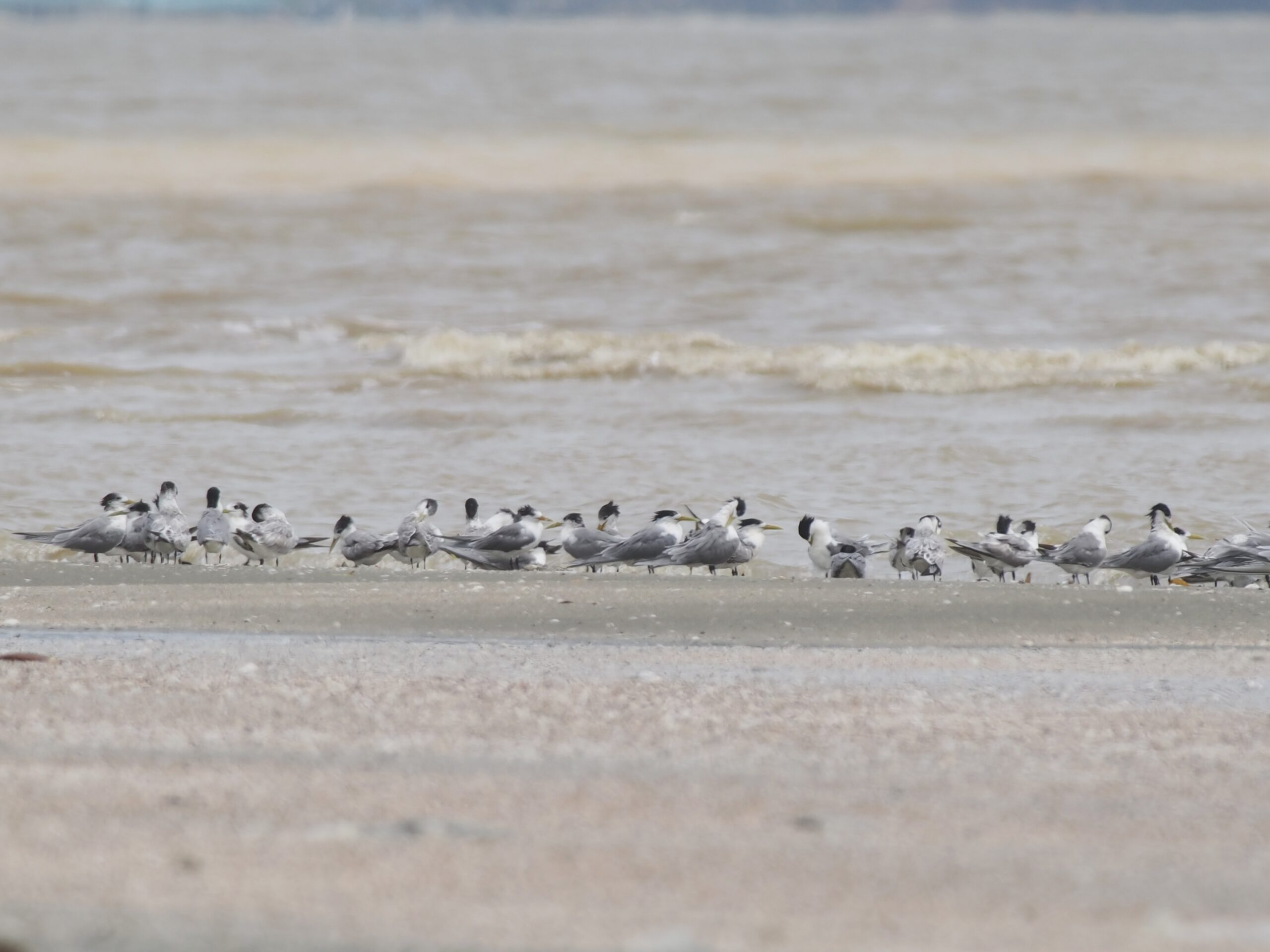
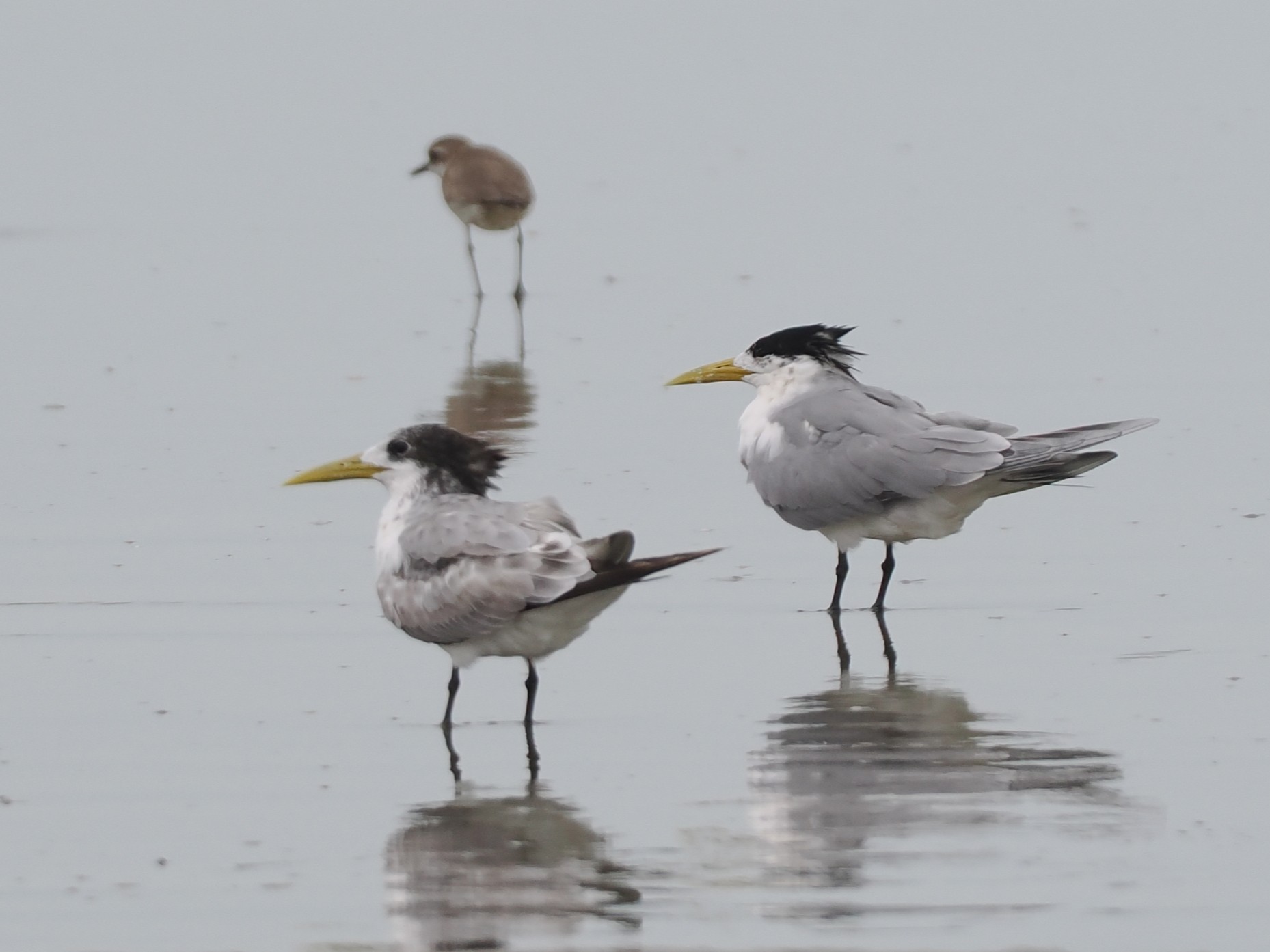
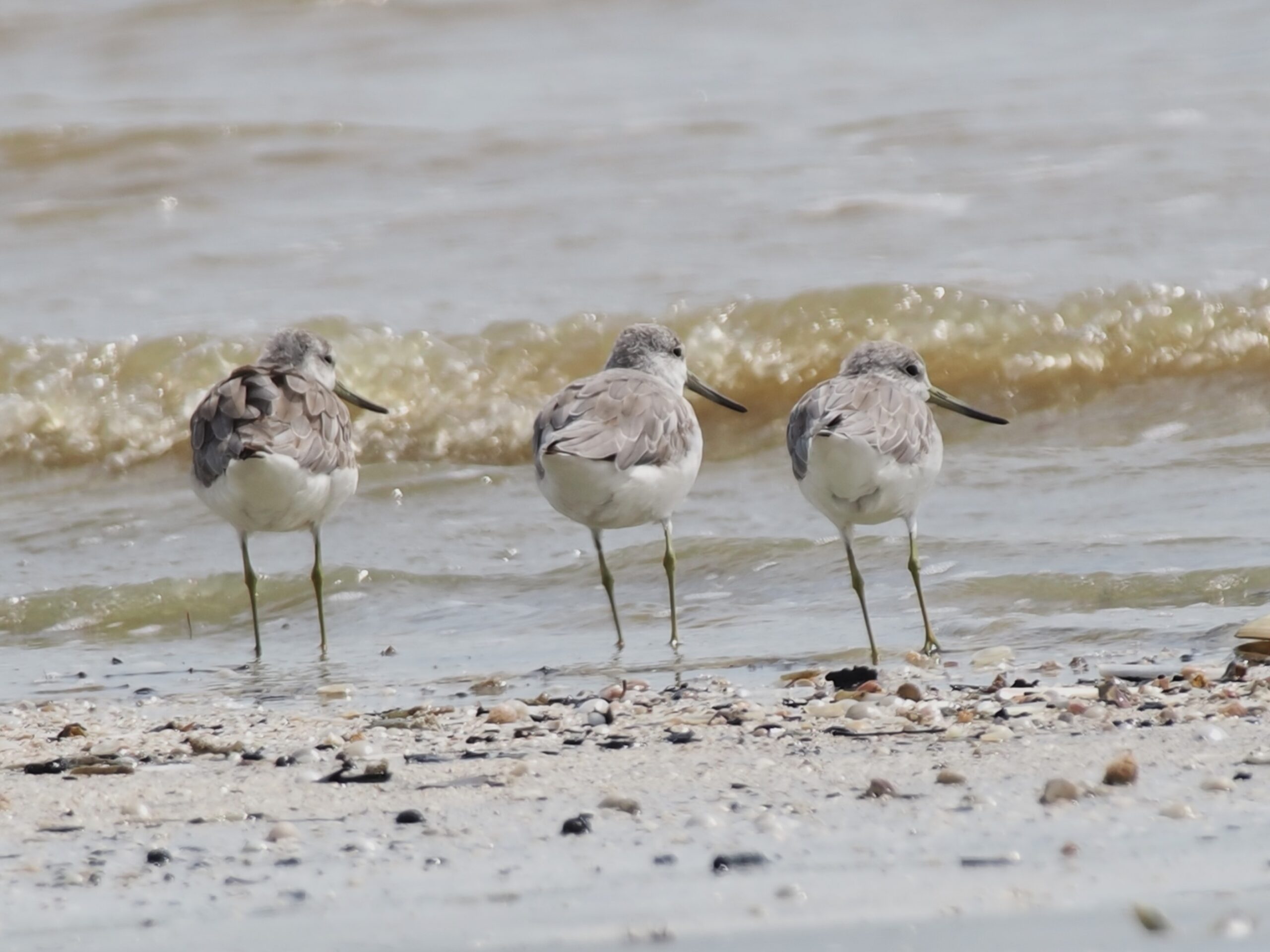
A quick scan of the flock revealed a rarity—the Nordmann’s Greenshank (Tringa guttifer).
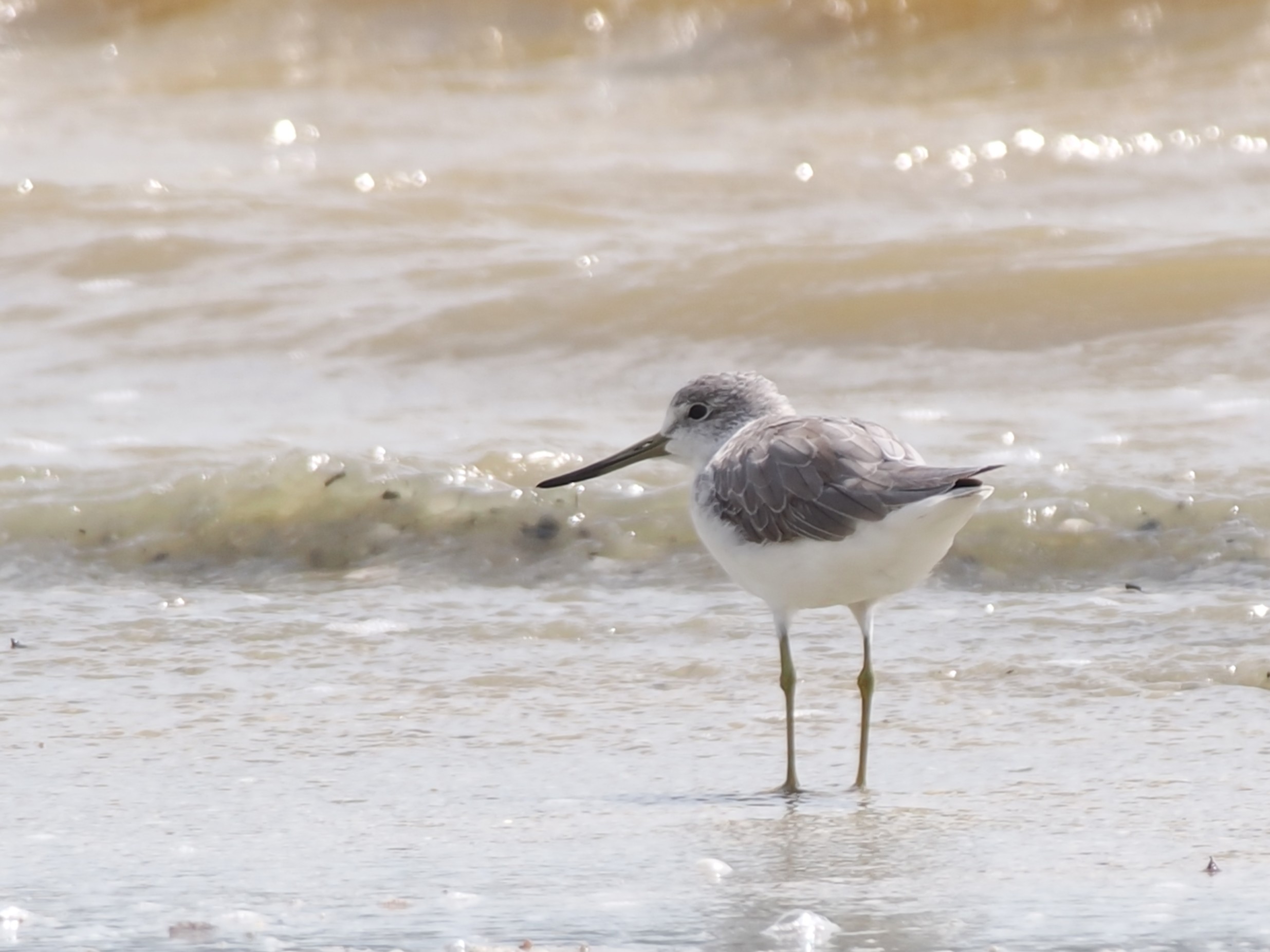
When a crow swept in and unsettled the group, the lone Nordmann broke into a run along the shoreline before rejoining two other Nordmanns nearby.
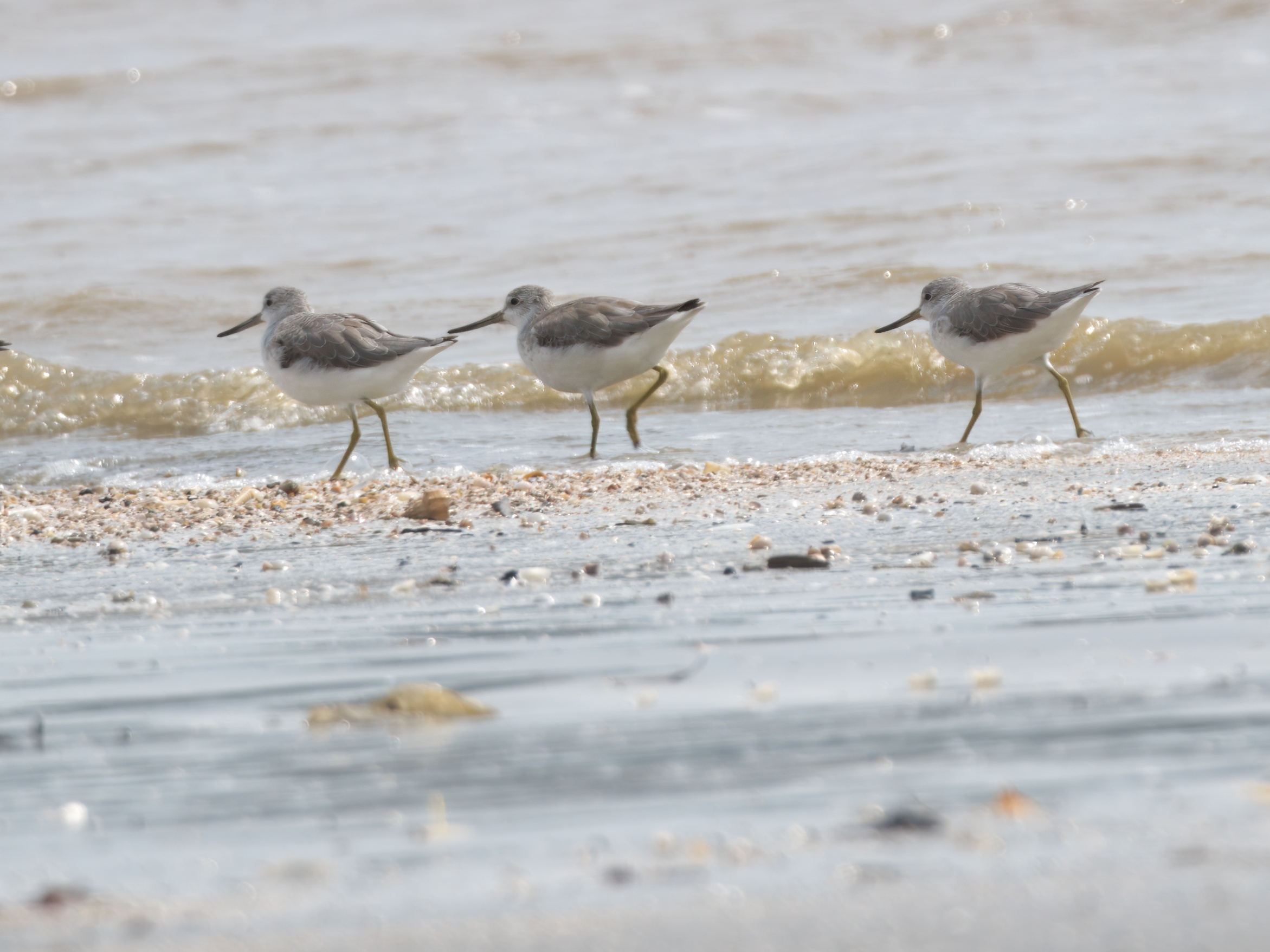
With all Nordmanns reunited, the three muskateers settled back into an easy, relaxed rhythm.
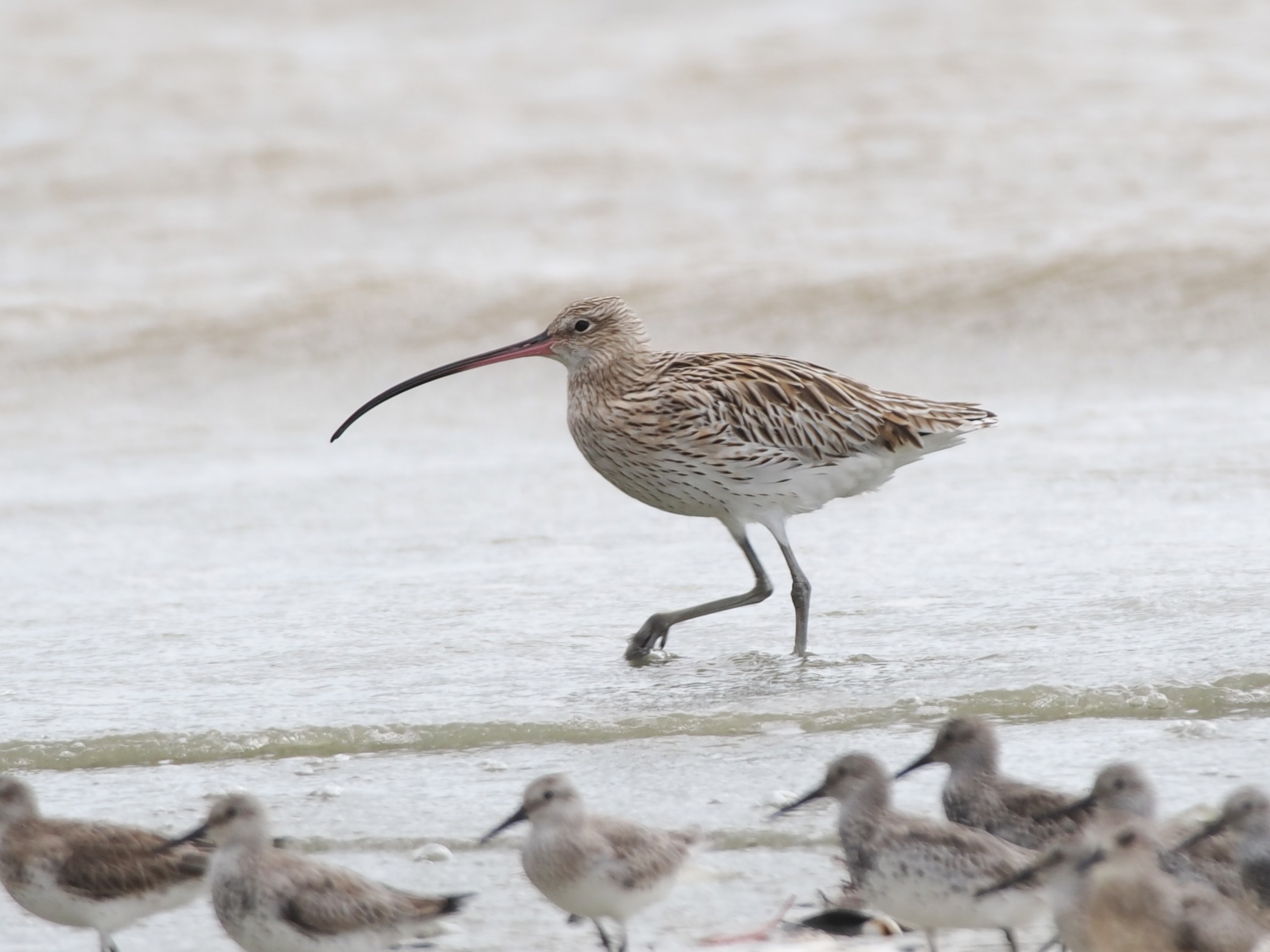
Other waders recorded at the site included the Eurasian Curlew (Numenius arquata)…
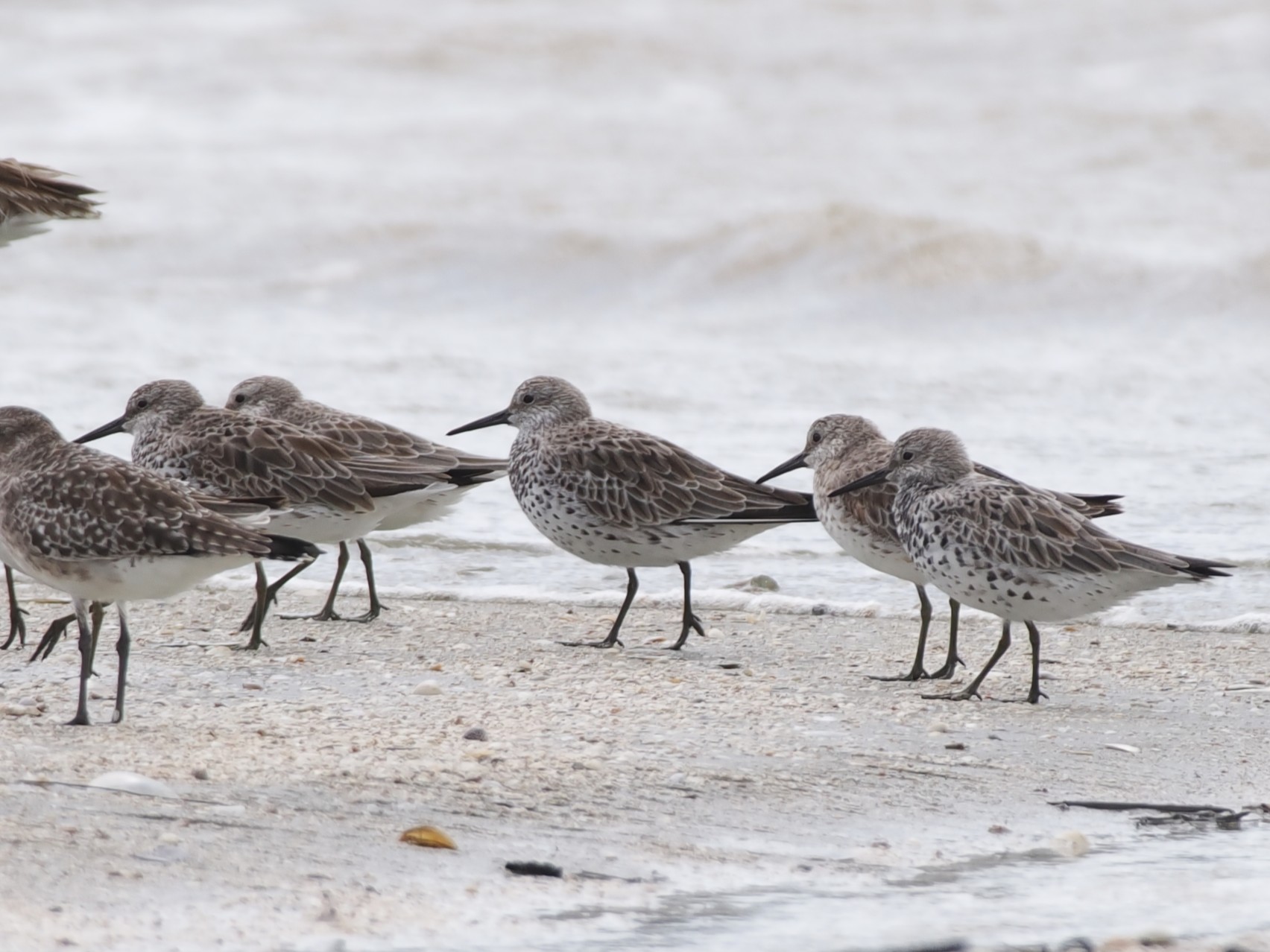
…the Great Knot (Calidris tenuirostris)…
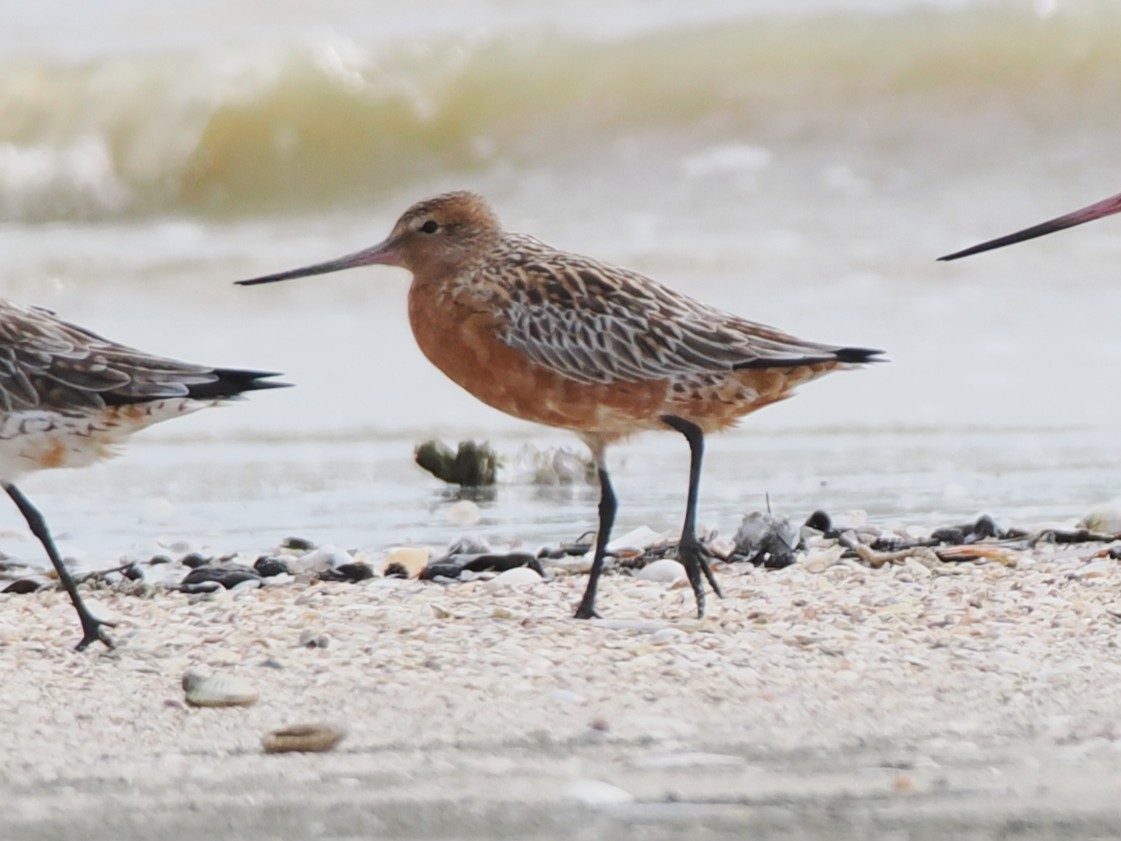
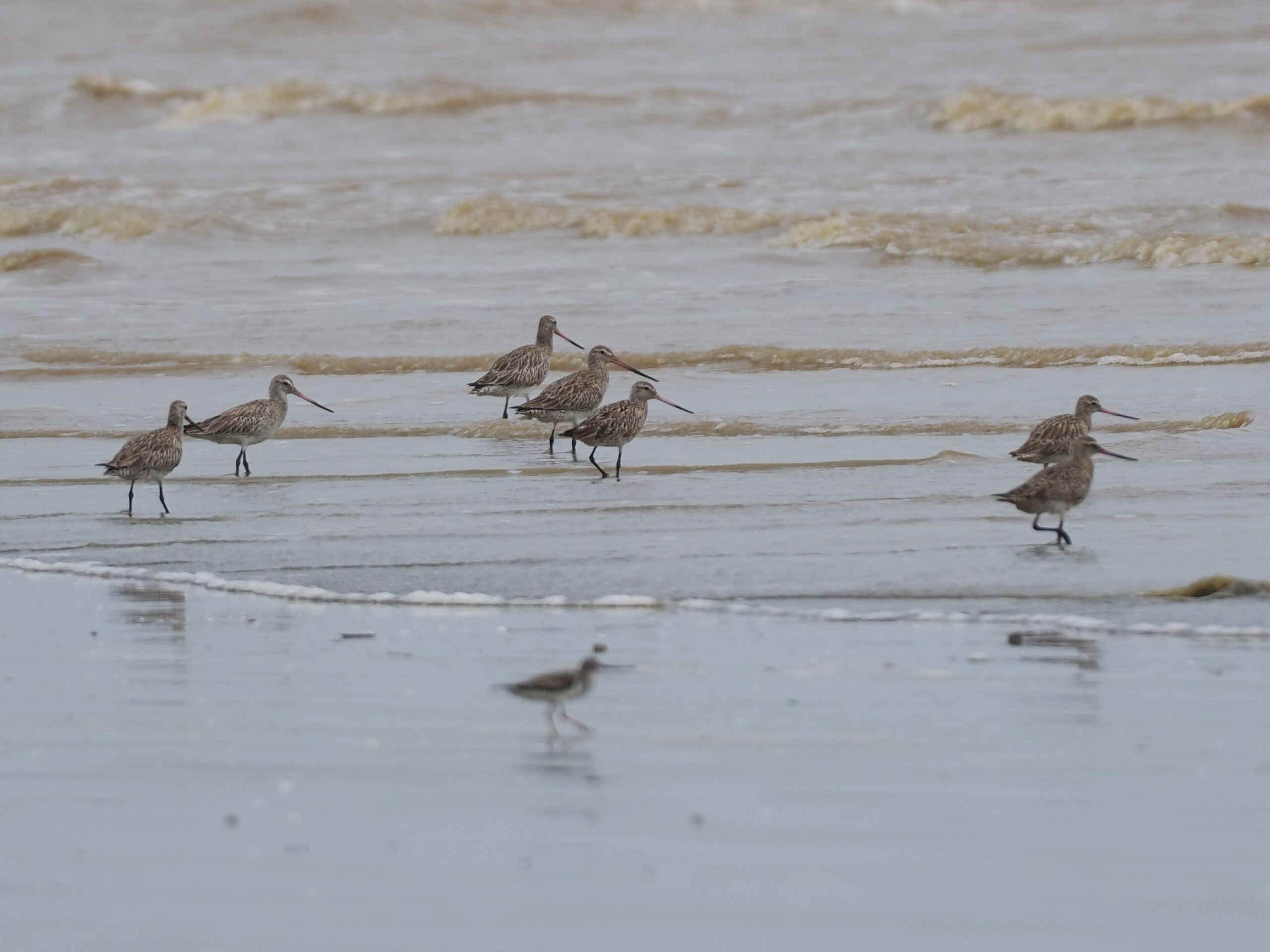
…the Bar-tailed Godwit (Limosa lapponica)…
…and the Black-bellied Plover (Pluvialis squatarola).
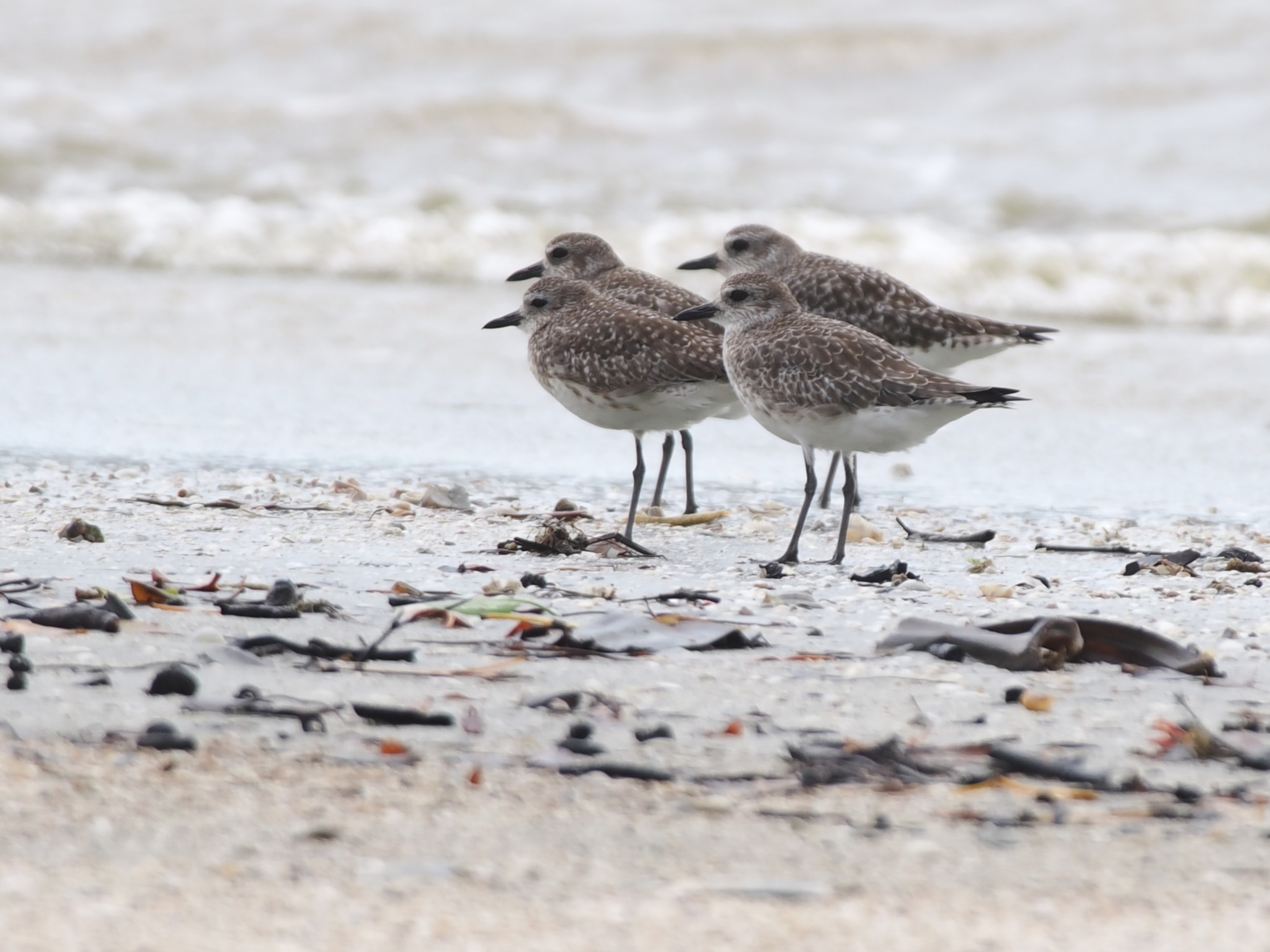
Over at Endau Teriang Penyabong Longshore, just north of Mersing, another group of waders were chillaxing along the beach.
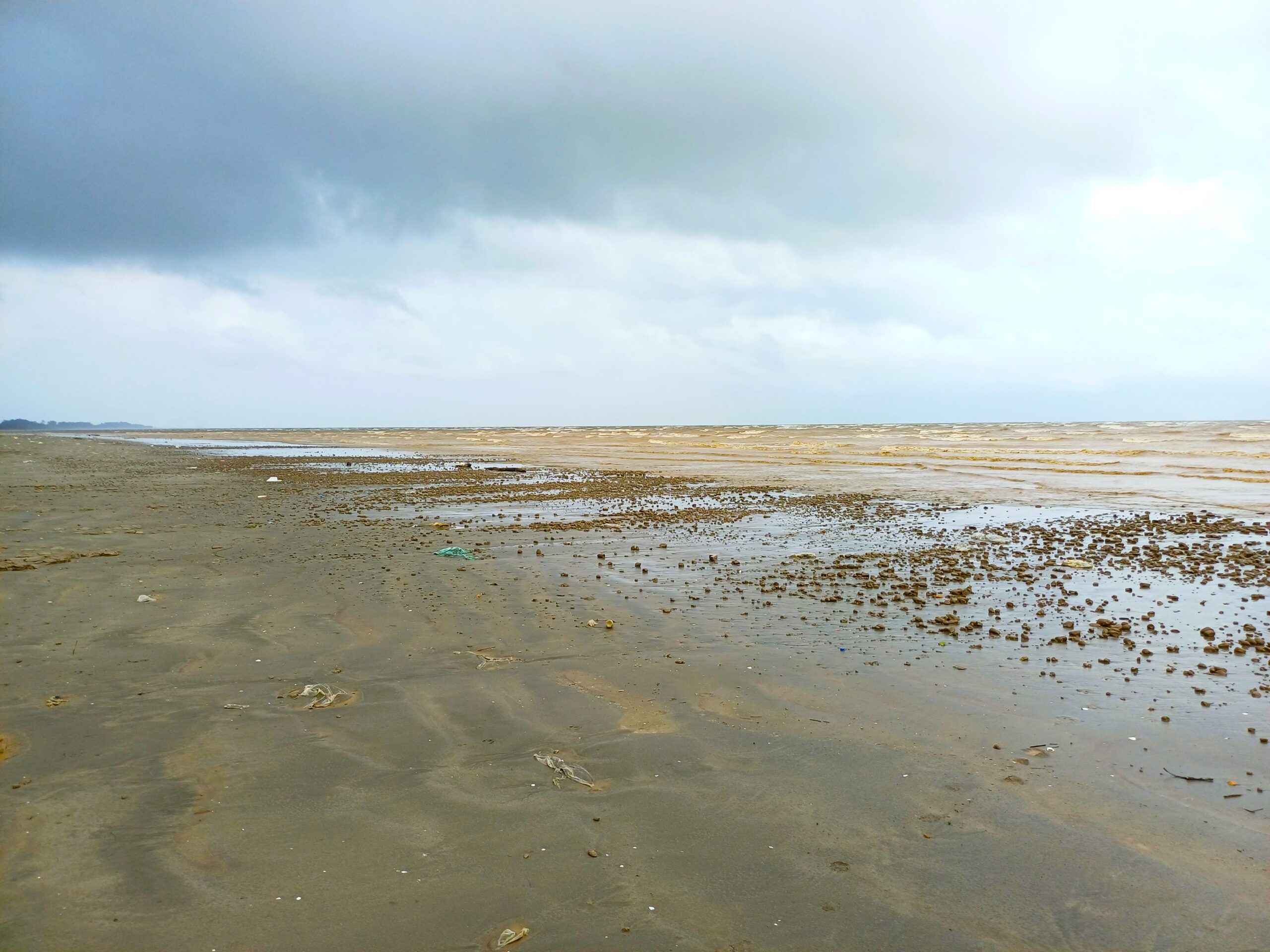
There we saw the same few suspects—the Tibetan Sand Plovers, Terek Sandpipers, Sanderlings, Black-bellied Plovers, Great Crested Terns, and Bar-tailed Godwits.
Amongst a flurry of Little Terns (Sternula albifrons)…
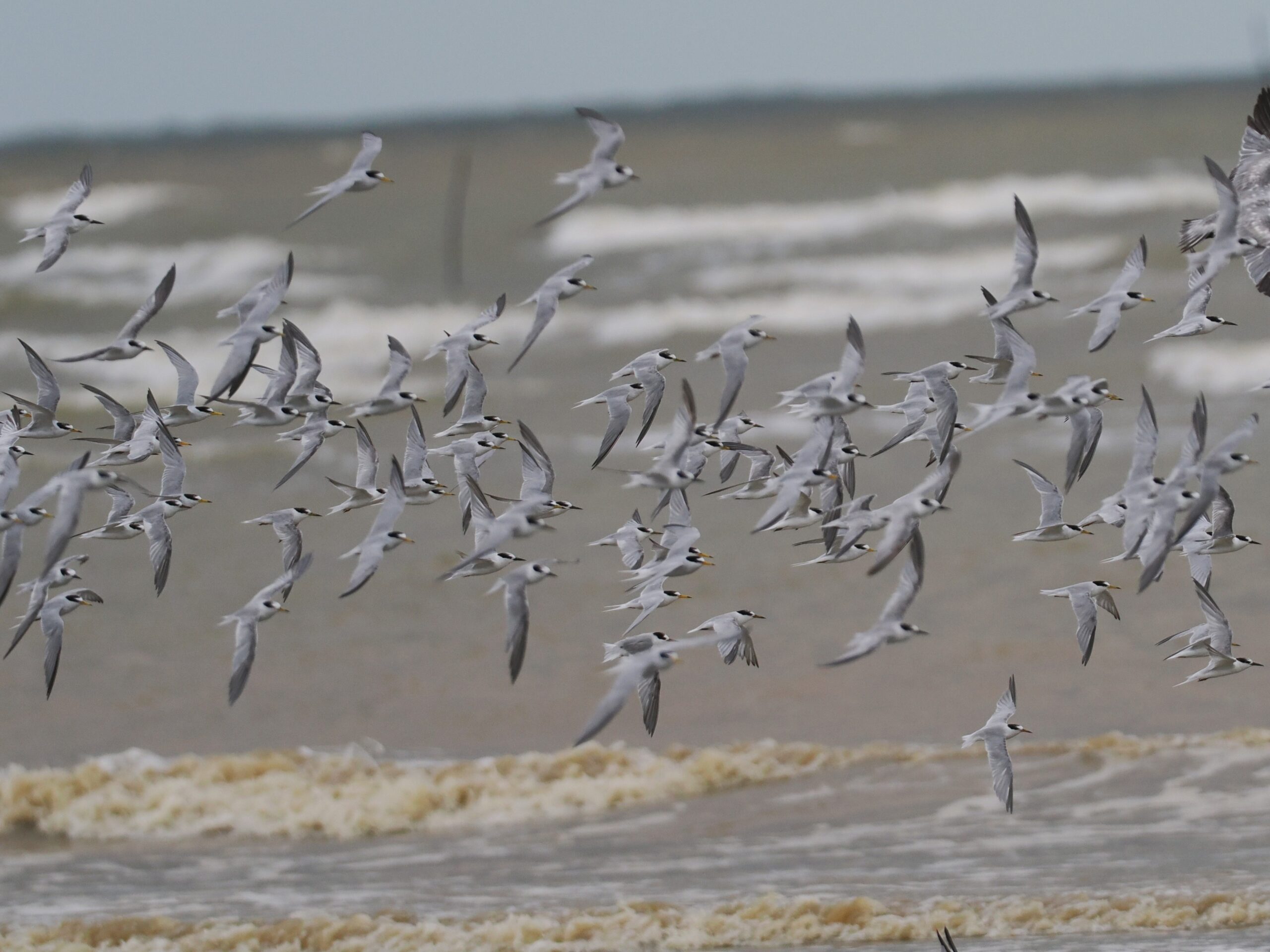
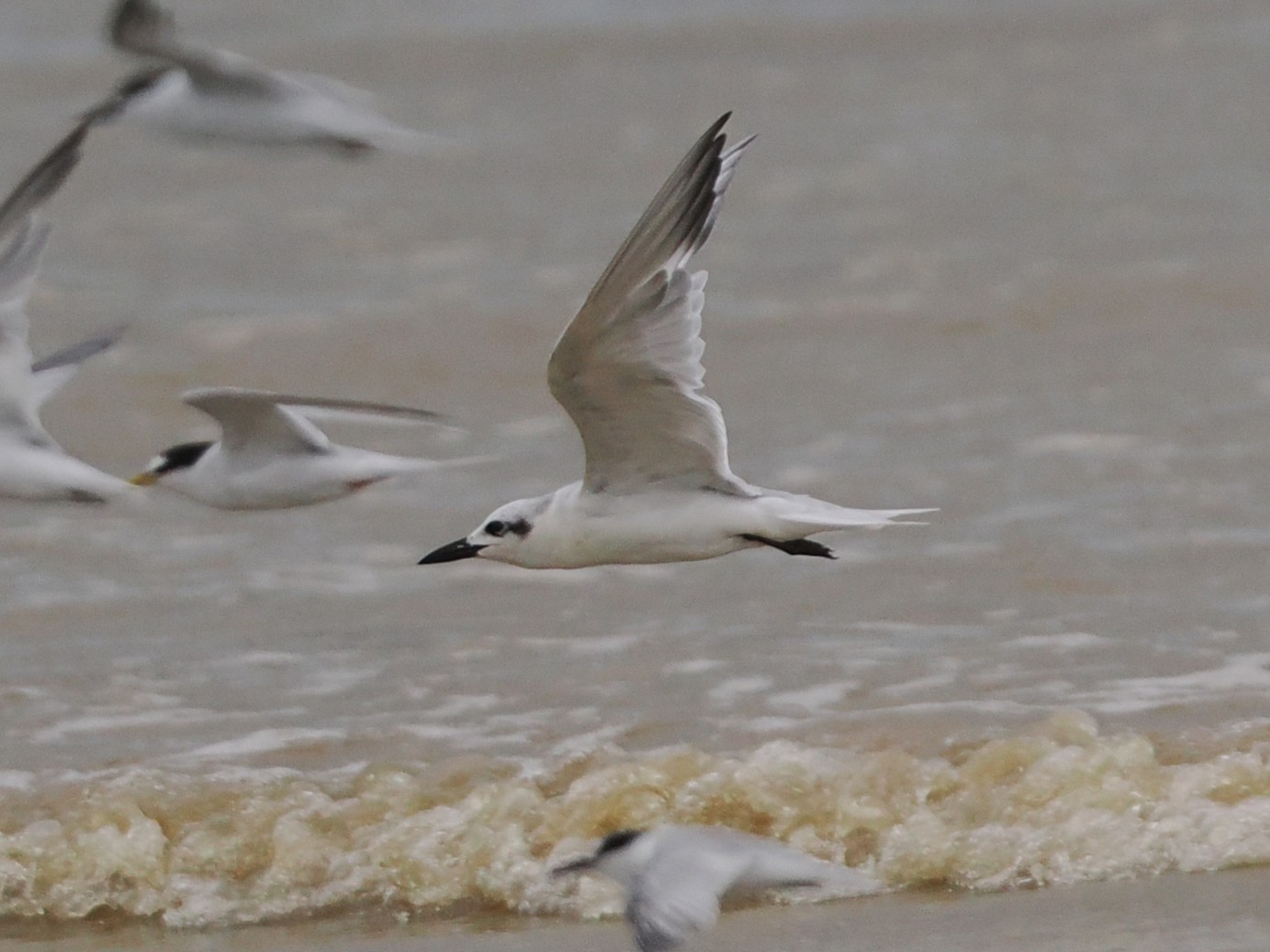
…a solitary Gull-billed Tern (Gelochelidon nilotica) stood out, instantly noticeable with its shorter and stouter bill.
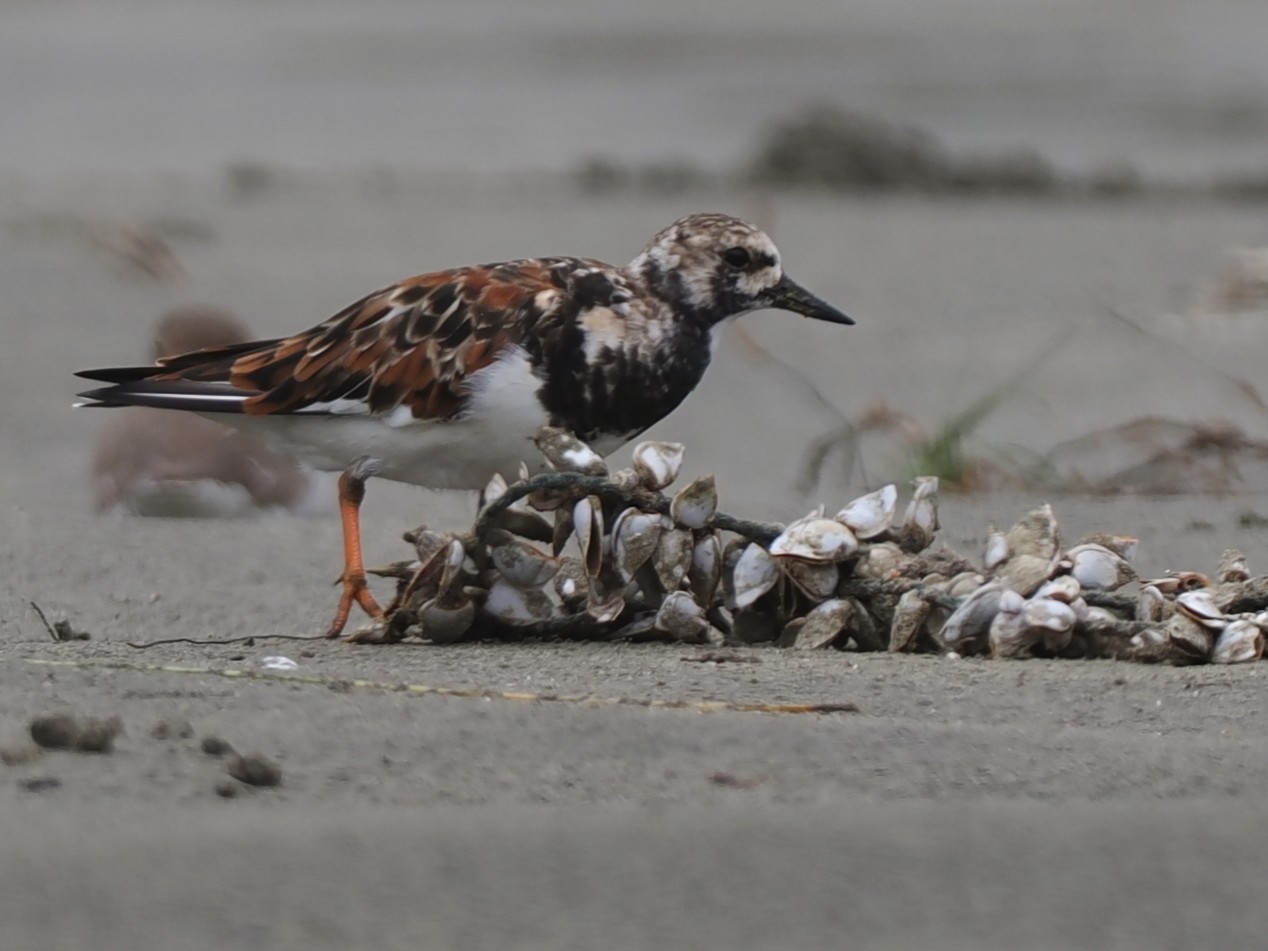
A group of Ruddy Turnstones (Arenaria interpres) worked busily along the sandy beach, flipping over a scattered necklace of seashells in their restless search for hidden morsels beneath.
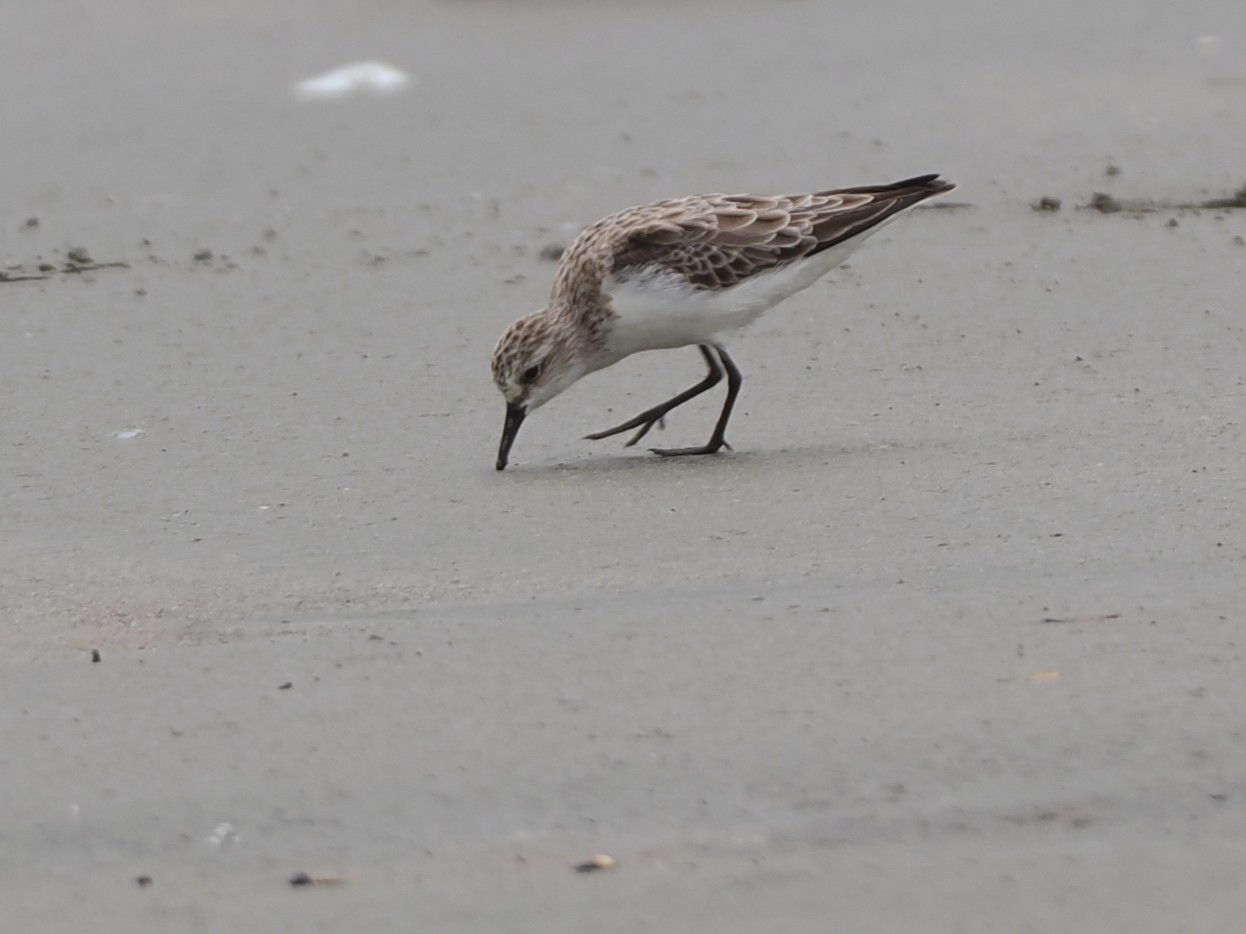
Among the other waders observed were the Red-necked Stint (Calidris ruficollis)…
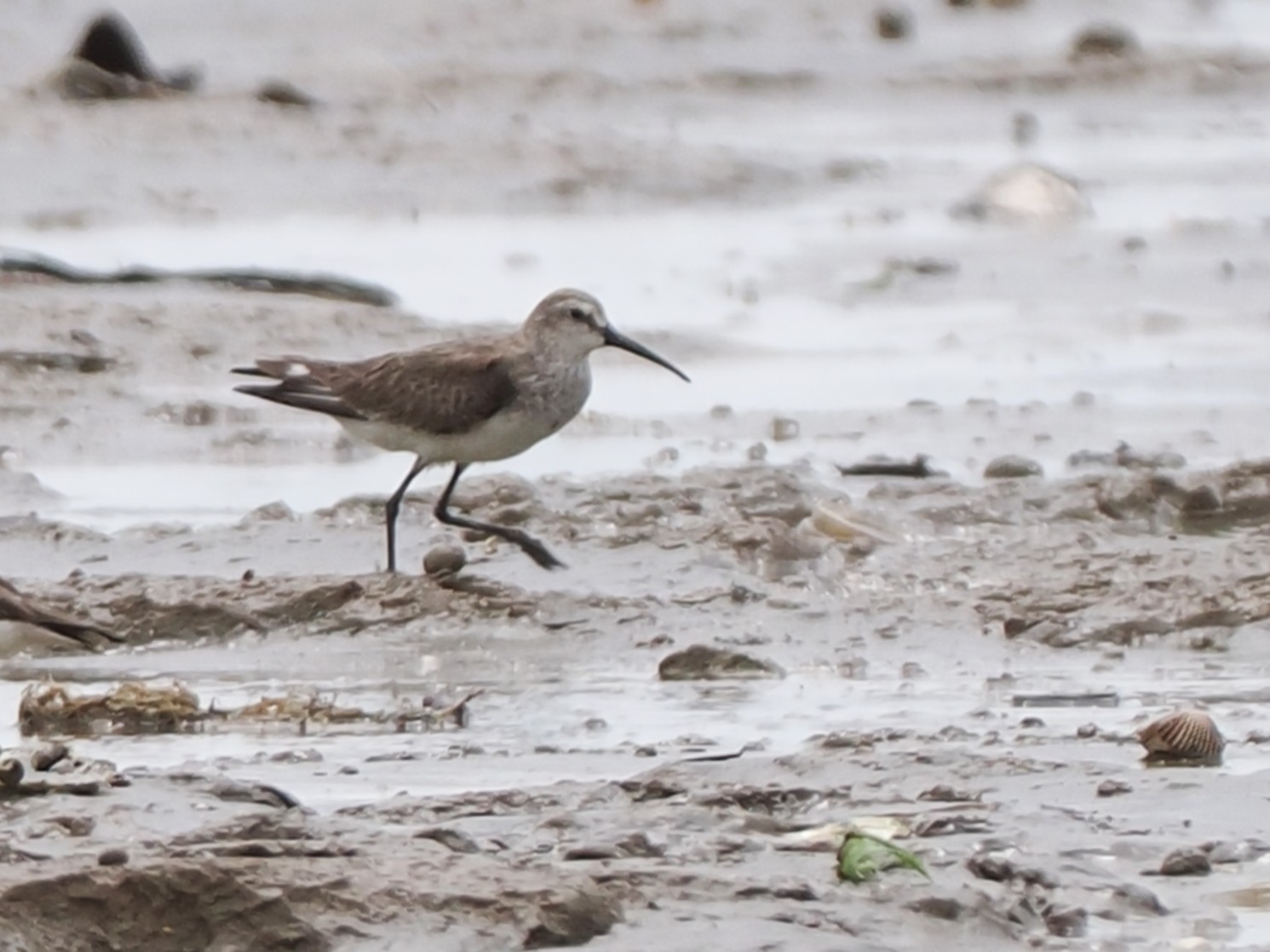
…and the Curlew Sandpiper (Calidris ferruginea).
We didn’t manage to tick off every possible shorebird on this trip to Mersing and Endau—misses like the Red Knot, Asian Dowitcher, Black-tailed Godwit and Far Eastern Curlew kept us on our toes—but that just gives us the perfect excuse to return.
Check out our ebird Trip Report here:
https://ebird.org/tripreport/492026